Stock Analysis · Garmin Ltd (GRMN)
Overview
Garmin Ltd designs and sells connected devices, sensors, and software built around navigation, fitness tracking, and specialized outdoor or mission-critical use cases. While many consumers know Garmin for running watches and bike computers, the company is broader than that: it also sells avionics for aircraft, marine electronics for boats, and navigation systems and wearables for automakers, truck fleets, and outdoor users. This mix gives Garmin exposure to both consumer spending and more specialized professional markets.
Garmin reports revenue across five operating segments. Based on the latest full-year mix disclosed in the company’s recent annual reporting, the revenue base is spread more widely than many electronics companies, which reduces reliance on any one category.
- Fitness: about 30% of revenue. This includes running watches, cycling computers, heart-rate products, smartwatches, and related fitness devices.
- Outdoor: about 25% of revenue. This segment includes adventure watches, handheld GPS devices, dog tracking products, golf devices, and other gear for hiking and outdoor recreation.
- Aviation: about 20% of revenue. Garmin sells integrated flight decks, cockpit displays, navigation and safety systems, and aftermarket avionics for aircraft manufacturers and owners.
- Marine: about 16% of revenue. This includes chartplotters, fishfinders, trolling motors, radars, sonars, and other marine electronics.
- Auto OEM: about 9% of revenue. This business serves automakers and commercial customers with domain controllers, infotainment, navigation, cameras, and fleet-related solutions.
What stands out in Garmin’s business model is that it combines branded hardware with software, mapping, and ecosystem features, while also operating in niches where product reliability matters. Over the last several years, revenue, gross profit, and operating income have all moved meaningfully higher, even as the company continued to spend heavily on research and development. That suggests Garmin has been expanding without sacrificing innovation.
The long-term pattern shows a company that has grown sales from roughly $5.0 billion to above $7.2 billion over four years, while net income also advanced. Research and development spending has climbed above $1.1 billion, which is large in absolute terms but still appears to be supporting profitable growth rather than eroding it.
Key Figures
| Metric | Value | Sector ⓘ |
|---|---|---|
| Date | Sep 12, 2026 | |
| Context | ||
| Sector | Technology | |
| Industry | Scientific & Technical Instruments | |
| Market Cap ⓘ | $54.51B | |
| Beta ⓘ | 0.87 | |
Value (Cheapness) | ||
| P/E Ratio ⓘ | 28.10 | 29.51 |
| FCF Yield ⓘ | 2.81% | 4.25% |
| EBIT / EV ⓘ | 4.79% | 2.85% |
| PEG ⓘ | 2.89 | |
Growth (Business expansion) | ||
| Revenue Growth ⓘ | 11.40% | 15.40% |
| RPS Growth (5Y CAGR) ⓘ | 9.73% | 8.56% |
| EPS Growth (5Y CAGR) ⓘ | -1.42% | -11.88% |
| Margin Growth (5Y Trend) ⓘ | 3.58% | 0.46% |
| FCF Growth (5Y CAGR) ⓘ | 18.01% | 9.80% |
Quality (Business durability) | ||
| ROIC (Latest) ⓘ | 19.93% | 9.44% |
| ROIC (5Y Median) ⓘ | 18.61% | 8.30% |
| Net Debt / EBIT (Latest) ⓘ | -1.01 | 0.54 |
| Net Debt / EBIT (5Y Median) ⓘ | -1.13 | 0.44 |
| Operating Margin (Latest) ⓘ | 28.11% | 9.58% |
| Operating Margin (5Y Median) ⓘ | 24.22% | 8.25% |
| Debt to Equity (Latest) ⓘ | 1.97% | 33.33% |
| Profit Margin (Latest) ⓘ | 24.47% | 7.14% |
| Free Cash Flow (Latest) ⓘ | $1.53B | |
Momentum (Price trend) | ||
| 3Y Return ⓘ | +183.61% | +45.48% |
| 12M Return (excl. last month) ⓘ | +35.25% | +23.48% |
| 6M Return ⓘ | +21.37% | +20.93% |
| Price vs. 200-Day MA ⓘ | +18.71% | +7.43% |
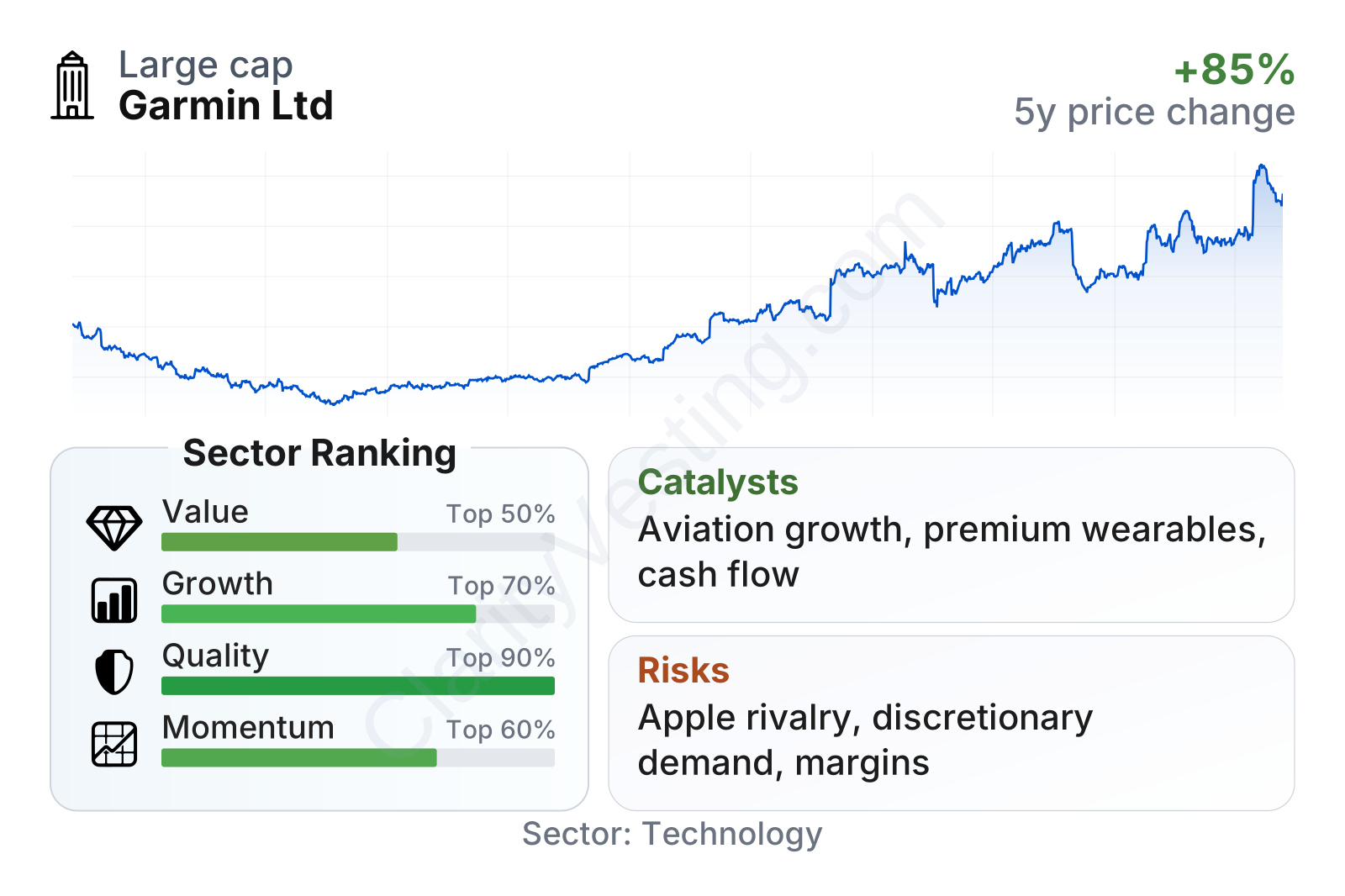
Garmin is a large company with a market value above $50 billion and a stock that has shown somewhat lower volatility than the broader market. The overall profile is strongest in business quality: returns on invested capital are around 20%, operating margin is near 28%, and profit margin is about 24%, all well above typical sector levels. Growth is solid rather than exceptional, with recent yearly revenue growth around 11% and stronger five-year expansion in free cash flow and revenue per share than many peers. On valuation, the earnings multiple sits a little below the sector median, but the free-cash-flow yield is less generous, which means the market is already giving meaningful credit to the company’s consistency and profitability.
Growth
Garmin operates in several markets that still have room to expand over the long term. Wearables for health, fitness, and outdoor use continue to benefit from consumer interest in wellness and performance tracking. Marine electronics and avionics are more specialized categories, but they also tend to have higher technical barriers, long product cycles, and customers willing to pay for reliability and features. That combination can support steadier expansion than a business tied only to mainstream consumer gadgets.
One important part of Garmin’s strategy is diversification. Instead of depending on a single hit product, the company spreads its efforts across fitness, outdoor, aviation, marine, and auto-related systems. That makes strategic sense because weakness in one area can be offset by strength in another. It also allows Garmin to reuse expertise in GPS, sensors, mapping, displays, and software across multiple product families.
The recent revenue trend points to a business that went through a temporary slowdown in 2022 and early 2023, then reaccelerated sharply. Since that reset, quarterly year-over-year growth has mostly remained in the low-teens to low-20s. The latest pace is still positive, though not as fast as the strongest rebound quarters, which is normal after a period of outsized comparisons.
Cash generation supports the growth case. Trailing free cash flow has risen from below $0.5 billion in early 2022 to roughly $1.5 billion more recently, with only modest fluctuation after a sharp step-up. That matters because it gives Garmin room to invest in new products, manufacturing capacity, software capabilities, and shareholder distributions without leaning on debt.
A clear catalyst is the company’s premium positioning in wearables and specialized equipment. Garmin is not trying to win the mass market only on price; it targets users who want battery life, durability, training features, marine functions, or aviation-grade systems that many generalist devices do not match. Another catalyst is continued product refreshes across high-end watch lines, cycling, boating, and cockpit electronics. In the more specialized segments, design wins with aircraft makers, boat manufacturers, and auto partners can support multi-year revenue streams once a platform is adopted.
Recent company communications have also continued to highlight demand in aviation, marine, and outdoor categories alongside ongoing product launches. That is significant because it suggests Garmin’s growth is not coming from only one hot category; it appears to be broad-based across several segments.
Risks
This article is for informational purposes only and does not constitute financial advice. Some content is AI-generated. See Disclaimer


