Stock Analysis · Acushnet Holdings Corp (GOLF)
Overview
Acushnet Holdings Corp is a golf-focused equipment, apparel, and accessories company best known for the Titleist and FootJoy brands. Its business is centered on products used by dedicated golfers, golf professionals, and golf facilities. Titleist is especially strong in golf balls, while FootJoy is a major name in golf shoes, gloves, and apparel. The group also sells clubs, gear, and performance-oriented golf products through specialty retailers, green grass shops, distributors, and direct channels.
Based on the company’s recent annual reporting structure, revenue is mainly generated from four operating categories:
- Titleist golf equipment - about 45% to 50%: this includes golf clubs such as drivers, fairways, hybrids, irons, wedges, and putters, plus related gear.
- Titleist golf balls - about 25% to 30%: premium golf balls, including the Pro V1 franchise, which is one of the company’s most important profit engines.
- FootJoy golf wear - about 20% to 25%: golf shoes, gloves, and apparel.
- Golf gear and other - about 5% to 10%: bags, headwear, travel products, and other accessories sold across the brand portfolio.
The business mix matters because it is not only selling discretionary sports goods; it also has a recurring element through golf ball replacement and steady accessory demand. Over the last several years, revenue has climbed from a little above $2.1 billion to roughly $2.6 billion, while operating income has also expanded. Gross profit has remained large and resilient, although interest expense and operating costs have risen as the company has grown.
The multi-year picture shows a business that has increased sales and preserved healthy operating profitability, but with a larger expense base and somewhat more pressure below operating income than earlier in the cycle.
Key Figures
| Metric | Value | Sector ⓘ |
|---|---|---|
| Date | Sep 12, 2026 | |
| Context | ||
| Sector | Consumer Cyclical | |
| Industry | Leisure | |
| Market Cap ⓘ | $4.98B | |
| Beta ⓘ | 0.80 | |
Value (Cheapness) | ||
| P/E Ratio ⓘ | 23.23 | 17.10 |
| FCF Yield ⓘ | 3.69% | 8.53% |
| EBIT / EV ⓘ | 6.80% | 6.46% |
| PEG ⓘ | 3.61 | |
Growth (Business expansion) | ||
| Revenue Growth ⓘ | 13.80% | 5.75% |
| RPS Growth (5Y CAGR) ⓘ | 10.63% | 9.14% |
| EPS Growth (5Y CAGR) ⓘ | 7.49% | -18.21% |
| Margin Growth (5Y Trend) ⓘ | -0.17% | -0.23% |
| FCF Growth (5Y CAGR) ⓘ | -18.83% | 4.91% |
Quality (Business durability) | ||
| ROIC (Latest) ⓘ | 16.05% | 12.61% |
| ROIC (5Y Median) ⓘ | 15.09% | 10.72% |
| Net Debt / EBIT (Latest) ⓘ | 2.40 | 2.10 |
| Net Debt / EBIT (5Y Median) ⓘ | 2.23 | 2.32 |
| Operating Margin (Latest) ⓘ | 14.79% | 9.25% |
| Operating Margin (5Y Median) ⓘ | 11.97% | 9.64% |
| Debt to Equity (Latest) ⓘ | 103.86% | 75.78% |
| Profit Margin (Latest) ⓘ | 8.12% | 5.33% |
| Free Cash Flow (Latest) ⓘ | $183.74M | |
Momentum (Price trend) | ||
| 3Y Return ⓘ | +54.92% | +14.53% |
| 12M Return (excl. last month) ⓘ | +18.52% | +3.08% |
| 6M Return ⓘ | -7.79% | +0.55% |
| Price vs. 200-Day MA ⓘ | -9.48% | -0.54% |
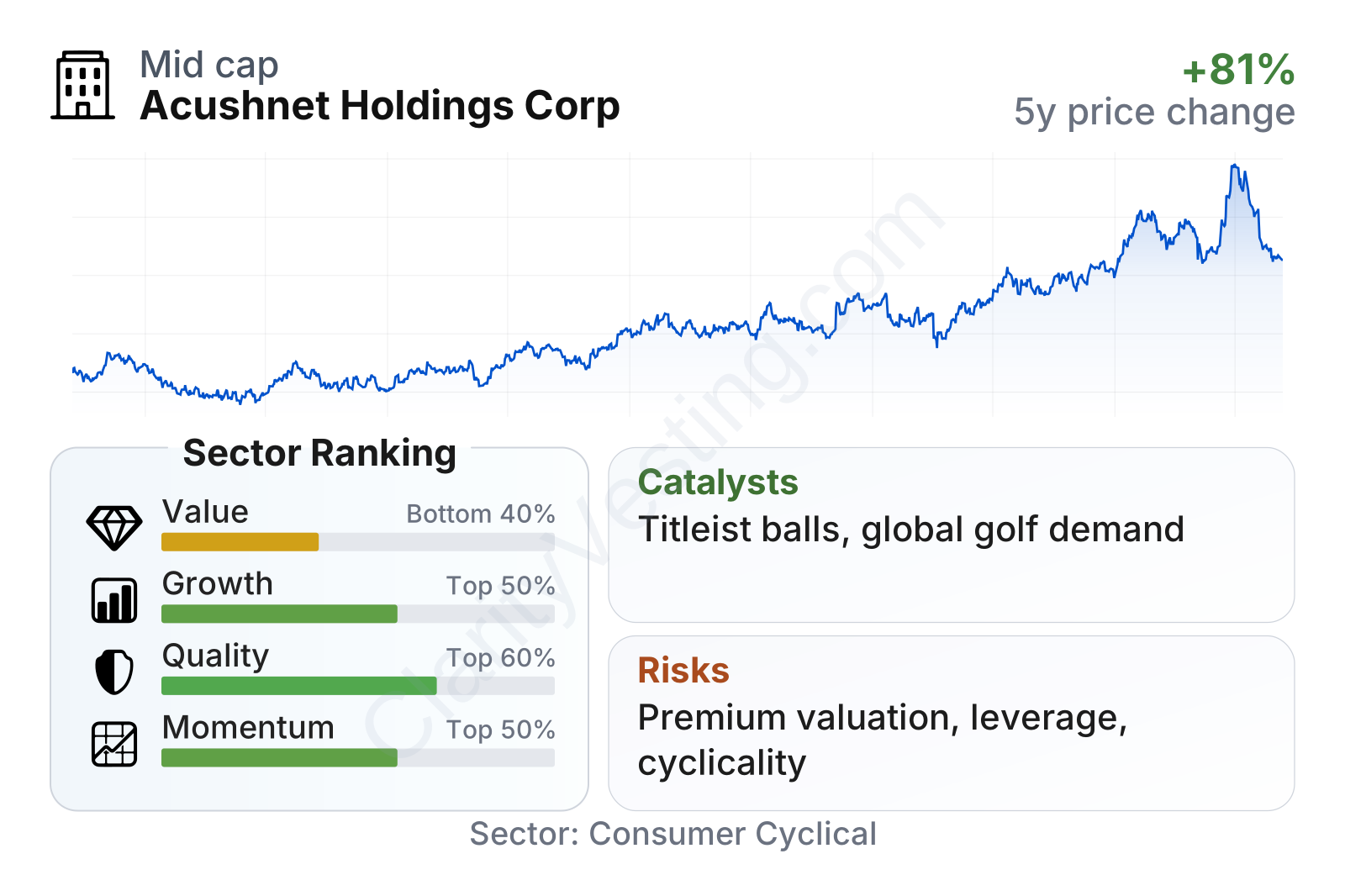
Acushnet is a mid-sized public company with a market value around $5 billion and a stock that has historically moved somewhat less than the broader market, as suggested by a beta below 1. The overall factor profile is mixed: growth and business quality look solid relative to much of the consumer cyclical sector, while pure valuation metrics appear less favorable. Profitability stands out more positively than cash generation at the moment, and leverage is a point that deserves attention despite good returns on invested capital.
The stock’s multi-year price trend has been strong, with gains far above the sector median over three years, although shorter-term momentum has cooled. That usually signals a company that has earned market confidence over time, but where expectations may already be elevated.
Growth
Golf is no longer just a narrowly cyclical participation market. In recent years, the sport has benefited from broader engagement, off-course formats, simulator use, and a larger base of casual and serious players. That does not make the industry immune to downturns, but it does support a more durable demand backdrop than in earlier periods. Acushnet is particularly well positioned because it is concentrated in the premium end of the category, where brand loyalty, product performance, and fitting expertise matter more than price alone.
The company’s strategy appears coherent for long-term expansion. It leans on strong brand equity, invests in product development, keeps a close link to professionals and avid golfers, and benefits from repeat purchase categories such as golf balls and gloves. That combination is attractive because repeat-use products can stabilize the business while higher-ticket clubs and footwear provide growth when participation and consumer confidence are healthy.
Recent revenue growth has been uneven quarter to quarter, which is normal for a seasonal sports business, but the broader direction has stayed positive. The latest year-over-year growth rate is running above the sector median, and the five-year revenue-per-share trend is also ahead of the broader group. That suggests Acushnet has been gaining from a favorable category mix and sustained brand strength rather than simply riding inflation.
Free cash flow has been more volatile than revenue or margins. It recovered strongly after a weak period and remains positive, but the longer five-year trend is less impressive than the sales trend. For long-term analysis, this means growth is real, yet not every dollar of accounting profit has turned smoothly into cash. That can happen when inventory, working capital, and investment needs rise with expansion.
A major catalyst is the company’s leadership in premium golf balls, especially within the Titleist franchise. Golf balls are a recurring purchase and can reinforce brand attachment across clubs and accessories. Another potential growth driver is international expansion, particularly in markets where golf participation and premium equipment demand continue to rise. Product cycles in clubs, footwear innovation, and continued strength in green grass distribution also support future momentum if execution remains strong.
Recent company updates have continued to highlight sales growth, brand momentum, and demand for performance-focused products. The most important opportunity is not a single one-time event, but the combination of premium positioning, repeat-purchase categories, and a still-growing global golf ecosystem.
Risks
This article is for informational purposes only and does not constitute financial advice. Some content is AI-generated. See Disclaimer


