Stock Analysis · Gentex Corporation (GNTX)
Overview
Gentex Corporation is a U.S. automotive technology supplier best known for auto-dimming mirrors. Over time, it has built that mirror business into a broader electronics platform that includes integrated cameras, displays, dimmable glass, sensing features, and connected-car functions. The company also operates smaller businesses in fire protection products and medical-related vision systems, but automotive remains the center of the business.
Its revenue base is concentrated and relatively easy to understand:
- Automotive products: about 97% to 98% of revenue. This includes auto-dimming rearview and side mirrors, HomeLink and other connected-car features, camera-based digital vision systems, dimmable aircraft windows, and electronics integrated into mirrors and glass.
- Fire protection products: about 1% to 2% of revenue. This business mainly includes alarms and signaling devices sold under the First Alert and Gentex fire protection lines.
- Other products: less than 1% of revenue. This includes a small medical-related business and other niche activities.
That concentration matters. Gentex is not a diversified industrial conglomerate; it is primarily an auto-parts company tied to vehicle production, option rates per vehicle, and the adoption of higher-value electronic features. The appealing part of the model is that the company sells components with better margins than many traditional commodity auto suppliers, helped by a long history in specialized optical and electronic systems.
The business mix also shows a useful pattern: revenue has expanded meaningfully since 2021, while gross profit has also grown, although operating expenses have risen faster in recent years as the company increased research, development, and commercial spending. That points to a company still generating solid earnings, but also spending to defend and extend its position in smarter vehicle cabin and vision technologies.
Key Figures
| Metric | Value | Sector ⓘ |
|---|---|---|
| Date | Sep 12, 2026 | |
| Context | ||
| Sector | Consumer Cyclical | |
| Industry | Auto Parts | |
| Market Cap ⓘ | $4.80B | |
| Beta ⓘ | 0.79 | |
Value (Cheapness) | ||
| P/E Ratio ⓘ | 12.06 | 17.10 |
| FCF Yield ⓘ | 10.34% | 8.53% |
| EBIT / EV ⓘ | 10.83% | 6.46% |
| PEG ⓘ | 0.67 | |
Growth (Business expansion) | ||
| Revenue Growth ⓘ | -1.00% | 5.75% |
| RPS Growth (5Y CAGR) ⓘ | 12.08% | 9.14% |
| EPS Growth (5Y CAGR) ⓘ | -6.88% | -18.21% |
| Margin Growth (5Y Trend) ⓘ | -5.86% | -0.23% |
| FCF Growth (5Y CAGR) ⓘ | 11.79% | 4.91% |
Quality (Business durability) | ||
| ROIC (Latest) ⓘ | 16.37% | 12.61% |
| ROIC (5Y Median) ⓘ | 16.79% | 10.72% |
| Net Debt / EBIT (Latest) ⓘ | 7.06 | 2.10 |
| Net Debt / EBIT (5Y Median) ⓘ | -0.50 | 2.32 |
| Operating Margin (Latest) ⓘ | 18.72% | 9.25% |
| Operating Margin (5Y Median) ⓘ | 20.26% | 9.64% |
| Debt to Equity (Latest) ⓘ | 146.05% | 75.78% |
| Profit Margin (Latest) ⓘ | 15.50% | 5.33% |
| Free Cash Flow (Latest) ⓘ | $496.65M | |
Momentum (Price trend) | ||
| 3Y Return ⓘ | -25.79% | +14.53% |
| 12M Return (excl. last month) ⓘ | -12.32% | +3.08% |
| 6M Return ⓘ | +8.09% | +0.55% |
| Price vs. 200-Day MA ⓘ | -2.13% | -0.54% |
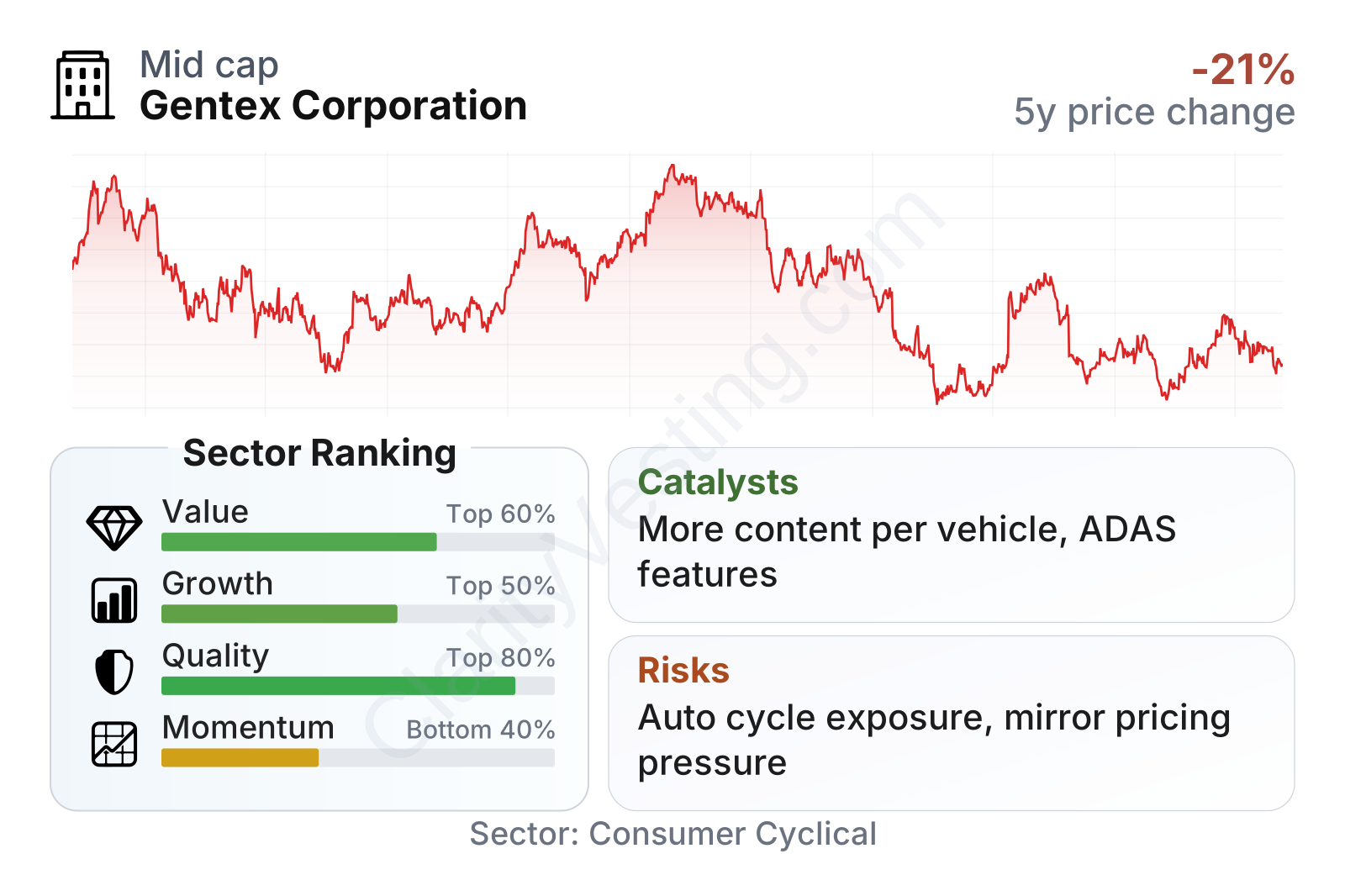
Gentex is a mid-sized company with a market value around $5 billion and a below-market beta, which suggests the shares have historically been less volatile than the broader market. The overall picture from the latest metrics is notable: valuation looks lighter than much of the sector, quality stands out strongly, and growth is mixed. Profitability and returns on capital remain well above typical auto-parts peers, while the balance sheet is exceptionally conservative, with almost no debt and net cash rather than net debt. The weaker area is recent top-line momentum, since short-term revenue growth has softened even though longer-term revenue-per-share and free-cash-flow growth remain healthy.
Growth
Gentex operates in a part of the auto industry that still has room for content growth per vehicle. Even when global vehicle production is not booming, automakers continue adding electronics, safety features, convenience functions, digital displays, and driver-assistance hardware. That trend can support suppliers that are able to sell more value into each vehicle, and Gentex is positioned around exactly that idea.
The company’s strategy makes industrial sense. Its core mirror franchise is mature, but management has been using that installed position to add more electronics and features rather than relying only on unit growth. Products such as digital vision, integrated toll and connectivity functions, dimmable glass, and aircraft window technologies give Gentex multiple ways to raise average content per vehicle. The firm has also continued investing in R&D, which is important in a market where product cycles are long and winning a place on vehicle platforms can create multi-year revenue streams.
Recent revenue growth has not been perfectly smooth. After a strong rebound in 2022 and 2023, growth became more uneven through 2024, 2025, and into 2026. That does not automatically signal a broken business. In automotive supply, quarterly swings are common because customer production schedules, launches, inventory moves, and regional vehicle demand can all distort short-term comparisons. The more constructive point is that Gentex still shows a stronger five-year revenue-per-share growth rate than the sector median.
Cash generation has improved clearly over the last several years, with trailing free cash flow rising from a little above $200 million in 2022 to roughly the mid-$400 million range more recently. That is a meaningful strength because free cash flow gives the company room to fund product development, capital spending, share repurchases, and dividends without leaning on debt markets.
One current catalyst is the broader push for more advanced in-cabin and visibility systems. Automakers are trying to improve safety, user experience, and vehicle differentiation at a time when consumers increasingly expect premium electronics beyond luxury models. Gentex also continues to pursue growth in aerospace dimmable windows and connected-car features, which could widen its opportunity set beyond the traditional rearview mirror category. Recent company updates have also highlighted production awards and feature adoption wins, which matter because design wins today can translate into revenue over several future model years.
Risks
This article is for informational purposes only and does not constitute financial advice. Some content is AI-generated. See Disclaimer


