Stock Analysis · G-III Apparel Group Ltd (GIII)
Overview
G-III Apparel Group Ltd is a fashion company that designs, sources, and markets clothing and accessories. It operates a mixed business model: part of its sales come from products it owns outright under its own brands, and another large part comes from licensed brands where it produces and sells merchandise using well-known names. The company sells through wholesale channels to department stores, off-price retailers, and digital partners, and it also sells directly to consumers through its own websites and stores.
Its brand portfolio includes DKNY, Karl Lagerfeld, Donna Karan, Vilebrequin, G.H. Bass, and other owned labels, while licensed relationships have included names such as Calvin Klein and Tommy Hilfiger. In recent years, management has emphasized reducing dependence on licensed business and building a stronger base of owned brands, which generally gives the company more control over pricing, marketing, and long-term brand value.
The company reports revenue mainly through two operating segments. Based on the latest annual filing for fiscal 2026, the mix is approximately:
- Wholesale operations: about 88% of revenue. This includes apparel, footwear, handbags, luggage, and related products sold to retailers and digital commerce partners.
- Retail operations: about 12% of revenue. This includes company-operated stores and e-commerce sales tied mainly to owned brands.
Looking at the business by product and brand exposure rather than reporting segment, outerwear, dresses, sportswear, handbags, and footwear remain important categories, but the strategic focus is increasingly centered on expanding owned labels such as DKNY, Donna Karan, and Karl Lagerfeld. That matters because owned brands can create more durable economics than licensed production work, even if the transition period brings volatility.
The multiyear profit flow shows a business that recovered after a difficult fiscal 2023, but fiscal 2026 was weaker again. Revenue stayed near the $3 billion range for several years, while selling and administrative expenses climbed and absorbed more of gross profit. One clear positive is that interest expense has fallen sharply, reflecting a much cleaner balance sheet.
Key Figures
| Metric | Value | Sector ⓘ |
|---|---|---|
| Date | Sep 12, 2026 | |
| Context | ||
| Sector | Consumer Cyclical | |
| Industry | Apparel Manufacturing | |
| Market Cap ⓘ | $1.20B | |
| Beta ⓘ | 1.27 | |
Value (Cheapness) | ||
| P/E Ratio ⓘ | 9.11 | 17.10 |
| FCF Yield ⓘ | 22.96% | 8.53% |
| EBIT / EV ⓘ | 18.46% | 6.46% |
| PEG ⓘ | 1.29 | |
Growth (Business expansion) | ||
| Revenue Growth ⓘ | -9.60% | 5.75% |
| RPS Growth (5Y CAGR) ⓘ | 4.43% | 9.14% |
| EPS Growth (5Y CAGR) ⓘ | -68.60% | -18.21% |
| Margin Growth (5Y Trend) ⓘ | -7.83% | -0.23% |
| FCF Growth (5Y CAGR) ⓘ | 14.36% | 4.91% |
Quality (Business durability) | ||
| ROIC (Latest) ⓘ | 8.01% | 12.61% |
| ROIC (5Y Median) ⓘ | 10.24% | 10.72% |
| Net Debt / EBIT (Latest) ⓘ | -1.02 | 2.10 |
| Net Debt / EBIT (5Y Median) ⓘ | -0.20 | 2.32 |
| Operating Margin (Latest) ⓘ | 6.47% | 9.25% |
| Operating Margin (5Y Median) ⓘ | 9.04% | 9.64% |
| Debt to Equity (Latest) ⓘ | 18.74% | 75.78% |
| Profit Margin (Latest) ⓘ | 4.75% | 5.33% |
| Free Cash Flow (Latest) ⓘ | $274.59M | |
Momentum (Price trend) | ||
| 3Y Return ⓘ | +15.06% | +14.53% |
| 12M Return (excl. last month) ⓘ | +34.20% | +3.08% |
| 6M Return ⓘ | +7.21% | +0.55% |
| Price vs. 200-Day MA ⓘ | -10.34% | -0.54% |
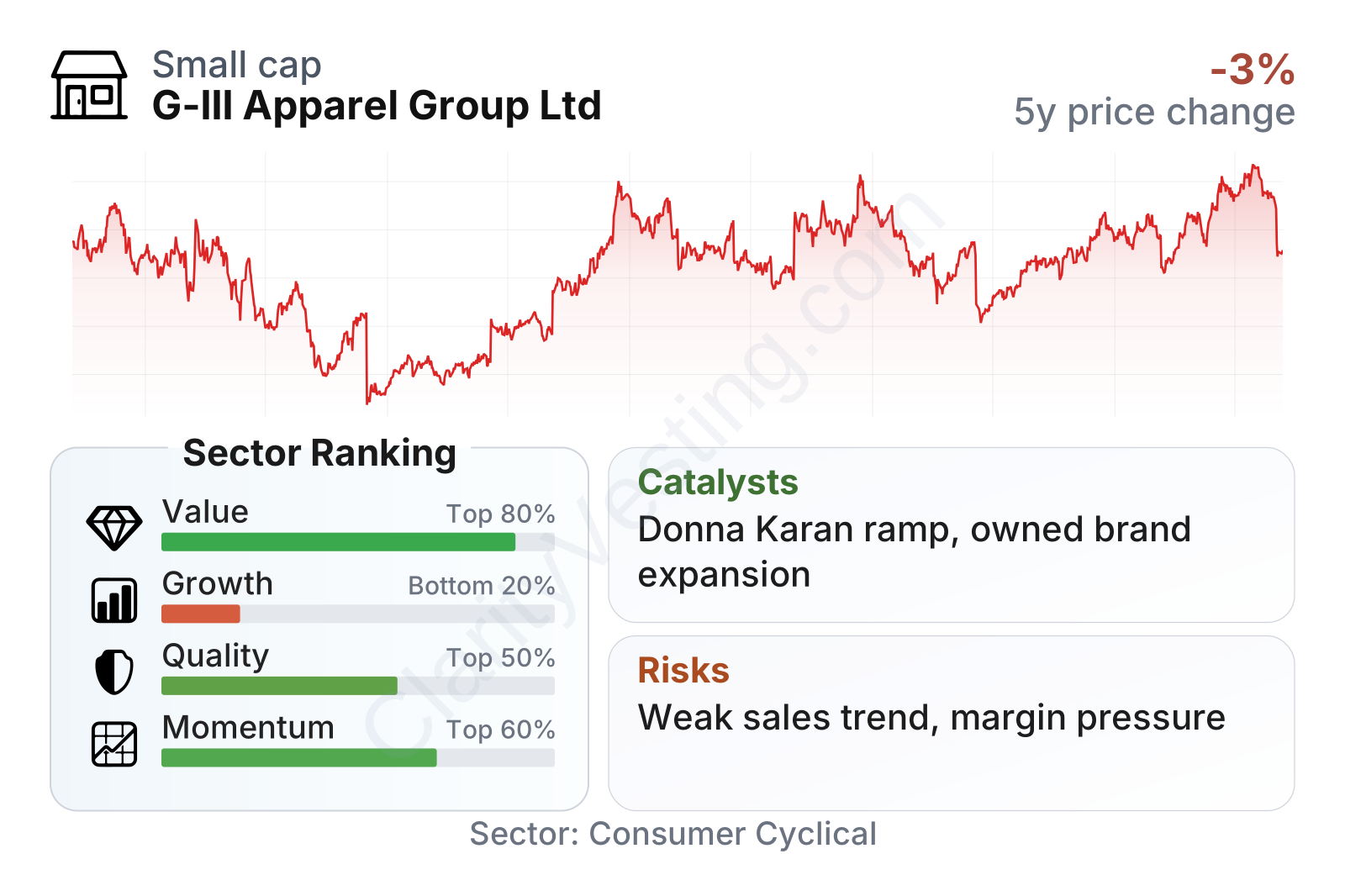
G-III sits in the smaller public-company range within the consumer discretionary space, with above-market share-price volatility. The valuation metrics look undemanding relative to the sector: earnings multiple is well below the sector median, while free cash flow yield and EBIT relative to enterprise value are stronger than typical peers. On the other hand, growth metrics are notably weak, with recent revenue declining and earnings progression over five years looking uneven. Quality is more mixed: leverage is exceptionally low and net cash is a real strength, but returns on capital and margins are below stronger apparel peers.
Growth
G-III operates in a large global apparel market, but this is not a structurally fast-growing industry. Long-term expansion usually comes less from overall sector growth and more from brand building, international reach, category expansion, and stronger direct-to-consumer sales. That makes G-III’s strategy important: management has been reshaping the company away from lower-control licensed revenue and toward owned brands that can support higher strategic value over time.
The central growth thesis rests on scaling DKNY, Donna Karan, and Karl Lagerfeld across more product categories and more geographies. If that works, the company could become less dependent on external brand owners and improve profitability over time. It is also investing in direct-to-consumer capabilities, which can deepen customer relationships and provide better control over merchandising and pricing than wholesale distribution alone.
Recent revenue momentum has been weak. After strong post-pandemic gains earlier in the cycle, year-over-year sales growth turned negative and stayed negative through the latest periods, with declines approaching 10%. That puts G-III in the weaker part of its sector on growth right now. The important question for long-term analysis is whether this is a temporary reset during a portfolio transition or evidence that the business is struggling to replace lost or maturing revenue streams.
Cash generation gives a more encouraging signal than revenue growth alone. Free cash flow has remained positive in recent years after a sharp swing in fiscal 2023, and the latest trailing level is still substantial for a company of this size. That suggests the business retains financial flexibility to support brand investment, inventory management, and selective expansion even during a softer sales period.
A notable catalyst in the current phase is the push behind Donna Karan, which management has described as an important multi-category growth platform, along with further development of DKNY and Karl Lagerfeld. Another visible opportunity is the continued cleanup of the balance sheet: with very little debt, more operating cash can be directed toward growth initiatives, buybacks, or brand support rather than financing costs.
Risks
This article is for informational purposes only and does not constitute financial advice. Some content is AI-generated. See Disclaimer


