Stock Analysis · Liberty Media Corporation Liberty Formula One (FWONK)
Overview
Liberty Formula One is the Liberty Media tracking stock tied primarily to Formula 1, the global motorsport championship and media property. In practical terms, this business owns the commercial rights around Formula 1 and earns money by turning a sports league into a global entertainment platform. That includes race hosting, media rights, sponsorship, hospitality, licensing, and newer fan-focused products such as F1 TV and broader digital engagement. Liberty Media also reports certain Formula 1 related businesses such as the Las Vegas Grand Prix and, in recent reporting, MotoGP after the close of the Dorna acquisition.
Formula 1 is not just a racing series. It is a scarce sports asset with a limited calendar, long-term contracts, high global visibility, and a fan base that has expanded beyond traditional motorsport audiences. The appeal of the company comes from the fact that many of its revenue streams are recurring or contract-based, while the underlying product has become more valuable to broadcasters, sponsors, and host cities.
Based on recent company reporting, Formula 1’s main sources of revenue can be grouped as follows:
- Race promotion fees: approximately 29% to 33% of Formula 1 revenue in recent years. These are fees paid by race promoters and host venues for the right to stage a Grand Prix.
- Media rights: approximately 30% to 33%. This includes television and broadcast agreements signed with media partners around the world.
- Sponsorship: approximately 18% to 20%. This includes global partners, trackside advertising, and branded commercial relationships.
- Other Formula 1 revenue: approximately 16% to 21%. This bucket includes hospitality through Paddock Club, licensing, F2 and F3 related activity, freight and service income, and increasingly direct-to-consumer and event-related revenue such as F1 TV and the Las Vegas Grand Prix.
The business mix matters because it shows that Liberty Formula One is not dependent on a single customer type. Revenue comes from broadcasters, sponsors, event promoters, and fans directly. Over time, that diversification can make the model more resilient than a pure advertising or ticketing business.
The broad financial flow has also improved materially over the last several years. Revenue has risen strongly since 2021, while operating income and net income have become much more substantial, although annual earnings can still move around because of event economics, accounting charges, and the timing of large races such as Las Vegas.
The operating profile has become much larger since 2021, with revenue roughly doubling by 2025 and operating income recovering sharply after a softer 2024. The main takeaway is that Formula 1 has been scaling, but reported earnings can still be uneven from year to year even when the franchise itself is strengthening.
Key Figures
| Metric | Value | Sector ⓘ |
|---|---|---|
| Date | Sep 12, 2026 | |
| Context | ||
| Sector | Communication Services | |
| Industry | Entertainment | |
| Market Cap ⓘ | $23.93B | |
| Beta ⓘ | 0.65 | |
Value (Cheapness) | ||
| P/E Ratio ⓘ | 117.83 | 18.61 |
| FCF Yield ⓘ | 3.28% | 13.68% |
| EBIT / EV ⓘ | 2.31% | 4.54% |
| PEG ⓘ | 12.77 | |
Growth (Business expansion) | ||
| Revenue Growth ⓘ | 18.30% | 5.40% |
| RPS Growth (5Y CAGR) ⓘ | 18.12% | 4.62% |
| EPS Growth (5Y CAGR) ⓘ | -65.48% | -18.01% |
| Margin Growth (5Y Trend) ⓘ | 18.57% | 1.10% |
| FCF Growth (5Y CAGR) ⓘ | 12.79% | 5.88% |
Quality (Business durability) | ||
| ROIC (Latest) ⓘ | 3.32% | 8.38% |
| ROIC (5Y Median) ⓘ | 3.86% | 8.32% |
| Net Debt / EBIT (Latest) ⓘ | 5.45 | 1.99 |
| Net Debt / EBIT (5Y Median) ⓘ | 3.28 | 2.94 |
| Operating Margin (Latest) ⓘ | 14.63% | 14.89% |
| Operating Margin (5Y Median) ⓘ | 13.19% | 12.96% |
| Debt to Equity (Latest) ⓘ | 64.63% | 59.59% |
| Profit Margin (Latest) ⓘ | 5.52% | 8.77% |
| Free Cash Flow (Latest) ⓘ | $786.00M | |
Momentum (Price trend) | ||
| 3Y Return ⓘ | +40.84% | +46.64% |
| 12M Return (excl. last month) ⓘ | +7.28% | +2.16% |
| 6M Return ⓘ | +12.21% | +5.05% |
| Price vs. 200-Day MA ⓘ | +3.71% | +2.88% |
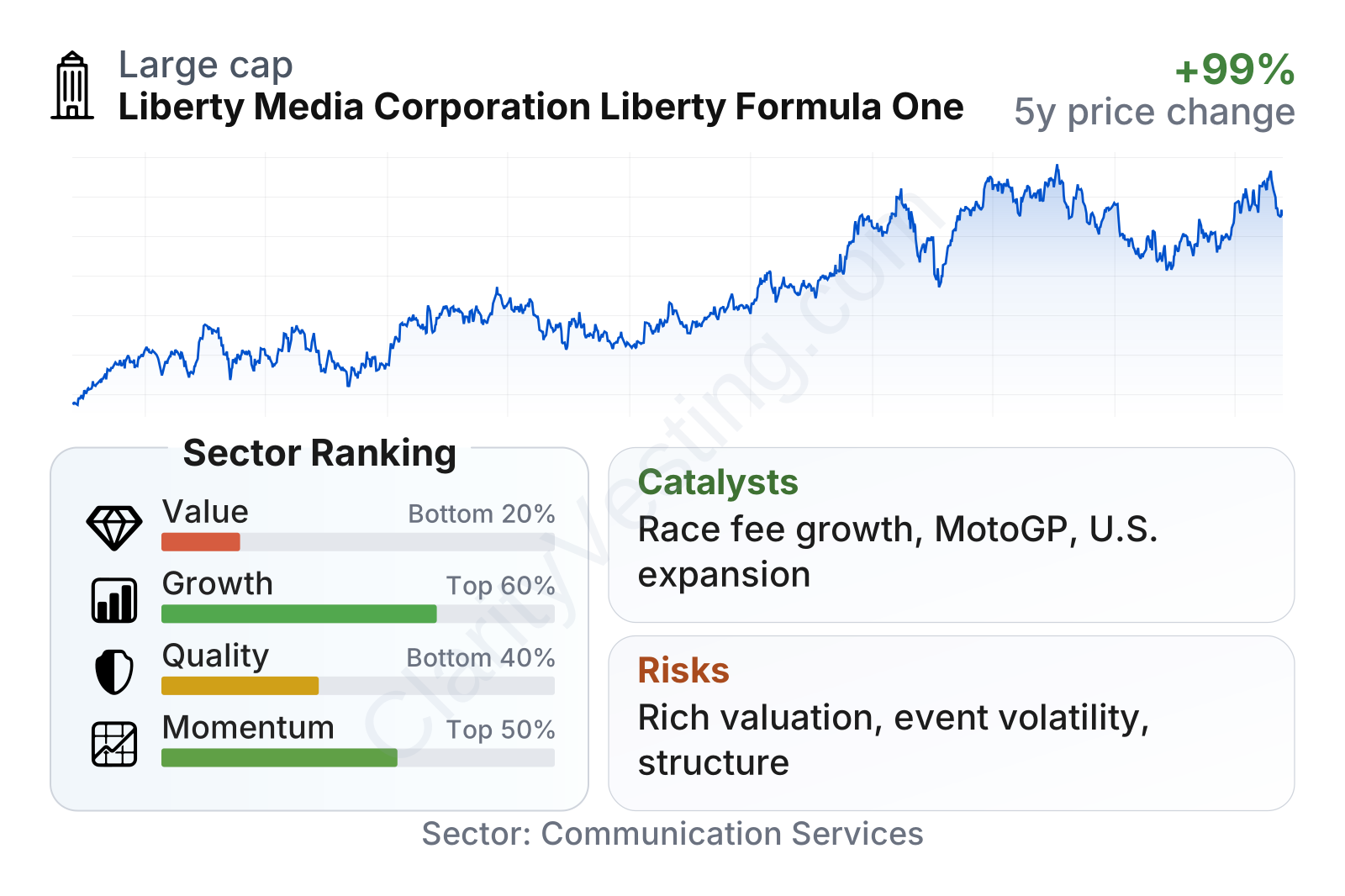
Liberty Formula One sits in the large-cap range, and its recent market behavior has been less volatile than the broader market, as shown by a beta well below 1. The factor profile is mixed. Growth metrics look better than much of the sector, helped by strong multi-year revenue expansion and improving cash generation. Quality is more moderate because returns on invested capital remain relatively low, and value metrics look expensive versus sector norms. Momentum is balanced overall: the longer-term share performance has been solid, while shorter-term trading has been more uneven.
Growth
Formula 1 operates in a favorable part of the entertainment industry: live sports with global media relevance. This is an attractive area because premium sports rights tend to hold value well, especially when they combine international reach, scarce inventory, and strong brand identity. Formula 1 has all three. It has also benefited from a broader shift in how audiences consume sports, with streaming, social media clips, and behind-the-scenes content extending engagement beyond race day.
The company’s strategy for future growth is coherent. Management has been working on three layers at the same time: raising the value of core rights, expanding direct fan monetization, and increasing the economics of marquee events. Core rights growth can come from renewed broadcast deals and race contracts. Direct monetization includes F1 TV, hospitality, and licensing. Event economics include premium destination races such as Las Vegas, Miami, and other high-demand venues that can attract sponsors, visitors, and corporate spending.
Revenue growth has been strong over the multi-year period, although quarterly comparisons are not smooth. That is normal for a sports business where the calendar, race count, and event timing can shift results between quarters. The more important point for a long-term view is that the business has moved from post-pandemic recovery into a meaningfully larger revenue base.
Cash generation has also improved. Free cash flow was relatively modest earlier in the period and then stepped up sharply, reaching well above $700 million on a trailing basis and above $1 billion in the latest metrics snapshot. That suggests the franchise is converting more of its commercial strength into cash, which matters more than accounting earnings alone in a business with periodic event and financing noise.
There are also identifiable catalysts. The 2026 Formula 1 season introduces a new engine regulation cycle, which usually attracts fresh manufacturer attention and can support commercial interest. The company has also been pushing further into the United States, where Formula 1 still has room to deepen audience penetration. In addition, the completed acquisition of MotoGP gives Liberty Media another premium motorsport property, creating the potential for cross-promotion, sponsorship packaging, media know-how transfer, and broader negotiating leverage with commercial partners.
Recent company updates have reinforced the idea that demand for Formula 1 remains healthy. New and renewed sponsorship agreements, long-term race calendar visibility, and continued fan growth in younger demographics all support the argument that this is not a short-lived popularity spike. The open question is not whether the brand is growing, but how much of that growth will translate into steady per-share earnings.
Risks
This article is for informational purposes only and does not constitute financial advice. Some content is AI-generated. See Disclaimer


