Stock Analysis · Fox Corp (FOXA)
Overview
Fox Corporation is a U.S. media company focused mainly on live news and live sports. Its best-known assets include the FOX broadcast network, local television stations, Fox News, Fox Business, FS1, FS2, BTN, Tubi, and a group of digital, streaming, and advertising technology operations. Compared with larger entertainment groups, Fox is more concentrated: it does not operate a major general entertainment streaming platform at the scale of Netflix or Disney+, and it relies more heavily on programming categories that still attract real-time viewing.
That focus matters because live content remains one of the strongest parts of traditional television. News and sports are harder to replace with on-demand viewing, and they still support advertising rates and carriage fees from pay-TV distributors. Tubi also gives Fox a position in free ad-supported streaming, which is one of the faster-growing corners of the video market.
Based on the company’s segment reporting, Fox’s revenue comes mainly from two operating segments.
- Cable Network Programming: about 60% to 65% of revenue. This includes affiliate fees paid by cable and satellite distributors, advertising sales, and other revenue from channels such as Fox News, Fox Business, FS1, FS2, and BTN.
- Television: about 35% to 40% of revenue. This includes the FOX broadcast network, owned-and-operated local TV stations, sports and entertainment programming, and advertising tied to national and local broadcasting.
Within those segments, the underlying revenue mix is broadly driven by:
- Affiliate fees: recurring payments from distributors that carry Fox channels and stations.
- Advertising: national and local ad sales across news, sports, entertainment, and digital properties including Tubi.
- Other revenue: content licensing and miscellaneous media-related revenue streams.
In recent years, the business mix has shown why Fox is often viewed as a cash-generating media company rather than a high-spending streaming turnaround. Revenue has moved upward overall, while operating income has stayed solid despite sports rights inflation and a shifting TV market. The latest annual picture also shows that profits remain meaningful even after programming, production, and distribution costs.
The business remains centered on large audiences that advertisers still value, especially in politically engaged news and premium sports programming.
Key Figures
| Metric | Value | Sector ⓘ |
|---|---|---|
| Date | Sep 12, 2026 | |
| Context | ||
| Sector | Communication Services | |
| Industry | Entertainment | |
| Market Cap ⓘ | $27.72B | |
| Beta ⓘ | 0.56 | |
Value (Cheapness) | ||
| P/E Ratio ⓘ | 16.99 | 18.61 |
| FCF Yield ⓘ | 13.00% | 13.68% |
| EBIT / EV ⓘ | 8.74% | 4.54% |
| PEG ⓘ | 1.17 | |
Growth (Business expansion) | ||
| Revenue Growth ⓘ | 28.10% | 5.40% |
| RPS Growth (5Y CAGR) ⓘ | 12.31% | 4.62% |
| EPS Growth (5Y CAGR) ⓘ | 18.17% | -18.01% |
| Margin Growth (5Y Trend) ⓘ | 0.08% | 1.10% |
| FCF Growth (5Y CAGR) ⓘ | -1.77% | 5.88% |
Quality (Business durability) | ||
| ROIC (Latest) ⓘ | 10.73% | 8.38% |
| ROIC (5Y Median) ⓘ | 10.44% | 8.32% |
| Net Debt / EBIT (Latest) ⓘ | 0.94 | 1.99 |
| Net Debt / EBIT (5Y Median) ⓘ | 1.22 | 2.94 |
| Operating Margin (Latest) ⓘ | 14.90% | 14.89% |
| Operating Margin (5Y Median) ⓘ | 14.90% | 12.96% |
| Debt to Equity (Latest) ⓘ | 56.81% | 59.59% |
| Profit Margin (Latest) ⓘ | 9.84% | 8.77% |
| Free Cash Flow (Latest) ⓘ | $3.60B | |
Momentum (Price trend) | ||
| 3Y Return ⓘ | +112.46% | +46.64% |
| 12M Return (excl. last month) ⓘ | +13.40% | +2.16% |
| 6M Return ⓘ | +14.71% | +5.05% |
| Price vs. 200-Day MA ⓘ | +4.58% | +2.88% |
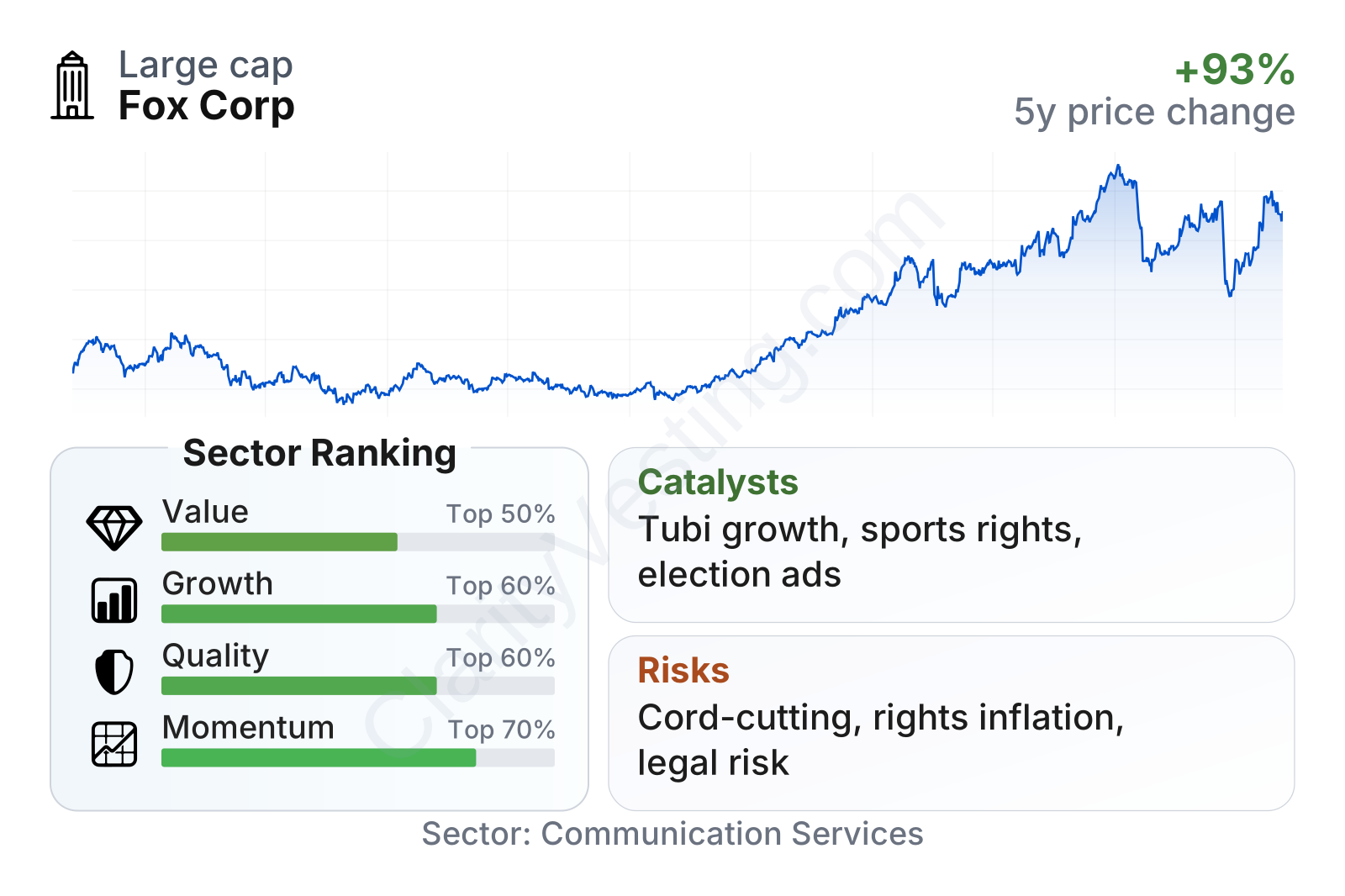
Fox sits in the large-cap range and has shown relatively low share-price volatility, with a beta well below 1. On valuation, it appears close to the middle of its sector on earnings multiples, while its EBIT relative to enterprise value looks stronger than the sector median. Quality is also supported by returns on invested capital above the sector midpoint and leverage that is manageable for a media company. Growth has been mixed beneath the surface: revenue and earnings trends have been favorable over five years, but free cash flow has been less consistent.
The stock chart also shows a strong multi-year rerating from 2024 into late 2025, followed by a pullback in 2026. That pattern suggests the market has already recognized some of Fox’s strengths, but it has also become more sensitive to changing expectations around advertising, sports economics, and political-cycle effects.
Growth
Fox operates in a mature industry, but not every part of that industry is shrinking at the same speed. Traditional linear television faces structural pressure from cord-cutting, yet Fox is concentrated in areas that have held up better than scripted entertainment. Live sports and live news still command large, immediate audiences, which supports both ad demand and distributor payments. That gives Fox a more defensible growth profile than many legacy media businesses.
The company’s strategy for future growth is fairly coherent. Rather than trying to outspend global streaming platforms in subscription entertainment, Fox has focused on categories where it already has brand power and pricing leverage. Fox News remains a major profit engine. Sports programming keeps the broadcast network relevant. Tubi gives the company exposure to free streaming advertising without requiring the kind of content budget that has burdened many subscription-video rivals.
Revenue growth has been uneven quarter to quarter, which is normal for a media group exposed to sports calendars, election advertising, and major broadcasting events. Even so, the broader trend has improved meaningfully from the softer period in 2023 and early 2024. The latest year-over-year growth rate is far ahead of the sector median, although some of that strength may reflect cyclical factors rather than a new long-term baseline.
Cash generation is one of the more important parts of the Fox case. Free cash flow has not moved in a straight line, but the business has still produced large amounts of cash over time. That matters because cash flow supports debt reduction, share repurchases, sports-rights commitments, and flexibility for acquisitions or digital investment. A company in a challenged industry becomes much more resilient when it can still convert revenue into cash at scale.
One notable catalyst is Tubi. Management has continued to emphasize the platform as a growth engine in ad-supported streaming. If Tubi keeps expanding audience reach and monetization, it could gradually offset some pressure from linear television. Another catalyst is the continued value of sports rights, especially when those rights feed both traditional broadcasting and digital distribution. Political advertising can also create periodic upside for Fox’s television station group and news properties during election cycles.
Recent company updates have also highlighted portfolio activity, including the planned acquisition of Caliente TV in Mexico, which points to a broader sports and digital distribution ambition in Spanish-language and international markets. This is not transformative on its own, but it shows Fox is still looking for targeted expansion rather than simply defending legacy assets.
Risks
This article is for informational purposes only and does not constitute financial advice. Some content is AI-generated. See Disclaimer


