Stock Analysis · Flutter Entertainment plc (FLUT)
Overview
Flutter Entertainment is a global online sports betting and iGaming company. It operates a portfolio of well-known brands that serve customers across the United States, the United Kingdom and Ireland, Australia, Italy, and a range of other international markets. Its best-known names include FanDuel, Paddy Power, Betfair, Sky Betting & Gaming, Sportsbet, PokerStars, Sisal, and tombola. In simple terms, Flutter makes money when customers place sports bets, play online casino games, poker, bingo, and other digital gaming products, and use its betting platforms.
The business is organized by geography and brand families rather than by a single global platform. That matters because online gambling is heavily shaped by local regulation, taxes, sports calendars, and brand loyalty. Flutter’s model combines large consumer brands, marketing scale, pricing technology, and product development to gain market share in regulated markets while trying to spread risk across several regions.
Based on recent annual reporting, Flutter’s revenue mix is led by the United States, which has become the company’s largest growth engine. Approximate revenue shares are:
- U.S.: about 37% of revenue. This mainly includes FanDuel’s online sports betting, iGaming, and daily fantasy sports operations.
- UK & Ireland: about 20%. This includes Paddy Power, Betfair, Sky Betting & Gaming, and related online betting and gaming activity.
- Australia: about 16%. This is largely Sportsbet, focused mainly on online sports wagering.
- International: about 16%. This covers a broad set of online gaming and betting operations outside the core English-speaking markets, including PokerStars and other regional brands.
- Southern Europe & Africa: about 11%. This includes Sisal and other operations in markets such as Italy and neighboring regions.
The broader financial picture shows a company that has expanded revenue rapidly over the past several years, but with uneven bottom-line results because of heavy marketing, acquisition-related costs, technology spending, and interest expense. Revenue has nearly doubled since 2021, while operating profitability has improved from losses into modest positive territory more recently. That combination is typical of a company still balancing expansion and scale benefits.
One clear pattern is that revenue and gross profit have risen strongly over time, while selling, administrative, product, and financing costs have also remained high. The important takeaway is that Flutter has already proven it can generate very large gross profit and cash flow, but converting that scale into consistently strong accounting profit is still a work in progress.
Key Figures
| Metric | Value | Sector ⓘ |
|---|---|---|
| Date | Sep 12, 2026 | |
| Context | ||
| Sector | Consumer Cyclical | |
| Industry | Gambling | |
| Market Cap ⓘ | $17.45B | |
| Beta ⓘ | 1.07 | |
Value (Cheapness) | ||
| P/E Ratio ⓘ | N/A | 17.10 |
| FCF Yield ⓘ | 4.36% | 8.53% |
| EBIT / EV ⓘ | -0.29% | 6.46% |
| PEG ⓘ | 0.19 | |
Growth (Business expansion) | ||
| Revenue Growth ⓘ | 3.30% | 5.75% |
| RPS Growth (5Y CAGR) ⓘ | 18.00% | 9.14% |
| EPS Growth (5Y CAGR) ⓘ | N/A | -18.21% |
| Margin Growth (5Y Trend) ⓘ | N/A | -0.23% |
| FCF Growth (5Y CAGR) ⓘ | 53.57% | 4.91% |
Quality (Business durability) | ||
| ROIC (Latest) ⓘ | -1.21% | 12.61% |
| ROIC (5Y Median) ⓘ | 1.95% | 10.72% |
| Net Debt / EBIT (Latest) ⓘ | 22.14 | 2.10 |
| Net Debt / EBIT (5Y Median) ⓘ | N/A | 2.32 |
| Operating Margin (Latest) ⓘ | -0.45% | 9.25% |
| Operating Margin (5Y Median) ⓘ | -0.80% | 9.64% |
| Debt to Equity (Latest) ⓘ | 143.53% | 75.78% |
| Profit Margin (Latest) ⓘ | -4.39% | 5.33% |
| Free Cash Flow (Latest) ⓘ | $761.14M | |
Momentum (Price trend) | ||
| 3Y Return ⓘ | -43.89% | +14.53% |
| 12M Return (excl. last month) ⓘ | -65.99% | +3.08% |
| 6M Return ⓘ | -4.71% | +0.55% |
| Price vs. 200-Day MA ⓘ | -22.54% | -0.54% |
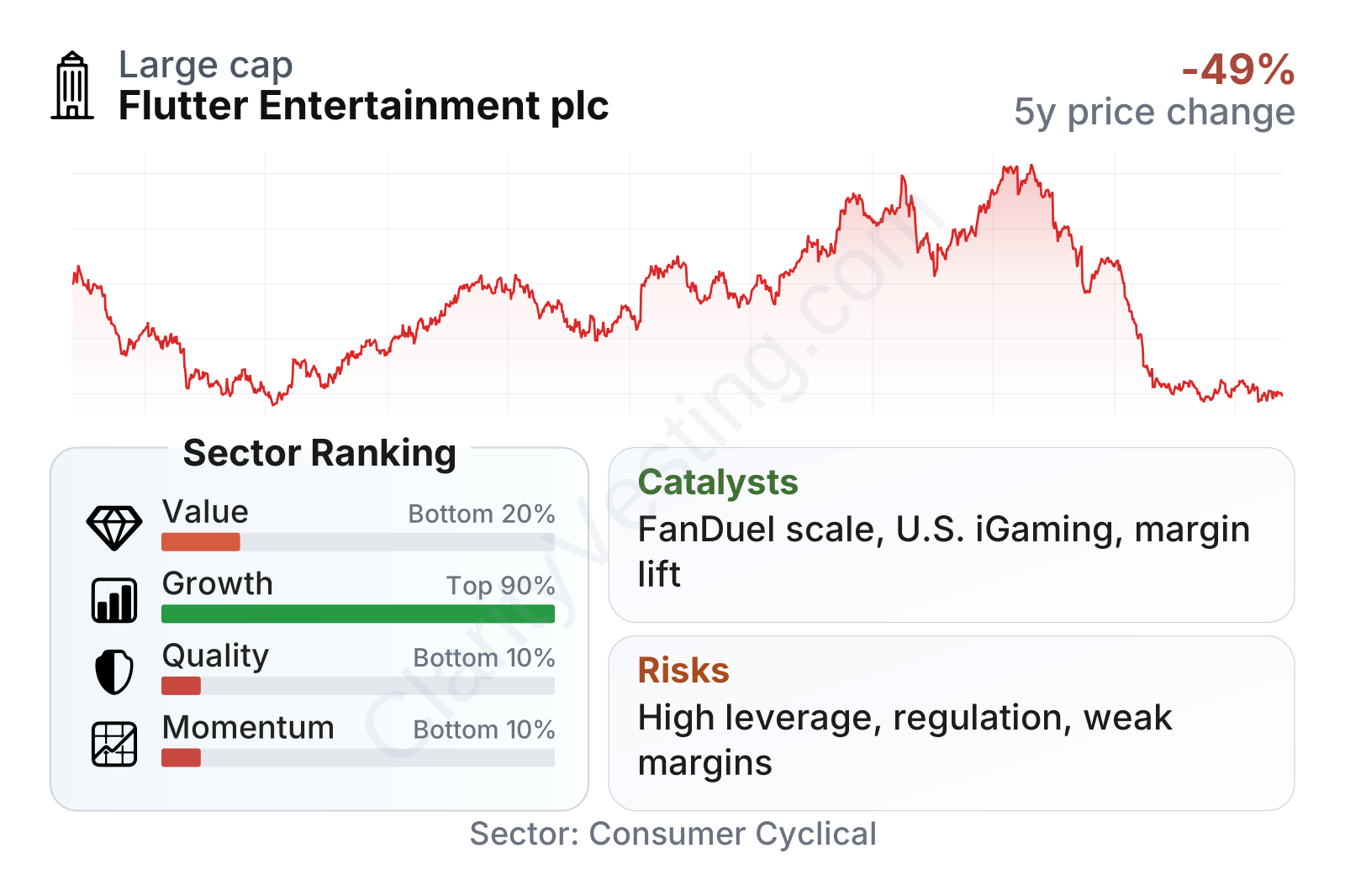
Flutter stands out as a large global operator with strong long-term growth characteristics, but the latest snapshot is mixed. Growth ranks near the top of the sector over a multi-year period, helped by strong revenue-per-share expansion and unusually fast free cash flow growth. By contrast, quality and momentum rank near the bottom: profitability remains weak, returns on invested capital are below sector norms, leverage is elevated, and the stock has gone through a very large drawdown.
This combination usually points to a business the market still views through a transition lens. The company is no longer a small challenger, but it is not yet showing the stable margins and balance sheet profile often associated with more mature consumer platform businesses.
Growth
Flutter operates in a sector with long-term structural growth, especially online sports betting and online casino gaming in regulated markets. The main reason is straightforward: gambling activity continues to shift from physical locations and legacy channels toward mobile apps, live betting, in-play products, and personalized digital experiences. Companies with strong technology, trusted brands, and efficient customer acquisition can benefit as more markets move online and as existing users spend more through richer product ecosystems.
Flutter’s strategy is coherent for that environment. It focuses on leading local brands, product depth, and scale advantages in customer acquisition, odds compilation, risk management, and cross-selling. A sports bettor acquired through FanDuel or another local brand can later be monetized through casino, poker, or other gaming products, which tends to improve lifetime value. The group’s international spread also reduces dependence on any single sports season or regulator.
Recent growth has been solid, although not perfectly smooth. Year-over-year revenue growth accelerated sharply through much of 2024 and 2025, often running in the mid-teens to mid-20% range, before slowing to the low single digits more recently. That slowdown does not erase the broader expansion trend, but it does suggest the comparison base is getting tougher and the market is paying closer attention to execution quality rather than just headline growth.
Cash generation is one of the more encouraging parts of the picture. Free cash flow has remained substantial, even with some recent moderation from prior highs. A trailing level around the high hundreds of millions of dollars indicates the business is not merely growing revenue on paper; it is also converting a meaningful portion of its scale into cash that can support debt service, technology investment, acquisitions, and regulatory commitments.
A major catalyst remains the U.S. market. FanDuel has built one of the strongest positions in online sports betting and iGaming, and the U.S. still has room for further market expansion through new state launches, deeper online casino adoption where legal, and better monetization of an already large customer base. Another catalyst is operating leverage: if Flutter can keep growing revenue faster than overhead, even moderate margin improvement could have an outsized effect on earnings because the company is already operating at very large scale.
Recent company communications have also emphasized disciplined capital allocation, product investment, and continued focus on regulated markets. For a business in gambling, that last point matters: licensed markets are generally more sustainable than gray-market exposure, even if growth can sometimes look slower in the short term.
Risks
This article is for informational purposes only and does not constitute financial advice. Some content is AI-generated. See Disclaimer


