Stock Analysis · F5 Networks Inc (FFIV)
Overview
F5 Networks, usually known as F5, sells software and specialized networking products that help companies run applications securely and reliably. Its tools sit between users and applications, managing traffic, improving performance, and protecting systems from cyberattacks. The company has historically been known for application delivery controllers, but over time it has expanded into security, cloud, and software-based services that work across data centers, private clouds, and public clouds.
That business matters because companies now run applications in many places at once. Instead of relying on one private data center, they often combine on-premises systems with cloud platforms and edge computing. F5 positions itself as a control layer for that complexity: routing traffic, balancing loads, protecting web applications and APIs, and helping large organizations manage hybrid environments.
Based on recent company reporting, revenue is mainly split between software, systems, and services. The mix has been shifting toward software and recurring sources, which generally makes revenue more predictable over time.
- Global Services: approximately 40% to 45% of revenue. This includes maintenance, support, consulting, training, and other service-related contracts tied to F5 products.
- Systems: approximately 30% to 35% of revenue. This is the hardware appliance business, including F5’s purpose-built equipment used in customer environments.
- Software: approximately 25% to 30% of revenue. This includes subscription software, perpetual licenses, SaaS, and security-focused offerings such as application and API protection.
Within software, management has been emphasizing subscription and security products, especially solutions tied to application security and API protection. That shift is important because software tends to carry higher margins and better long-term scalability than hardware-heavy infrastructure sales.
The business flow also shows a favorable pattern: revenue has grown steadily over the last several years, while gross profit has expanded faster than operating costs. Research and development remains meaningful, but operating discipline has improved, helping more of each sales dollar reach operating income and net income.
Key Figures
| Metric | Value | Sector ⓘ |
|---|---|---|
| Date | Sep 12, 2026 | |
| Context | ||
| Sector | Technology | |
| Industry | Software - Infrastructure | |
| Market Cap ⓘ | $23.31B | |
| Beta ⓘ | 1.03 | |
Value (Cheapness) | ||
| P/E Ratio ⓘ | 31.74 | 29.51 |
| FCF Yield ⓘ | 4.16% | 4.25% |
| EBIT / EV ⓘ | 3.99% | 2.85% |
| PEG ⓘ | 1.42 | |
Growth (Business expansion) | ||
| Revenue Growth ⓘ | 10.90% | 15.40% |
| RPS Growth (5Y CAGR) ⓘ | 5.83% | 8.56% |
| EPS Growth (5Y CAGR) ⓘ | 4.89% | -11.88% |
| Margin Growth (5Y Trend) ⓘ | 10.77% | 0.46% |
| FCF Growth (5Y CAGR) ⓘ | 10.20% | 9.80% |
Quality (Business durability) | ||
| ROIC (Latest) ⓘ | 19.67% | 9.44% |
| ROIC (5Y Median) ⓘ | 15.56% | 8.30% |
| Net Debt / EBIT (Latest) ⓘ | -1.60 | 0.54 |
| Net Debt / EBIT (5Y Median) ⓘ | -0.51 | 0.44 |
| Operating Margin (Latest) ⓘ | 25.57% | 9.58% |
| Operating Margin (5Y Median) ⓘ | 19.12% | 8.25% |
| Debt to Equity (Latest) ⓘ | 6.55% | 33.33% |
| Profit Margin (Latest) ⓘ | 21.95% | 7.14% |
| Free Cash Flow (Latest) ⓘ | $969.60M | |
Momentum (Price trend) | ||
| 3Y Return ⓘ | +156.97% | +45.48% |
| 12M Return (excl. last month) ⓘ | +29.55% | +23.48% |
| 6M Return ⓘ | +45.64% | +20.93% |
| Price vs. 200-Day MA ⓘ | +24.51% | +7.43% |
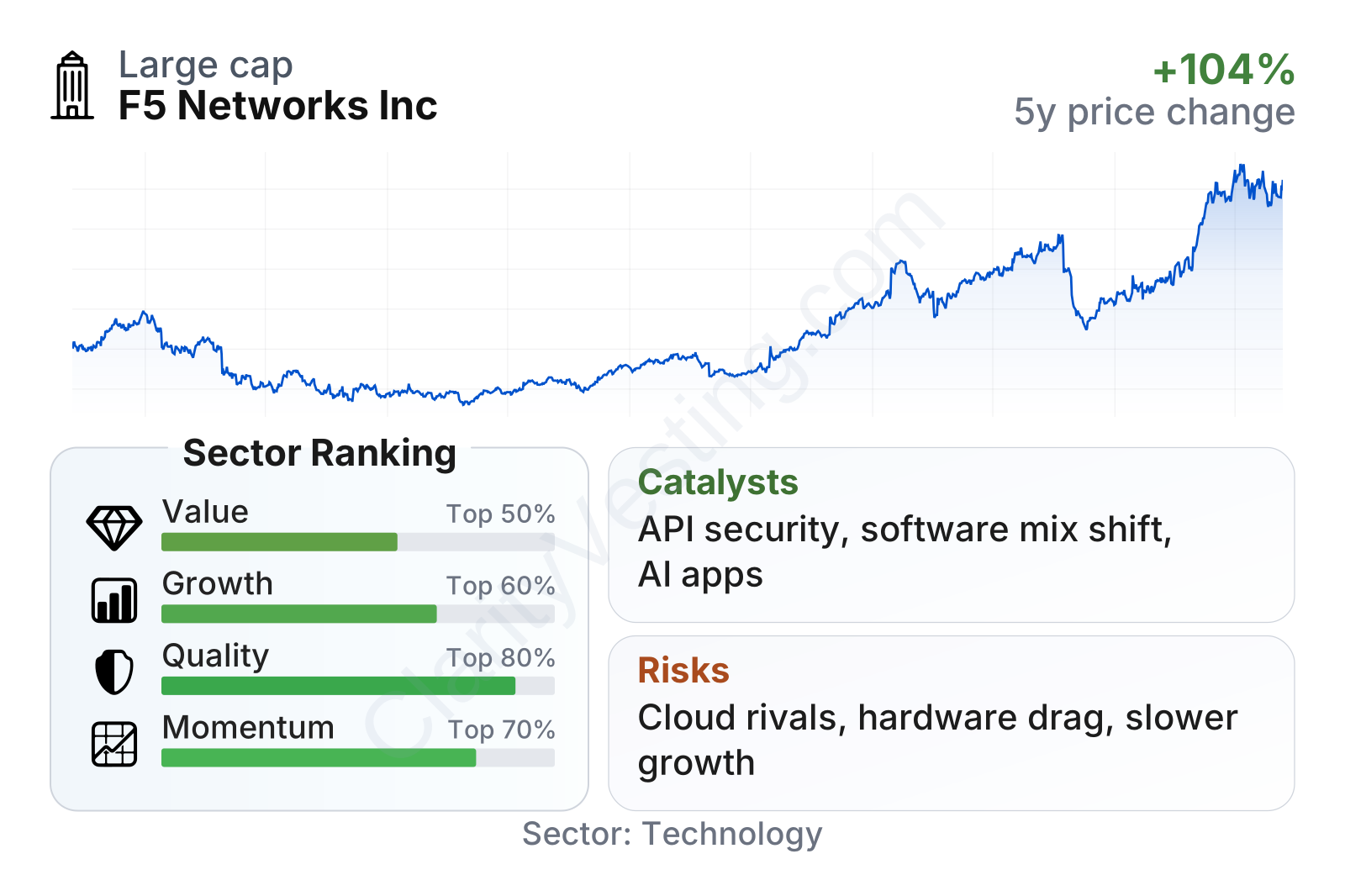
F5 is a large infrastructure software company with a market value in the low-$20 billion range and a beta close to 1, which suggests the stock has moved broadly in line with the market rather than behaving like an extreme high-volatility name. On valuation, it sits around the sector median on earnings, while cash-flow-based measures look somewhat stronger than many peers. Quality is where the company stands out most clearly: returns on invested capital, operating margin, net margin, and balance-sheet strength all rank well above typical sector levels. Growth is positive rather than explosive, but profitability trends have been unusually strong for this part of the technology market. Price performance has also been solid, with multi-year returns and recent momentum ahead of the sector median.
Growth
F5 operates in a market supported by durable long-term demand. Applications are becoming more distributed, cybersecurity requirements are rising, and API traffic is growing quickly as companies connect software systems together. That creates a need for traffic management, application security, and visibility across hybrid environments. F5 is not simply selling a one-time networking box into that trend; it is increasingly aligning itself with the software and security layers that organizations need as their systems become more complex.
The company’s strategy broadly makes sense for future expansion. Management has spent several years moving the business from a more hardware-centered model toward software subscriptions, SaaS, and security solutions. That transition can make reported growth look less dramatic than younger cloud companies, but it can improve earnings quality and recurring revenue. It also helps F5 stay relevant as customers shift workloads away from traditional data centers.
Recent revenue trends point to a business that has moved through a softer patch and returned to healthier growth. Year-over-year growth dipped into negative territory during 2024, then recovered and has recently been running around the low double digits. That is still below the sector median, so F5 is not leading on raw top-line speed, but the rebound matters because it suggests the company’s portfolio shift is translating into renewed demand.
Cash generation is another important growth support. Free cash flow has risen meaningfully over the last several years and is now approaching the $1 billion level on a trailing basis. That gives F5 flexibility to invest in product development, pursue acquisitions, and return capital to shareholders without relying heavily on debt. For a long-term business, that combination of moderate growth and strong cash conversion is often more durable than rapid expansion with weak profitability.
A notable catalyst is the rise of application security and API security. As enterprises deploy more AI-enabled services, connect more applications through APIs, and spread workloads across multiple clouds, the attack surface becomes larger. F5 has been positioning its Distributed Cloud and security offerings to meet that need. Recent company communications have also highlighted continued traction in software and AI-related use cases, which could support mix improvement even if overall enterprise spending remains uneven.
Risks
This article is for informational purposes only and does not constitute financial advice. Some content is AI-generated. See Disclaimer


