Stock Analysis · Extreme Networks Inc (EXTR)
Overview
Extreme Networks is a networking equipment and software company. In simple terms, it helps organizations build and manage the digital infrastructure that connects devices, users, applications, and data. Its products are used in places such as campuses, schools, hospitals, factories, stadiums, hotels, warehouses, and branch offices. The company focuses on enterprise networking rather than consumer devices, with a portfolio that includes wired switching, wireless local area network products, cloud-based network management, security-related tools, and support services.
The business model has gradually shifted toward a mix of hardware plus recurring software and services. That matters because recurring revenue is usually more predictable than one-time equipment sales. Based on the company’s recent filings, revenue is mainly generated from the following categories:
- Product revenue: about 72% to 76% of total revenue. This includes switching hardware, wireless access points, related software sold with products, and other networking equipment.
- Services revenue: about 24% to 28% of total revenue. This includes maintenance, support, subscriptions, cloud management, and professional services tied to the installed base.
Within that mix, management has emphasized subscription-based software and cloud-managed networking as strategic priorities. That is important because enterprise customers increasingly want networks that can be monitored, automated, and secured from centralized software rather than managed box by box.
The business profile also shows a company that still spends heavily on research and development, with annual R&D expense in the low-to-mid teens as a percentage of revenue in recent years. Gross profit has remained solid, but the path from gross profit to net income has been uneven because operating expenses have absorbed a meaningful share of revenue.
The overall revenue base has recovered after a weak period, and gross profit remains sizable relative to sales. The main swing factor has been operating efficiency: spending on product development and selling costs has kept final earnings more volatile than revenue.
Key Figures
| Metric | Value | Sector ⓘ |
|---|---|---|
| Date | Sep 12, 2026 | |
| Context | ||
| Sector | Technology | |
| Industry | Communication Equipment | |
| Market Cap ⓘ | $2.90B | |
| Beta ⓘ | 1.76 | |
Value (Cheapness) | ||
| P/E Ratio ⓘ | 69.38 | 29.51 |
| FCF Yield ⓘ | 2.10% | 4.25% |
| EBIT / EV ⓘ | 2.38% | 2.85% |
| PEG ⓘ | 0.78 | |
Growth (Business expansion) | ||
| Revenue Growth ⓘ | 10.30% | 15.40% |
| RPS Growth (5Y CAGR) ⓘ | 4.56% | 8.56% |
| EPS Growth (5Y CAGR) ⓘ | 4.50% | -11.88% |
| Margin Growth (5Y Trend) ⓘ | -0.75% | 0.46% |
| FCF Growth (5Y CAGR) ⓘ | -4.13% | 9.80% |
Quality (Business durability) | ||
| ROIC (Latest) ⓘ | 19.98% | 9.44% |
| ROIC (5Y Median) ⓘ | 13.98% | 8.30% |
| Net Debt / EBIT (Latest) ⓘ | -0.26 | 0.54 |
| Net Debt / EBIT (5Y Median) ⓘ | 0.05 | 0.44 |
| Operating Margin (Latest) ⓘ | 5.09% | 9.58% |
| Operating Margin (5Y Median) ⓘ | 5.09% | 8.25% |
| Debt to Equity (Latest) ⓘ | 219.63% | 33.33% |
| Profit Margin (Latest) ⓘ | 3.28% | 7.14% |
| Free Cash Flow (Latest) ⓘ | $60.95M | |
Momentum (Price trend) | ||
| 3Y Return ⓘ | -12.32% | +45.48% |
| 12M Return (excl. last month) ⓘ | +17.40% | +23.48% |
| 6M Return ⓘ | +55.68% | +20.93% |
| Price vs. 200-Day MA ⓘ | +5.43% | +7.43% |
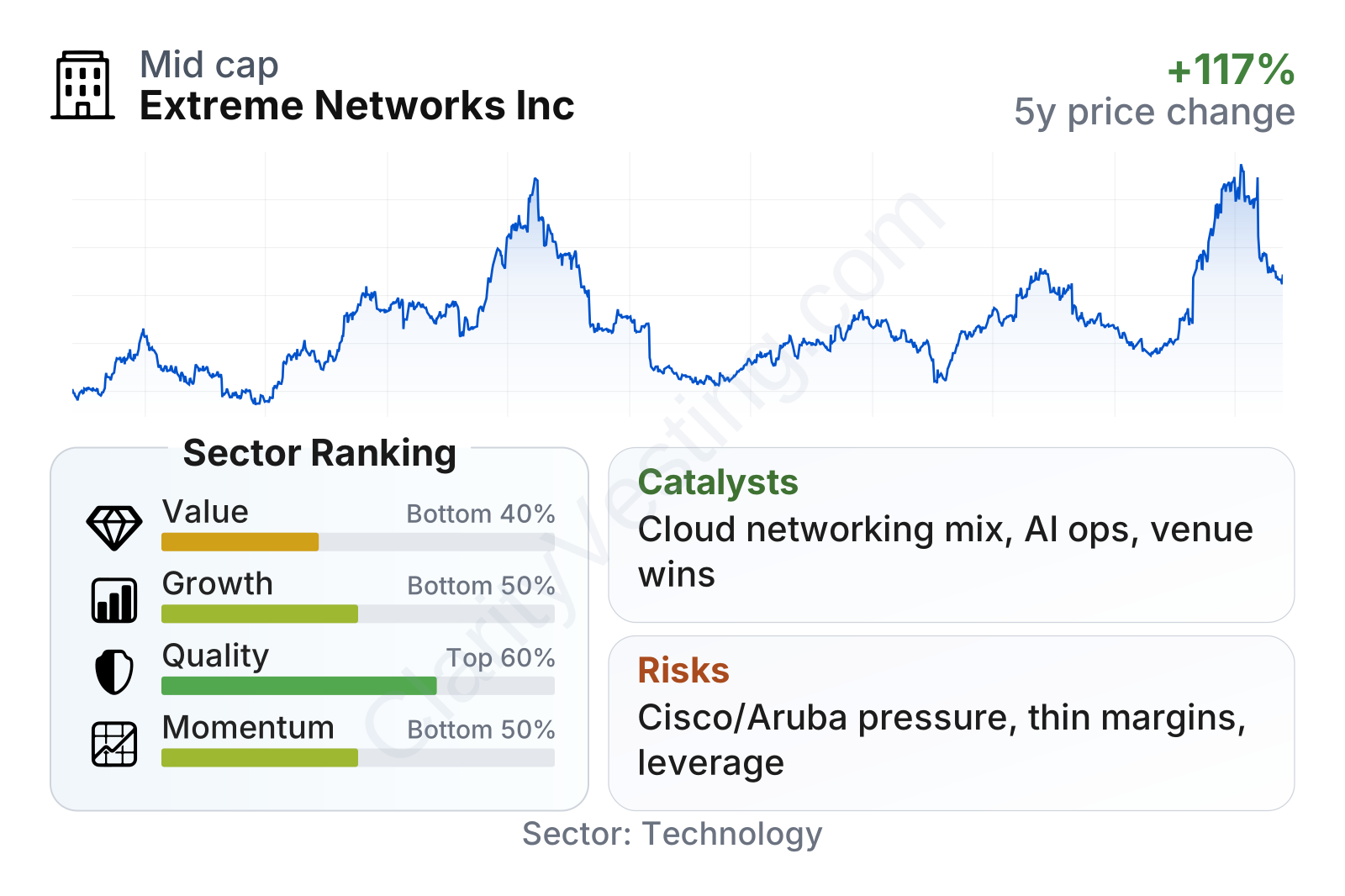
Extreme Networks is a mid-sized technology company with a share price history that has been notably volatile. The latest factor snapshot points to a mixed profile. Quality is decent, supported by returns on invested capital above the sector median and a net cash position relative to EBIT, but value looks weaker because the earnings multiple is well above the sector median while cash flow yield is lower. Growth metrics are also mixed: recent revenue has improved, yet the longer five-year trend remains softer than the broader sector. Momentum has turned much stronger in the shorter term, reflecting a sharp rebound in the stock after a difficult multi-year stretch.
Growth
Enterprise networking is still a relevant long-term market. Organizations continue to upgrade Wi-Fi standards, expand cloud-connected sites, add more devices at the edge, and look for better automation and visibility across their networks. These needs are supported by structural trends such as hybrid work, digital operations, connected campuses, industrial networking, and rising expectations for secure and reliable connectivity. Extreme Networks operates in that broader upgrade cycle, so the sector itself remains attractive enough to support long-term demand.
The company’s strategy also makes sense in principle. Instead of relying only on hardware refreshes, it is trying to deepen customer relationships through cloud management, subscriptions, and software-led features. That approach can improve revenue visibility and create a larger lifetime value per customer. It also fits how many IT buyers now prefer to operate networks: with centralized dashboards, automation, analytics, and ongoing service contracts.
Recent growth has clearly improved from the downturn seen in 2024. Revenue growth turned negative for several quarters and then recovered strongly, with the latest year-over-year readings back in positive double digits. Even so, the pace has recently moderated toward the low-teens, which suggests the rebound phase is becoming more normal rather than explosive. That is healthier than a temporary spike, but it also means the next step depends on sustained execution rather than easy comparisons.
Cash generation tells a similar story. Free cash flow fell sharply from earlier highs, then started to recover. The recent level is positive and materially better than the weakest period, but still below the stronger years. For a long-term business case, this matters because durable free cash flow is what ultimately supports debt reduction, product investment, and financial flexibility.
One notable catalyst is the company’s focus on AI-related networking capabilities, including automation and analytics inside the platform rather than AI as a separate product theme. Another is its presence in large venues, education, healthcare, and distributed enterprise locations, where wireless upgrades and cloud-managed networking can create repeat demand. Recent company updates have also pointed to improving sales execution and a healthier demand environment after prior inventory and spending disruptions. If that continues, the company could benefit from both recovery and mix improvement at the same time.
Risks
This article is for informational purposes only and does not constitute financial advice. Some content is AI-generated. See Disclaimer


