Stock Analysis · Etsy Inc (ETSY)
Overview
Etsy operates online marketplaces focused on items that are hard to standardize and often hard to find on large mass-market platforms. Its best-known marketplace, Etsy.com, connects buyers with independent sellers offering handmade goods, vintage products, craft supplies, personalized items, and gifts. The group also owns Reverb, which focuses on musical instruments, and Depop, a fashion resale marketplace aimed at younger users.
The business model is marketplace-based rather than inventory-based. Etsy generally does not manufacture products or hold most of the goods sold on its platforms. Instead, it earns fees and services revenue when transactions happen and when sellers use extra tools such as advertising, payments, and shipping-related services. That structure helps keep gross margins high and supports strong cash generation when demand is stable.
Based on recent annual filings, revenue is heavily concentrated in the core Etsy marketplace, with smaller contributions from Depop and Reverb. A simple way to think about the mix is:
- Etsy marketplace: approximately 85% to 90% of revenue. This includes transaction fees, listing fees, payments-related revenue, on-site ads, and seller services tied to the main Etsy platform.
- Depop: approximately 7% to 10% of revenue. Depop is a mobile-first resale marketplace focused mainly on secondhand fashion.
- Reverb: approximately 3% to 5% of revenue. Reverb serves musicians and gear enthusiasts buying and selling instruments and equipment.
Within the group, Etsy’s own marketplace remains the key economic engine by a wide margin. At a higher level, the company reports revenue mainly through two streams: marketplace revenue, which comes from transaction-related fees, and services revenue, which includes seller tools such as advertising and payments. Services revenue has become increasingly important because it raises monetization per seller even when merchandise volume grows slowly.
Etsy’s economics still look attractive at the top of the income statement. Revenue has continued to edge higher over the last several years, while cost of revenue has remained relatively controlled, preserving a very strong gross profit base. The bigger swing factor has been operating expenses and the pace of reinvestment, not the underlying marketplace take model.
The long-term pattern shows a business with resilient gross profit, but more variable operating income and net income. That matters because Etsy’s core marketplace model remains structurally profitable, while reported earnings can move around more sharply depending on spending, acquisition-related effects, and non-cash charges.
Key Figures
| Metric | Value | Sector ⓘ |
|---|---|---|
| Date | Sep 12, 2026 | |
| Context | ||
| Sector | Consumer Cyclical | |
| Industry | Internet Retail | |
| Market Cap ⓘ | $6.57B | |
| Beta ⓘ | 1.81 | |
Value (Cheapness) | ||
| P/E Ratio ⓘ | 22.66 | 17.10 |
| FCF Yield ⓘ | 9.39% | 8.53% |
| EBIT / EV ⓘ | 5.65% | 6.46% |
| PEG ⓘ | 0.78 | |
Growth (Business expansion) | ||
| Revenue Growth ⓘ | 6.20% | 5.75% |
| RPS Growth (5Y CAGR) ⓘ | 10.11% | 9.14% |
| EPS Growth (5Y CAGR) ⓘ | -18.78% | -18.21% |
| Margin Growth (5Y Trend) ⓘ | -11.48% | -0.23% |
| FCF Growth (5Y CAGR) ⓘ | 0.69% | 4.91% |
Quality (Business durability) | ||
| ROIC (Latest) ⓘ | 21.88% | 12.61% |
| ROIC (5Y Median) ⓘ | 16.04% | 10.72% |
| Net Debt / EBIT (Latest) ⓘ | 4.54 | 2.10 |
| Net Debt / EBIT (5Y Median) ⓘ | 4.26 | 2.32 |
| Operating Margin (Latest) ⓘ | 16.77% | 9.25% |
| Operating Margin (5Y Median) ⓘ | 11.17% | 9.64% |
| Debt to Equity (Latest) ⓘ | -220.48% | 75.78% |
| Profit Margin (Latest) ⓘ | 7.11% | 5.33% |
| Free Cash Flow (Latest) ⓘ | $616.67M | |
Momentum (Price trend) | ||
| 3Y Return ⓘ | +12.27% | +14.53% |
| 12M Return (excl. last month) ⓘ | +19.76% | +3.08% |
| 6M Return ⓘ | +39.95% | +0.55% |
| Price vs. 200-Day MA ⓘ | +13.14% | -0.54% |
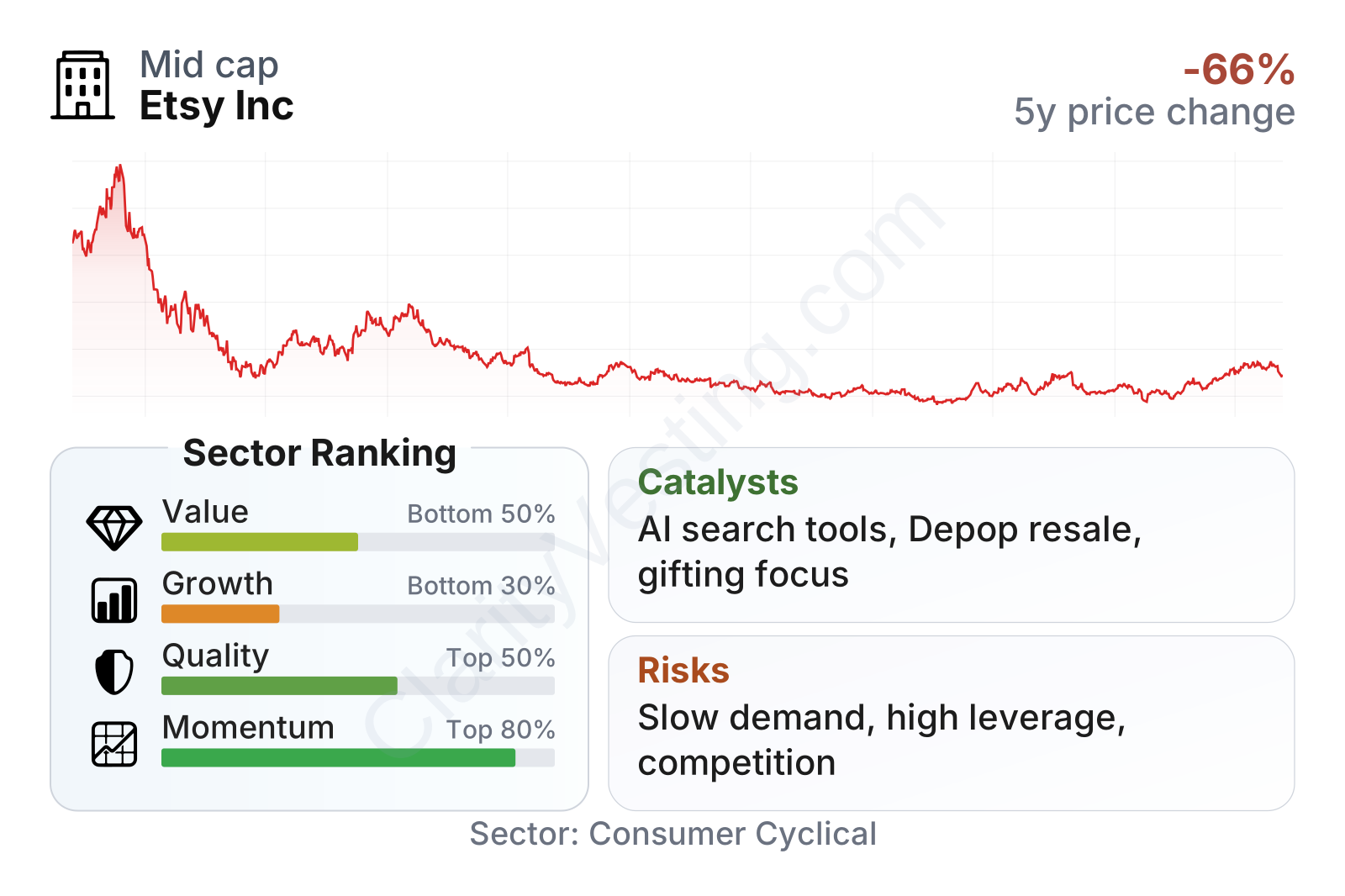
Etsy is now a mid-sized internet retail company with a stock that has been volatile over the last several years. Operationally, the business shows a mixed profile: profitability and returns on invested capital are stronger than many sector peers, free cash flow remains substantial, and recent price momentum has improved sharply. At the same time, growth ranks in the weaker part of the sector, and leverage looks elevated when measured against earnings. The valuation picture is also mixed, with a price-to-earnings ratio above the sector median but a free-cash-flow yield that appears more supportive.
Growth
Etsy operates in a part of e-commerce that still has long-term relevance: specialized online marketplaces, resale, personalization, and non-commodity goods. Those categories are different from everyday low-cost retail because buyers often care more about uniqueness, creativity, and emotional value than about the lowest price. That gives Etsy a clearer identity than generalist e-commerce platforms, and it aligns with broader consumer trends such as gifting, customization, secondhand shopping, and support for small businesses.
The challenge is that this is not a fast-growth phase for the company. Revenue growth has slowed materially from the surge period seen earlier in the decade. More recently, annual growth has moved in the low single digits and even dipped slightly negative in the latest quarterly reading. Over a five-year period, revenue per share growth is still respectable at roughly 10% annually, but current momentum in the underlying business is much more modest than the headline growth rates investors saw during the pandemic years.
This pattern suggests Etsy is now growing from monetization improvements, product upgrades, and gradual ecosystem expansion more than from explosive jumps in buyer activity. Management has been emphasizing search quality, personalization, mobile engagement, seller tools, advertising products, and international expansion. That strategy makes sense because Etsy’s marketplaces work best when they become easier to discover, easier to trust, and more useful for repeat purchases rather than only occasional gifting.
Another important growth support is cash generation. Even with uneven earnings, Etsy has remained a strong free-cash-flow business. That gives it room to invest in product development, marketing, and platform improvements without relying heavily on new capital. For a marketplace company, that flexibility is valuable because product and trust features can take time to translate into stronger merchandise volume.
Free cash flow has stayed in a healthy range, which reinforces the idea that Etsy’s model remains economically durable even during slower demand periods. That does not automatically mean rapid expansion is returning, but it does give the company options.
A potentially meaningful catalyst is the continued normalization of resale and circular fashion, which supports Depop, along with Etsy’s push to make gifting and personalized discovery easier on its core platform. If management can improve conversion and purchase frequency without sacrificing marketplace quality, even moderate gross merchandise sales stabilization could have an outsized effect on profit because the platform already operates with healthy margins.
Recent company communications have also highlighted efforts around artificial intelligence and product discovery tools. For Etsy, AI is less about building a frontier technology business and more about making search, matching, recommendations, and seller productivity more effective. If these features improve buyer conversion and seller success, they could become a practical growth lever.
Risks
This article is for informational purposes only and does not constitute financial advice. Some content is AI-generated. See Disclaimer