Stock Analysis · Electronic Arts Inc (EA)
Overview
Electronic Arts is one of the largest video game publishers in the world. The company develops, markets, publishes, and supports games, live services, and related content across console, PC, and mobile. Its best-known properties include EA SPORTS FC, Madden NFL, Apex Legends, The Sims, Battlefield, and mobile racing and sports titles. For long-term analysis, the important point is that EA is no longer just a seller of one-time game copies. A large part of the business now comes from ongoing player spending inside games and from annual sports franchises that refresh every year.
EA reports revenue mainly through two broad categories: live services and other, and full game sales. It also provides geographic and platform detail in its filings. Based on the latest annual filing for fiscal 2026, the business mix is heavily tilted toward recurring digital activity.
- Live services and other: about 73% of net bookings. This includes in-game purchases, extra content, subscriptions, advertising, and mobile live operations. Ultimate Team modes in sports games are a major contributor.
- Full game sales: about 27% of net bookings. This includes sales of complete games, whether downloaded digitally or sold through retail channels.
- Digital distribution: about 80%+ of net bookings. Digital downloads and in-game monetization dominate, which usually supports higher gross margins than physical sales.
- Packaged goods: about 10%-20% of net bookings. Physical game discs and boxed products are now a much smaller part of the business.
- By platform, consoles remain the largest contributor, followed by PC and mobile, with sports franchises and online ecosystems driving much of the spending.
That mix matters because recurring digital revenue tends to be more predictable than hit-driven boxed game launches. Over the last several years, EA has also kept cost of revenue relatively contained while gross profit has remained very high, showing the economic advantage of digital content at scale. At the same time, research and development spending has continued to rise, underlining that this is a business that must keep investing to maintain player engagement and release quality.
EA’s revenue base has been stable to slightly growing over time, while gross profit has stayed strong. The more notable shift recently has been higher development spending, which can support future releases but also puts pressure on operating income if new titles do not perform well enough.
Key Figures
| Metric | Value | Sector ⓘ |
|---|---|---|
| Date | Sep 12, 2026 | |
| Context | ||
| Sector | Communication Services | |
| Industry | Electronic Gaming & Multimedia | |
| Market Cap ⓘ | $52.92B | |
| Beta ⓘ | 0.64 | |
Value (Cheapness) | ||
| P/E Ratio ⓘ | 49.00 | 18.61 |
| FCF Yield ⓘ | 3.89% | 13.68% |
| EBIT / EV ⓘ | 2.75% | 4.54% |
| PEG ⓘ | 1.30 | |
Growth (Business expansion) | ||
| Revenue Growth ⓘ | 18.90% | 5.40% |
| RPS Growth (5Y CAGR) ⓘ | 5.05% | 4.62% |
| EPS Growth (5Y CAGR) ⓘ | 2.97% | -18.01% |
| Margin Growth (5Y Trend) ⓘ | -0.62% | 1.10% |
| FCF Growth (5Y CAGR) ⓘ | 7.94% | 5.88% |
Quality (Business durability) | ||
| ROIC (Latest) ⓘ | 13.14% | 8.38% |
| ROIC (5Y Median) ⓘ | 10.74% | 8.32% |
| Net Debt / EBIT (Latest) ⓘ | -0.56 | 1.99 |
| Net Debt / EBIT (5Y Median) ⓘ | -0.58 | 2.94 |
| Operating Margin (Latest) ⓘ | 18.24% | 14.89% |
| Operating Margin (5Y Median) ⓘ | 18.64% | 12.96% |
| Debt to Equity (Latest) ⓘ | 20.99% | 59.59% |
| Profit Margin (Latest) ⓘ | 13.80% | 8.77% |
| Free Cash Flow (Latest) ⓘ | $2.06B | |
Momentum (Price trend) | ||
| 3Y Return ⓘ | +74.17% | +46.64% |
| 12M Return (excl. last month) ⓘ | +39.37% | +2.16% |
| 6M Return ⓘ | +5.05% | +5.05% |
| Price vs. 200-Day MA ⓘ | +3.41% | +2.88% |
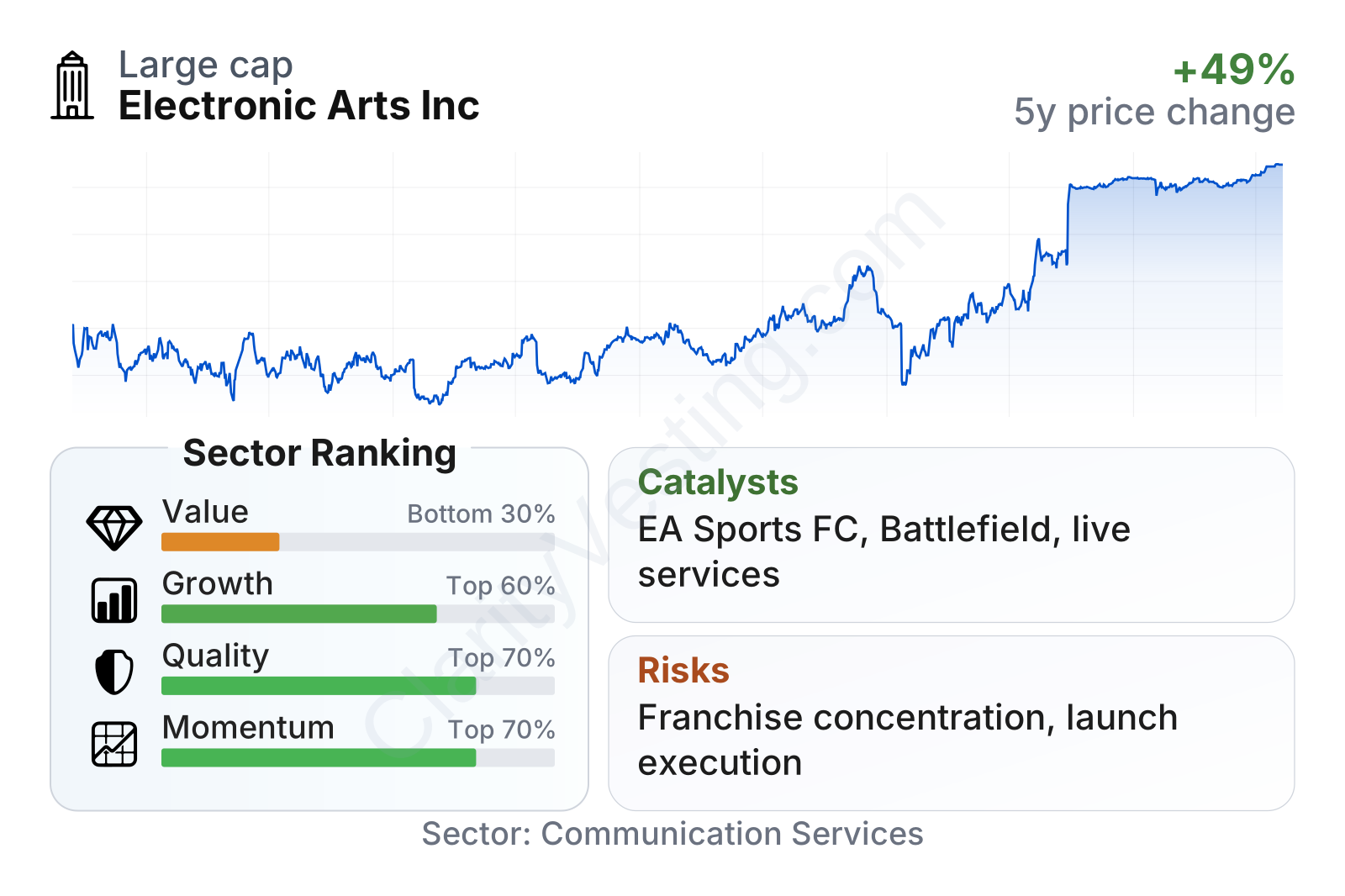
EA is a large-cap company with lower share-price volatility than many media and gaming names, as reflected by a beta well below 1. On profitability and balance-sheet strength, the company stands above much of its sector: operating margin is around 18%, profit margin is around 14%, return on invested capital is in the low teens, and net debt remains below zero on an EBIT basis, pointing to a net cash position. Growth is more mixed but currently favorable, with recent year-over-year revenue expansion clearly above the sector median and free cash flow still comfortably above $2 billion on a trailing basis. The weaker area is valuation, where EA trades at a clear premium to the sector on earnings and cash flow measures.
Growth
The gaming industry remains a structurally attractive market for long-term growth, supported by digital distribution, ongoing in-game spending, mobile gaming, and large global player communities. Within that market, EA is positioned in one of the more resilient segments: sports and live-service gaming. Annual sports franchises tend to renew player demand each year, while online modes create repeat spending instead of relying only on launch-day sales.
EA’s strategy also makes sense for future growth because it is built around owned intellectual property, licensed sports brands, and long-life online ecosystems. Franchises such as EA SPORTS FC and Madden benefit from player familiarity, competitive online modes, and regular content updates. Apex Legends and The Sims add diversification outside annual sports cycles. This setup can produce steadier cash generation than a publisher that depends mainly on occasional blockbuster releases.
Recent revenue growth has been uneven from quarter to quarter, which is normal in gaming because release calendars and live-service trends can swing results. Even so, the latest pace has improved meaningfully, with year-over-year growth moving back into a strong double-digit range. That suggests EA has regained momentum after a softer stretch in fiscal 2024 and parts of fiscal 2025.
Cash generation remains one of EA’s most important strengths. Free cash flow has moved around over the years, but the overall direction has been positive, reaching a little over $2.3 billion at the latest fiscal year-end and staying above $2.0 billion on a trailing basis. For a publisher with large development budgets, that level of cash creation gives flexibility for dividends, share repurchases, acquisitions, and continued game investment.
A key catalyst is the continued buildout of the EA SPORTS ecosystem, especially after the transition from FIFA branding to EA SPORTS FC. The brand appears to have held up commercially, which reduced a major execution concern. Another growth driver is EA’s focus on deeper engagement rather than only unit sales: more seasons, updates, competitive modes, and add-on content can extend the life of each franchise. If upcoming Battlefield releases reconnect with players, that could become another meaningful revenue leg because Battlefield remains one of EA’s most recognizable brands.
In recent company updates during 2026, management has continued to emphasize a pipeline centered on owned franchises, sports leadership, and live services. That is significant because it points to a strategy of concentrating capital on brands with existing audiences instead of chasing entirely new, unproven concepts.
Risks
This article is for informational purposes only and does not constitute financial advice. Some content is AI-generated. See Disclaimer


