Stock Analysis · Duolingo Inc (DUOL)
Overview
Duolingo is a consumer education software company best known for its language-learning app, but its business now extends beyond languages into math, music, literacy, and English proficiency testing. The core idea is simple: offer a free, highly engaging product to build a very large user base, then convert part of that audience into paid subscriptions while also generating advertising and test-related revenue. The company’s product design relies heavily on short lessons, game-like features, streaks, and personalization, which help keep users active over time.
Its largest revenue source is subscriptions sold through Duolingo’s paid tiers, including premium features such as an ad-free experience and added learning tools. Based on recent company filings, subscriptions account for the clear majority of revenue, while smaller contributions come from advertising and the Duolingo English Test, plus a limited amount from in-app purchases and other items.
- Subscriptions: approximately 75% to 80% of revenue. This includes recurring payments for premium plans such as Super Duolingo and higher-tier offerings with additional features.
- Advertising: approximately 10% to 15% of revenue. This mainly comes from ads shown to users on the free version of the app.
- Duolingo English Test and other revenue: approximately 10% to 15% of revenue. This includes fees from the English proficiency test, which is used by students and institutions, as well as smaller app-related purchases.
What stands out in the business model is that Duolingo has moved from being a fast-growing app with losses to a platform producing strong gross profit, positive operating income, and meaningful cash generation. Revenue has expanded rapidly over the past several years, while operating costs have grown more slowly than sales, showing improving scale.
The company’s expense mix also says something important about its priorities: product development remains one of the biggest spending areas, reflecting continued investment in content, engineering, and artificial intelligence capabilities rather than a pure harvesting phase.
Over the past few years, revenue has risen from roughly a quarter of a billion dollars to more than $1 billion annually, while net income and cash flow improved sharply. The broad pattern is a software platform gaining operating leverage: high gross profit, disciplined overhead, and rising monetization from a very large free user base.
Key Figures
| Metric | Value | Sector ⓘ |
|---|---|---|
| Date | Sep 12, 2026 | |
| Context | ||
| Sector | Technology | |
| Industry | Software - Application | |
| Market Cap ⓘ | $6.76B | |
| Beta ⓘ | 0.89 | |
Value (Cheapness) | ||
| P/E Ratio ⓘ | 16.44 | 29.51 |
| FCF Yield ⓘ | 5.99% | 4.25% |
| EBIT / EV ⓘ | 3.61% | 2.85% |
| PEG ⓘ | N/A | |
Growth (Business expansion) | ||
| Revenue Growth ⓘ | 18.30% | 15.40% |
| RPS Growth (5Y CAGR) ⓘ | 34.56% | 8.56% |
| EPS Growth (5Y CAGR) ⓘ | N/A | -11.88% |
| Margin Growth (5Y Trend) ⓘ | 17.56% | 0.46% |
| FCF Growth (5Y CAGR) ⓘ | 185.26% | 9.80% |
Quality (Business durability) | ||
| ROIC (Latest) ⓘ | 29.52% | 9.44% |
| ROIC (5Y Median) ⓘ | 2.68% | 8.30% |
| Net Debt / EBIT (Latest) ⓘ | -5.74 | 0.54 |
| Net Debt / EBIT (5Y Median) ⓘ | -23.88 | 0.44 |
| Operating Margin (Latest) ⓘ | 16.67% | 9.58% |
| Operating Margin (5Y Median) ⓘ | 3.35% | 8.25% |
| Debt to Equity (Latest) ⓘ | 6.11% | 33.33% |
| Profit Margin (Latest) ⓘ | 35.88% | 7.14% |
| Free Cash Flow (Latest) ⓘ | $405.20M | |
Momentum (Price trend) | ||
| 3Y Return ⓘ | -10.28% | +45.48% |
| 12M Return (excl. last month) ⓘ | -58.31% | +23.48% |
| 6M Return ⓘ | +51.37% | +20.93% |
| Price vs. 200-Day MA ⓘ | +9.86% | +7.43% |
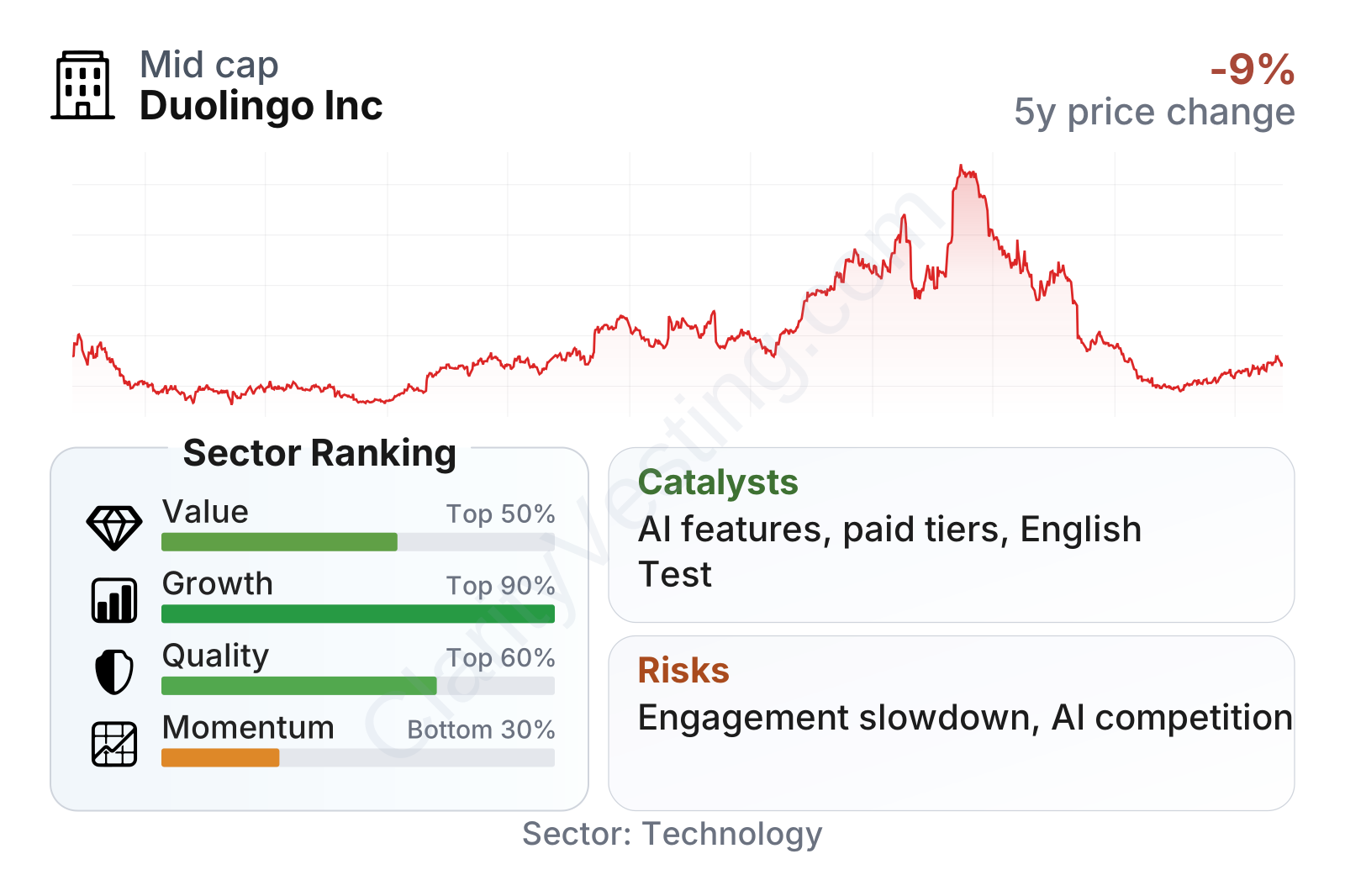
Duolingo currently sits in a mixed but interesting position. Growth remains among the stronger profiles in its sector, with revenue still expanding at a high-teen rate and five-year revenue-per-share growth far ahead of the typical software peer. Quality is also solid: return on invested capital is strong, operating margin is above the sector median, and the balance sheet carries very little debt. On valuation metrics, the stock appears less demanding than many software names, helped by a sharp rise in profitability and free cash flow. The weak point is market momentum, as the share price has fallen sharply from prior highs and still trails much of the sector over the last year and over three years.
Growth
Duolingo operates in digital education, a category supported by long-term trends that are easy to understand: more learning is moving to mobile devices, global demand for English and other language skills remains high, and consumers are increasingly willing to pay for subscription-based learning tools that show clear progress. The company’s global reach is especially important because language learning is not limited to one geography or age group. That gives Duolingo a very large potential audience compared with many niche education platforms.
Its strategy for future growth is coherent. The company first attracts users with free access, then improves monetization through paid plans, broader subject offerings, and more personalized learning. That approach can work well because a large user funnel allows Duolingo to test features at scale and identify what increases retention and conversion. The addition of math, music, and literacy also broadens the addressable market beyond pure language learning, potentially increasing the value of each user relationship over time.
Artificial intelligence is a major catalyst. Management has increasingly positioned AI not just as a marketing tool, but as a way to create content faster, personalize lessons, and support premium experiences. If this works as intended, it can improve user outcomes while also raising monetization and reducing content production bottlenecks. For a platform with many courses and millions of learners, even modest improvements in engagement can have a large financial effect.
Growth has cooled from the very high rates seen earlier in the company’s public life, but the bigger point is that expansion remains strong even at a much larger revenue base. That is usually a healthier sign than headline hypergrowth alone. Five-year compounding has been exceptionally high, and recent year-over-year growth still compares favorably with the sector median.
Cash generation has become one of the strongest parts of the thesis. Free cash flow has climbed dramatically from modest levels a few years ago to hundreds of millions of dollars on a trailing basis. That matters because it shows the business is no longer relying on growth without financial discipline. The model is increasingly producing cash that can support product development, infrastructure, and future expansion without balance-sheet strain.
A recent opportunity to watch is the continued push into more advanced paid offerings and AI-enhanced products. Another is the Duolingo English Test, which gives the company exposure to a different but related market tied to education access and admissions. While smaller than subscriptions, it broadens the platform and creates another way to monetize trust in the brand.
Risks
This article is for informational purposes only and does not constitute financial advice. Some content is AI-generated. See Disclaimer


