Stock Analysis · Dicks Sporting Goods Inc (DKS)
Overview
DICK’S Sporting Goods is a U.S. sporting goods retailer that sells athletic footwear, apparel, team sports equipment, golf products, outdoor gear, fitness items, and hunting-related products where permitted. The company operates through a mix of large-format DICK’S Sporting Goods stores, specialty concepts such as Golf Galaxy, and a growing digital business. It also owns private brands and offers services such as equipment support, lessons, and in-store experiences designed to make stores more than simple product distribution points.
Its revenue is still primarily generated by retail sales of merchandise, with footwear and apparel now playing a larger role than many casual observers may expect. Based on company disclosures, industry commentary from management, and category descriptions in recent filings, the business can be summarized approximately as follows:
- Footwear: about 28% to 32% of sales. This includes athletic shoes, cleats, casual sport footwear, and specialty performance products.
- Apparel: about 24% to 28% of sales. This covers activewear, licensed clothing, outerwear, and related sports apparel.
- Hardlines and equipment: about 40% to 45% of sales. This broad group includes team sports gear, golf, outdoor products, fitness, fan merchandise, and other sporting equipment.
- Services, licenses, and other: likely a low-single-digit share of sales. This includes items such as lessons, repairs, and smaller ancillary activities, but the company does not break these out in detail as a major separate line.
DICK’S is essentially a scale retailer in a fragmented market, but it has increasingly tried to differentiate itself through premium store formats, omnichannel fulfillment, and strong relationships with major brands such as Nike, Adidas, Hoka, On, and others. That mix matters because the sporting goods category is not just about selling products cheaply; it also depends on assortment, inventory execution, store experience, and brand access.
Over the last five fiscal years, revenue has expanded materially, but the path from sales to earnings has become less favorable. Sales rose from roughly $12.3 billion to more than $17.2 billion by fiscal 2025, while gross profit also increased. The weaker point is operating cost growth, especially selling and administrative expenses, which absorbed much of the gain and pushed net income below earlier peak levels despite the larger revenue base.
Key Figures
| Metric | Value | Sector ⓘ |
|---|---|---|
| Date | Sep 12, 2026 | |
| Context | ||
| Sector | Consumer Cyclical | |
| Industry | Specialty Retail | |
| Market Cap ⓘ | $12.01B | |
| Beta ⓘ | 1.14 | |
Value (Cheapness) | ||
| P/E Ratio ⓘ | 14.92 | 17.10 |
| FCF Yield ⓘ | 2.67% | 8.53% |
| EBIT / EV ⓘ | N/A | 6.46% |
| PEG ⓘ | 0.97 | |
Growth (Business expansion) | ||
| Revenue Growth ⓘ | 53.20% | 5.75% |
| RPS Growth (5Y CAGR) ⓘ | 15.86% | 9.14% |
| EPS Growth (5Y CAGR) ⓘ | -16.46% | -18.21% |
| Margin Growth (5Y Trend) ⓘ | -9.69% | -0.23% |
| FCF Growth (5Y CAGR) ⓘ | -22.11% | 4.91% |
Quality (Business durability) | ||
| ROIC (Latest) ⓘ | N/A | 12.61% |
| ROIC (5Y Median) ⓘ | 27.46% | 10.72% |
| Net Debt / EBIT (Latest) ⓘ | N/A | 2.10 |
| Net Debt / EBIT (5Y Median) ⓘ | 1.78 | 2.32 |
| Operating Margin (Latest) ⓘ | N/A | 9.25% |
| Operating Margin (5Y Median) ⓘ | 11.69% | 9.64% |
| Debt to Equity (Latest) ⓘ | 139.08% | 75.78% |
| Profit Margin (Latest) ⓘ | 3.97% | 5.33% |
| Free Cash Flow (Latest) ⓘ | $320.82M | |
Momentum (Price trend) | ||
| 3Y Return ⓘ | +32.39% | +14.53% |
| 12M Return (excl. last month) ⓘ | -6.68% | +3.08% |
| 6M Return ⓘ | -30.18% | +0.55% |
| Price vs. 200-Day MA ⓘ | -33.34% | -0.54% |
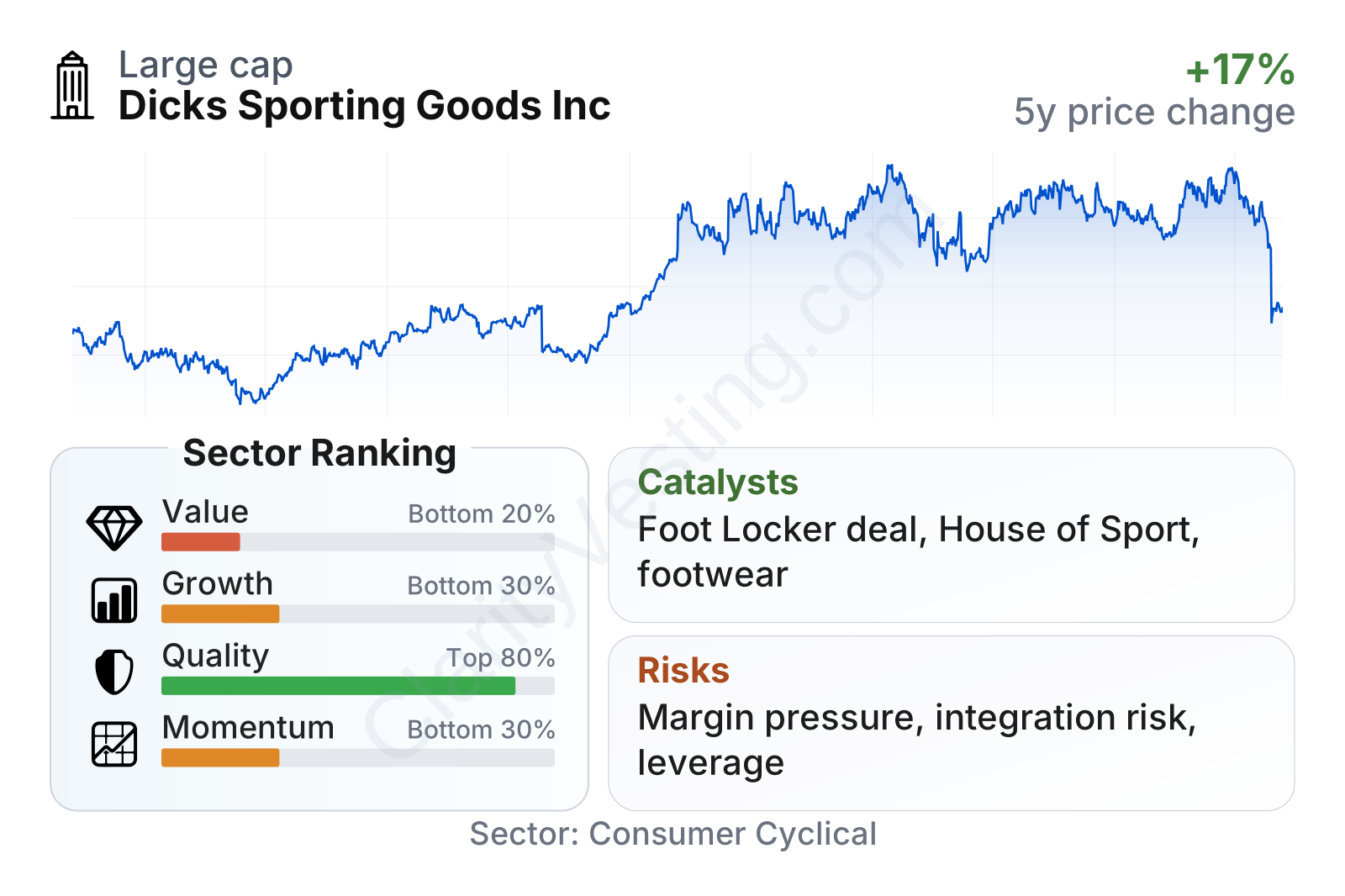
DICK’S is a mid-to-large-cap specialty retailer with a market value around $12 billion and a stock volatility slightly above the broader market. The overall profile is mixed. Quality remains solid because returns on invested capital over time have been strong and leverage relative to earnings is not excessive. However, its value ranking is weaker than the headline earnings multiple alone might suggest, largely because cash flow yield is not especially high. Growth and momentum metrics also point to a company that has recently become more difficult to read: near-term sales growth looks unusually strong, but margins and cash generation have not kept pace, and the stock has been much weaker over the last six months than the typical company in its sector.
Growth
The sporting goods market is not a classic hypergrowth industry, but it does benefit from several durable trends: continued interest in health and fitness, steady demand for athletic footwear and apparel, youth sports participation, and the premiumization of performance products. That gives DICK’S exposure to a sector with recurring consumer demand, even if spending can still fluctuate with the economy.
DICK’S strategy for future expansion is logical. Management has focused on larger experiential stores, including House of Sport locations, as well as more curated footwear and apparel offerings, e-commerce integration, and private-brand development. This matters because sporting goods retail is increasingly split between convenience, brand heat, and experience. Large-format stores that include activities, services, and broader assortments can help the company capture spending that might otherwise go to both online specialists and general retailers.
Recent revenue growth has accelerated sharply, with year-over-year figures moving well above both the company’s own earlier pace and the sector median. That kind of jump is too large to treat as ordinary underlying demand alone. It suggests that a major business change, likely tied to acquisition impact and/or a meaningful shift in reported sales base, is now influencing the top line. For long-term analysis, the key question is not simply whether revenue is rising fast, but whether DICK’S can convert that larger sales base into stable margins and durable cash flow.
Free cash flow remains positive, which is important for a retailer funding store investment, technology, and shareholder returns. Still, the trend over the last several years has been uneven and below the highs reached earlier in the period. In other words, the business is still producing cash, but recent growth in sales has not translated into equally strong cash generation. That reduces the strength of the current growth narrative.
A major recent catalyst is the company’s agreement to acquire Foot Locker, a move that meaningfully expands its presence in athletic footwear and gives it access to a broader global customer base, mall locations, and new operating formats. If integrated well, that deal could strengthen supplier relationships, increase scale in one of the most important categories in sports retail, and create cross-selling opportunities across banners. It is a large enough transaction to reshape the company’s long-term growth profile.
Risks
This article is for informational purposes only and does not constitute financial advice. Some content is AI-generated. See Disclaimer


