Stock Analysis · DraftKings Inc (DKNG)
Overview
DraftKings is a digital sports entertainment and gaming company best known for online sports betting, online casino games, daily fantasy sports, and related media products. In simple terms, it runs mobile apps and websites where users can place sports wagers, play casino-style games where permitted, and participate in fantasy contests. The business is largely U.S.-focused, with operations shaped by state-by-state regulation.
The company’s revenue is mainly generated from money retained after paying winning customers, promotional activity, and certain platform-related fees. Based on company reporting and business mix described in recent filings, the main sources of revenue can be summarized as follows:
- Sportsbook / online sports betting: approximately 60% to 70% of revenue. This is the core business and includes mobile and retail sports wagering in legalized jurisdictions.
- iGaming / online casino: approximately 20% to 30% of revenue. This includes digital casino games such as slots, table games, and other real-money online gaming products in states where online casino play is legal.
- Daily Fantasy Sports and other consumer products: approximately 5% to 10% of revenue. This includes paid fantasy contests and smaller ancillary offerings.
- B2B and other revenue: a low-single share of total revenue. This generally covers technology, marketplace, and other smaller activities, though it is not the economic center of the group.
What stands out in DraftKings’ business model is scale. As more states legalize sports betting and online casino gaming, the company can enter new markets using the same technology platform, brand, and customer database. Over the last several years, revenue has expanded sharply, while losses have narrowed as marketing efficiency and operating leverage improved. The broad direction is clear: DraftKings is trying to become a national platform with stronger profitability as customer acquisition spending becomes a smaller share of sales.
The financial profile has improved meaningfully. Revenue has climbed from roughly $1.3 billion in 2021 to more than $6.0 billion in 2025, while operating losses have shrunk dramatically and the company moved to a small full-year net profit in 2025. Gross profit has also risen strongly, suggesting the model is scaling, even if cost discipline and margin stability still matter a lot.
Key Figures
| Metric | Value | Sector ⓘ |
|---|---|---|
| Date | Sep 12, 2026 | |
| Context | ||
| Sector | Consumer Cyclical | |
| Industry | Gambling | |
| Market Cap ⓘ | $12.28B | |
| Beta ⓘ | 1.63 | |
Value (Cheapness) | ||
| P/E Ratio ⓘ | 240.30 | 17.10 |
| FCF Yield ⓘ | 5.01% | 8.53% |
| EBIT / EV ⓘ | -1.01% | 6.46% |
| PEG ⓘ | 0.06 | |
Growth (Business expansion) | ||
| Revenue Growth ⓘ | -4.60% | 5.75% |
| RPS Growth (5Y CAGR) ⓘ | 39.54% | 9.14% |
| EPS Growth (5Y CAGR) ⓘ | N/A | -18.21% |
| Margin Growth (5Y Trend) ⓘ | N/A | -0.23% |
| FCF Growth (5Y CAGR) ⓘ | N/A | 4.91% |
Quality (Business durability) | ||
| ROIC (Latest) ⓘ | -3.18% | 12.61% |
| ROIC (5Y Median) ⓘ | -26.35% | 10.72% |
| Net Debt / EBIT (Latest) ⓘ | 7.37 | 2.10 |
| Net Debt / EBIT (5Y Median) ⓘ | N/A | 2.32 |
| Operating Margin (Latest) ⓘ | -2.07% | 9.25% |
| Operating Margin (5Y Median) ⓘ | -21.51% | 9.64% |
| Debt to Equity (Latest) ⓘ | 336.48% | 75.78% |
| Profit Margin (Latest) ⓘ | -2.68% | 5.33% |
| Free Cash Flow (Latest) ⓘ | $615.76M | |
Momentum (Price trend) | ||
| 3Y Return ⓘ | -19.39% | +14.53% |
| 12M Return (excl. last month) ⓘ | -40.81% | +3.08% |
| 6M Return ⓘ | -3.21% | +0.55% |
| Price vs. 200-Day MA ⓘ | -7.15% | -0.54% |
DraftKings is now a large publicly traded gaming platform, but its market behavior still looks more like a developing growth company than a mature consumer business. The stock has been highly volatile over the last several years, which fits a business tied to regulation, sports outcomes, promotional intensity, and changing expectations around profitability.
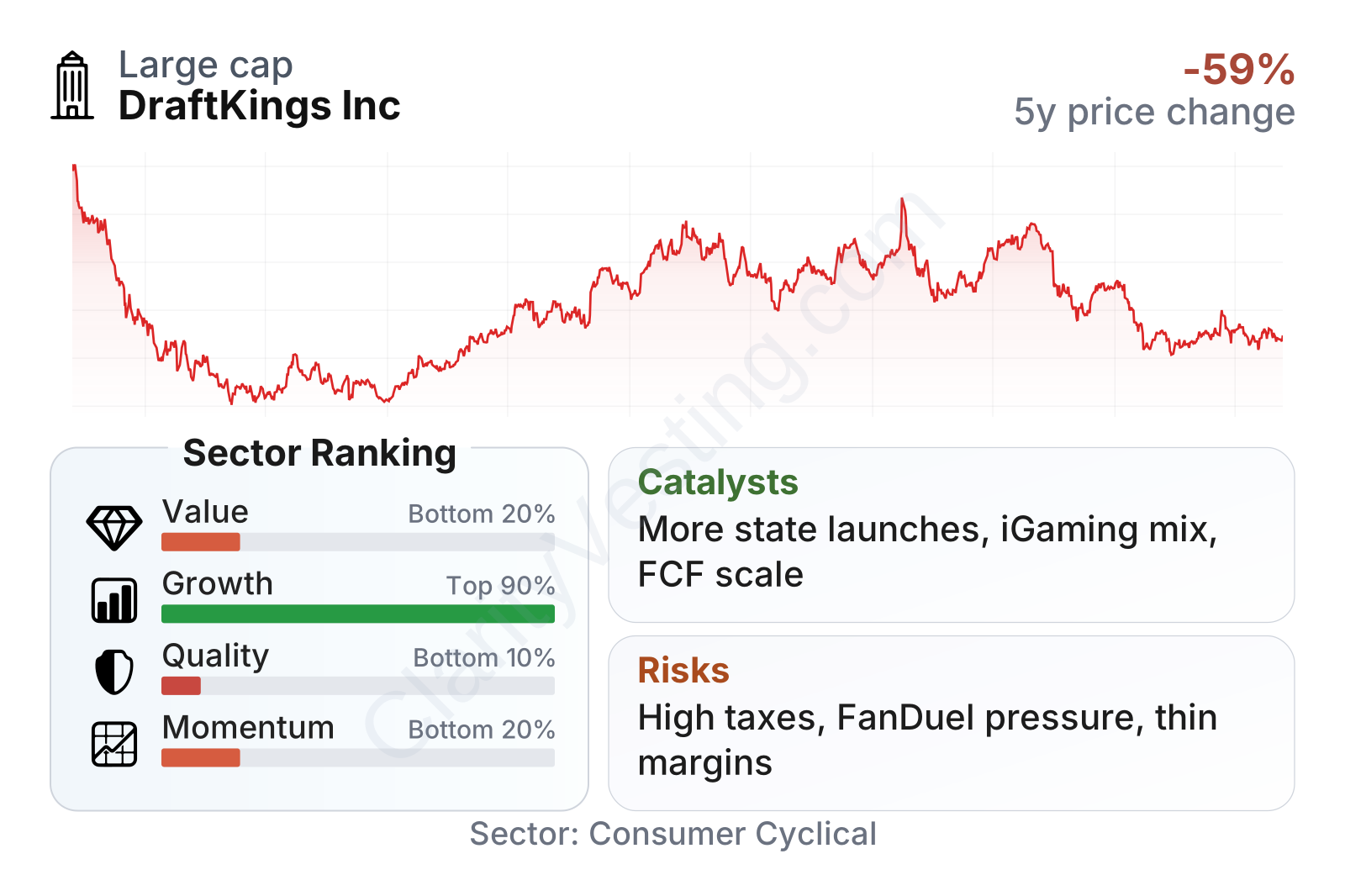
The factor table paints a mixed picture. Growth remains one of the strongest features, with the company ranking near the top of its sector over a multiyear period. By contrast, quality and value metrics remain weak relative to peers, reflecting still-thin operating margins, modest returns on invested capital, and a valuation that remains elevated on earnings-based measures. Free cash flow has improved enough to be a meaningful positive, but the balance sheet and profitability profile still look less robust than those of more established consumer companies.
Growth
The long-term backdrop remains attractive. Online sports betting and online casino gaming are still relatively young categories in the United States, and legalization is not yet nationwide. That matters because DraftKings does not need to invent a new habit: it is expanding into a large, existing demand base that continues moving from offline channels and local operators toward regulated mobile platforms.
The company’s strategy is straightforward and mostly logical for this industry. It invests heavily in brand, product, technology, and customer retention, aiming to acquire users early and increase lifetime value over time. Cross-selling is particularly important. A customer who starts with sports betting can later use casino products, fantasy offerings, and other in-app features, which can improve economics without requiring the same level of promotional spending for each product.
Revenue growth has been exceptional over the medium term, even though the latest year-over-year comparison turned slightly negative. That recent slowdown should be read in context: growth had previously run at very high rates for several years, including multiple quarters well above 20% and at times much higher. A short-term dip after such expansion does not erase the broader trend, but it does show the company is entering a more demanding phase where execution and retention matter more than simple market entry.
Cash generation is one of the most important improvements. DraftKings moved from deeply negative free cash flow a few years ago to solidly positive trailing cash flow more recently, rising into the several-hundred-million-dollar range. That shift suggests the business is no longer relying on growth at any cost and is showing signs of self-funding capacity, which is a major step for a company in this category.
A meaningful catalyst is the ongoing possibility of additional state legalization, especially for iGaming, which tends to carry better economics than sports betting. Another catalyst is deeper monetization of existing users through product upgrades, same-game parlay betting, more personalized promotions, and broader use of in-house technology. Recent company communications have also emphasized continued product rollout, operational efficiency, and customer engagement tools, all of which support the view that future growth does not depend only on opening new states.
Risks
This article is for informational purposes only and does not constitute financial advice. Some content is AI-generated. See Disclaimer


