Stock Analysis · Dufry AG (DFRYF)
Overview
Dufry AG, now operating under the Avolta name after the combination with Autogrill, is a global travel retail and food & beverage operator. In simple terms, it runs stores, duty-free shops, convenience outlets, and dining locations in places where people travel, mainly airports but also railway stations, cruise ports, seaports, and some tourist locations. Its business depends heavily on passenger traffic, airport concessions, and the ability to capture spending from travelers before departure, after arrival, or while in transit.
The company’s revenue base has become broader since the Autogrill merger. Based on recent annual reporting, the largest sources of revenue are approximately:
- Food & Beverage: about 55% to 60% of revenue. This includes restaurants, bars, cafés, quick-service outlets, and grab-and-go concepts located in travel hubs.
- Duty-Free and Duty-Paid Retail: about 35% to 40% of revenue. This includes perfumes and cosmetics, liquor, tobacco, fashion and accessories, confectionery, watches, jewelry, and destination-related products sold in airports and other transit points.
- Other activities: about 5% or less of revenue. This includes smaller support activities, logistics-related arrangements, and selected specialty formats depending on geography.
Geographically, the business is diversified across Europe, North America, Latin America, the Middle East, Africa, and Asia-Pacific. Airports remain the economic center of the group even after diversification into travel dining. That matters because airport contracts can be long-lived and high-volume, but they also expose the company to fluctuations in international travel and concession conditions.
Over the last several years, the business has clearly recovered from the pandemic shock. Revenue expanded from roughly $3.9 billion in 2021 to nearly $14.0 billion in 2025, while operating income moved from a loss to more than $1.1 billion. The improvement shows both travel normalization and the impact of the larger combined platform. The weaker point is that net profit has remained relatively thin compared with total sales, largely because interest expense is still high for a company carrying meaningful debt.
The long-term pattern is easy to understand: sales and operating profit have recovered strongly, but a meaningful share of earnings is still absorbed by financing costs. That makes cash generation important, because continued debt reduction could materially improve the profit profile over time.
Key Figures
| Metric | Value | Sector ⓘ |
|---|---|---|
| Date | Aug 22, 2026 | |
| Context | ||
| Sector | Consumer Cyclical | |
| Industry | Specialty Retail | |
| Market Cap ⓘ | $8.65B | |
| Beta ⓘ | 1.03 | |
Value (Cheapness) | ||
| P/E Ratio ⓘ | 34.92 | 18.08 |
| FCF Yield ⓘ | 49.56% | 8.40% |
| EBIT / EV ⓘ | N/A | 6.20% |
| PEG ⓘ | 7.23 | |
Growth (Business expansion) | ||
| Revenue Growth ⓘ | -2.50% | 5.80% |
| RPS Growth (5Y CAGR) ⓘ | 21.00% | 9.06% |
| EPS Growth (5Y CAGR) ⓘ | N/A | -17.87% |
| Margin Growth (5Y Trend) ⓘ | 12.17% | -0.31% |
| FCF Growth (5Y CAGR) ⓘ | 42.29% | 4.91% |
Quality (Business durability) | ||
| ROIC (Latest) ⓘ | N/A | 12.33% |
| ROIC (5Y Median) ⓘ | 6.39% | 10.78% |
| Net Debt / EBIT (Latest) ⓘ | 6.55 | 2.16 |
| Net Debt / EBIT (5Y Median) ⓘ | N/A | 2.31 |
| Operating Margin (Latest) ⓘ | 7.33% | 9.14% |
| Operating Margin (5Y Median) ⓘ | 7.00% | 9.64% |
| Debt to Equity (Latest) ⓘ | 774.94% | 75.06% |
| Profit Margin (Latest) ⓘ | 1.50% | 5.30% |
| Free Cash Flow (Latest) ⓘ | $4.29B | |
Momentum (Price trend) | ||
| 3Y Return ⓘ | +33.60% | +20.19% |
| 12M Return (excl. last month) ⓘ | +2.50% | +0.43% |
| 6M Return ⓘ | -0.99% | -2.19% |
| Price vs. 200-Day MA ⓘ | +17.69% | +2.39% |
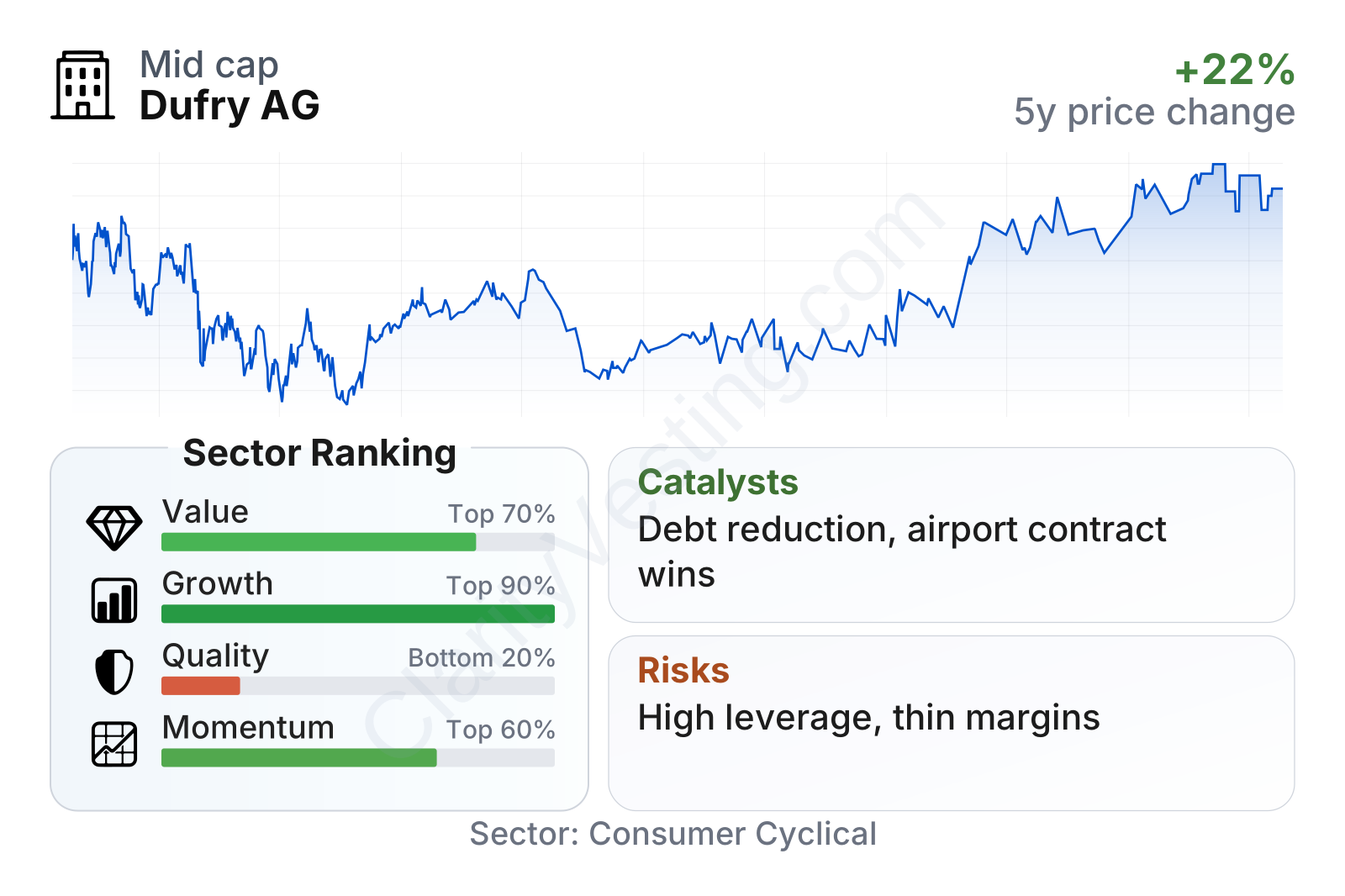
Dufry sits in the large-cap range within travel retail, with share-price volatility close to the broader market. The factor picture is mixed. Growth measures are strong versus the sector over a multi-year period, helped by post-pandemic recovery and portfolio expansion. Momentum is also better than average over longer windows. By contrast, quality measures are weaker, mainly because leverage is high, profit margins are slim, and returns on invested capital remain below sector norms. Value signals are not straightforward: the earnings multiple looks elevated, but free cash flow metrics appear much stronger than the sector, suggesting the market is weighing cash generation against balance-sheet risk and thin accounting profits.
Growth
Dufry operates in a sector with a credible long-term growth backdrop. Global passenger traffic has historically trended upward over time, supported by rising middle-class travel, airport capacity expansion, tourism growth, and increasing penetration of commercial services inside transport hubs. Travel retail and travel dining also benefit from a captive customer base: travelers usually have limited alternatives once they are inside an airport or station.
The strategic logic of the Avolta model is fairly strong. Combining retail and food & beverage creates a broader presence across the traveler journey and can make the company more useful to airport landlords. Instead of offering only shops, it can provide a larger commercial package covering multiple spending moments. That can help in concession tenders, improve bargaining power with brands, and create cross-selling opportunities through shared customer data, loyalty tools, and location management.
Near-term growth has cooled after the sharp rebound years, and the latest year-over-year revenue change is around flat. That is not unusual after a major recovery cycle and merger integration period. More important for long-term analysis is that five-year revenue-per-share growth has been materially stronger than the sector median, showing that the business is much larger and more productive than it was before the recovery phase.
Cash generation is one of the more constructive aspects of the current profile. Free cash flow has improved sharply over the last several years, and the latest trailing level is very substantial relative to the company’s size. If sustained, that gives management room to reduce debt, invest in contract renewals, modernize locations, and potentially improve resilience during slower travel periods. A strong cash profile matters more here than for many ordinary retailers because airport concessions and financing costs can put pressure on reported earnings.
Recent company updates have also emphasized network optimization, digital engagement, and contract wins or renewals in major travel hubs. For this business, those developments matter because each large airport concession can support revenue visibility for many years. Another useful catalyst is the continued recovery of long-haul and Asia-related travel flows, which typically support higher spending categories such as duty-free beauty, premium spirits, and luxury accessories.
Risks
This article is for informational purposes only and does not constitute financial advice. Some content is AI-generated. See Disclaimer