Stock Analysis · Dropbox Inc (DBX)
Overview
Dropbox is a cloud software company best known for file storage and synchronization, but its business today is broader than simple online backup. It sells tools that help individuals and teams store content, share files securely, sign documents electronically, edit video-based content, and organize digital work across devices. The company mainly serves self-serve users and small to midsize businesses, with a subscription model that produces recurring revenue.
Its revenue mix is unusually concentrated. Based on company filings, nearly all revenue comes from subscriptions sold through its core platform and related premium services, rather than advertising or hardware. A practical way to think about the business is:
- Core Dropbox subscriptions: about 85% to 90% — paid plans for storage, file sync, sharing, backup, security, and admin features for individuals and teams.
- Dropbox Sign and document workflow: about 5% to 10% — e-signature and agreement workflow tools, largely coming from the HelloSign acquisition.
- DocSend, Dash, Replay and other workflow products: about 3% to 7% — secure document sharing and analytics, universal search and knowledge tools, and creative collaboration features.
The company does not report all of these as separate formal segments, so these percentages are best viewed as directional rather than exact. What is clear is that Dropbox remains heavily dependent on its core subscription base, while newer products are meant to raise revenue per user and make the platform more useful in daily work.
Dropbox also stands out for its economics. It has high gross margins, a relatively asset-light model, and strong cash generation. Over the last several years, revenue growth has slowed sharply, but profitability and free cash flow have remained strong, which changes the investment case from a classic high-growth software name to a mature, cash-producing software platform.
The broad financial pattern is favorable on margins: revenue has grown modestly over time, cost of revenue has stayed well controlled, and operating income improved meaningfully by 2025 as operating expenses became leaner. Research and development remains a major spending area, showing that Dropbox is still funding product expansion even while emphasizing efficiency.
Key Figures
| Metric | Value | Sector ⓘ |
|---|---|---|
| Date | Sep 12, 2026 | |
| Context | ||
| Sector | Technology | |
| Industry | Software - Infrastructure | |
| Market Cap ⓘ | $7.73B | |
| Beta ⓘ | 0.65 | |
Value (Cheapness) | ||
| P/E Ratio ⓘ | 19.65 | 29.51 |
| FCF Yield ⓘ | 12.38% | 4.25% |
| EBIT / EV ⓘ | 6.73% | 2.85% |
| PEG ⓘ | 27.18 | |
Growth (Business expansion) | ||
| Revenue Growth ⓘ | 0.90% | 15.40% |
| RPS Growth (5Y CAGR) ⓘ | 14.10% | 8.56% |
| EPS Growth (5Y CAGR) ⓘ | -8.18% | -11.88% |
| Margin Growth (5Y Trend) ⓘ | 14.89% | 0.46% |
| FCF Growth (5Y CAGR) ⓘ | 7.35% | 9.80% |
Quality (Business durability) | ||
| ROIC (Latest) ⓘ | 50.81% | 9.44% |
| ROIC (5Y Median) ⓘ | 45.69% | 8.30% |
| Net Debt / EBIT (Latest) ⓘ | 4.13 | 0.54 |
| Net Debt / EBIT (5Y Median) ⓘ | 4.17 | 0.44 |
| Operating Margin (Latest) ⓘ | 27.89% | 9.58% |
| Operating Margin (5Y Median) ⓘ | 15.33% | 8.25% |
| Debt to Equity (Latest) ⓘ | -181.67% | 33.33% |
| Profit Margin (Latest) ⓘ | 17.49% | 7.14% |
| Free Cash Flow (Latest) ⓘ | $957.10M | |
Momentum (Price trend) | ||
| 3Y Return ⓘ | +29.03% | +45.48% |
| 12M Return (excl. last month) ⓘ | +23.05% | +23.48% |
| 6M Return ⓘ | +37.24% | +20.93% |
| Price vs. 200-Day MA ⓘ | +28.05% | +7.43% |
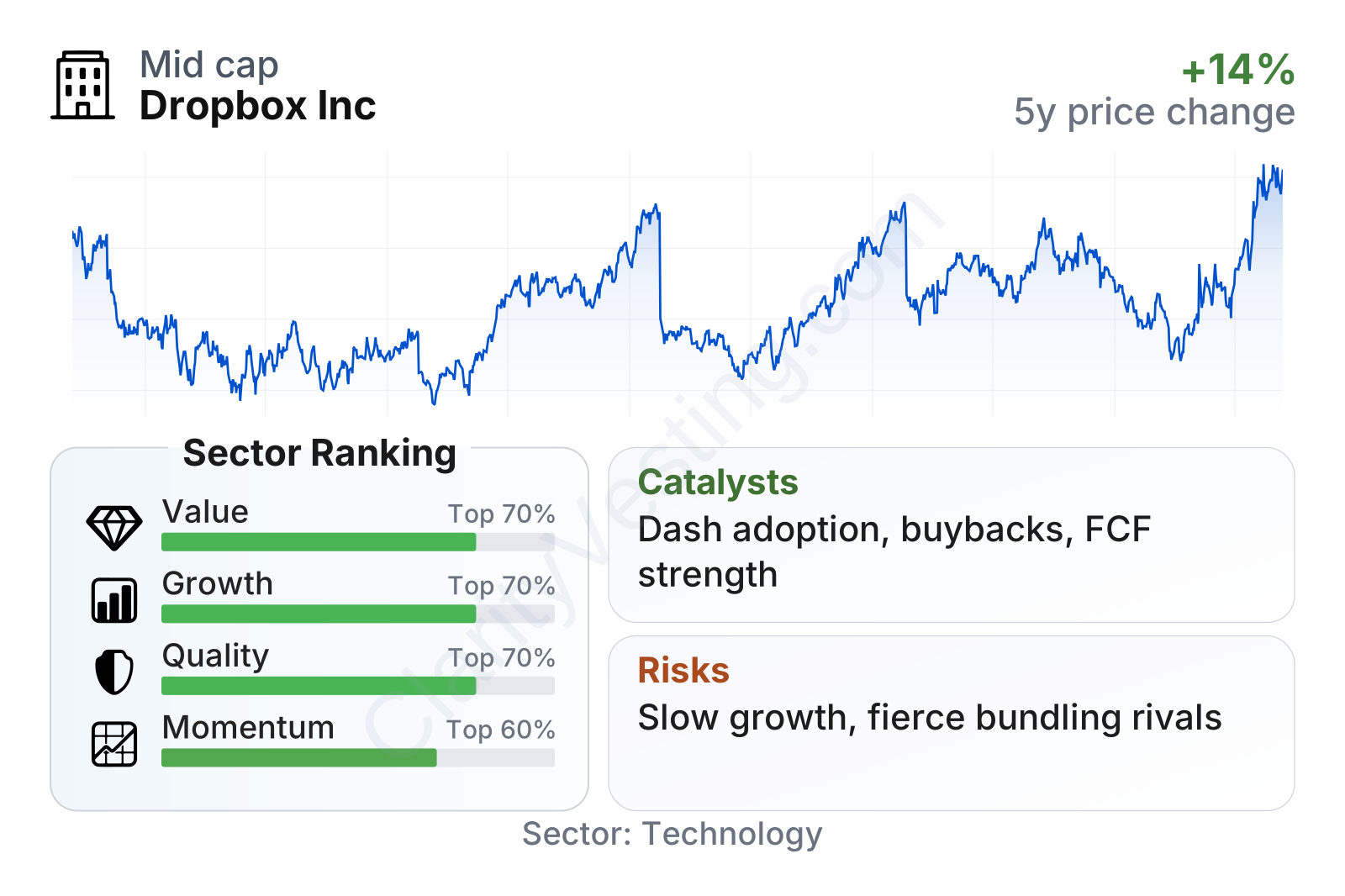
Dropbox is a mid-sized software company with below-market share price volatility, which can matter for readers comparing it with more speculative technology names. The most notable combination in the table is strong profitability and cash generation alongside weak near-term growth. Its return on invested capital and operating margin are far above the sector median, while revenue growth is far below it. That makes Dropbox look more like an efficient software compounder with limited top-line momentum than a fast-expanding platform.
Another important point is balance sheet interpretation. Debt-to-equity appears negative because accumulated share repurchases and accounting equity effects have pushed equity below zero, not because the company operates like a distressed borrower. Even so, net debt relative to EBIT is higher than many software peers, so capital allocation and leverage still deserve attention.
Growth
Dropbox operates in a large and still relevant market: cloud content management, digital collaboration, e-signatures, and AI-assisted knowledge work. These categories are not disappearing. Remote and hybrid work, rising compliance needs, and the spread of digital workflows continue to support demand for tools that make files easier to find, share, protect, and formalize.
That said, Dropbox is not currently growing at the pace normally associated with faster software niches. Revenue growth has slowed from low double digits a few years ago to around 1% recently, including a period of slight contraction before returning to modest growth.
The recent trend shows stabilization rather than acceleration. That matters because the company now needs product mix improvement, pricing discipline, and upselling to do more of the work that user growth once handled.
Management’s strategy is built around making Dropbox more useful beyond storage. Dash is intended to act as an AI-powered universal search and knowledge access tool across workplace apps. Dropbox Sign addresses document execution, while DocSend helps with secure content sharing and analytics. The logic is sensible: basic storage is increasingly commoditized, so future growth likely depends on becoming part of everyday workflows rather than simply a place where files sit.
A meaningful catalyst is free cash flow. Dropbox produces unusually strong cash for a company with such limited top-line growth, which gives it room for repurchases, product investment, and selective acquisitions.
Free cash flow has been climbing steadily and is now near the $1 billion level on a trailing basis. That does not solve the growth problem by itself, but it does give the company financial flexibility and supports the case that its business model remains durable even in a slower-growth phase.
Recent company updates have also pointed to continued product work around AI search, workflow simplification, and cross-product integration. If these efforts improve conversion, increase average revenue per paying user, or reduce customer churn, they could create a more credible second leg of growth than storage alone can provide.
Risks
This article is for informational purposes only and does not constitute financial advice. Some content is AI-generated. See Disclaimer


