Stock Analysis · Daktronics Inc (DAKT)
Overview
Daktronics is a U.S. manufacturer of electronic display systems and digital signage. Its products are the large video boards, scoreboards, ribbon displays, message signs, and control systems used in sports stadiums, arenas, high schools, transportation networks, casinos, retail locations, and commercial buildings. The company also provides installation, project management, content, and service support around those systems. In simple terms, Daktronics sells both the hardware that people see on large screens and the software and services needed to run them.
The business is organized by end market rather than by product alone, which helps show where demand comes from. Based on the latest annual filing for fiscal 2026, revenue is spread across several segments:
- Commercial: about 33% of revenue. This includes digital billboards, on-premise business signage, spectacular displays, mass transit displays, and other commercial installations.
- Live Events: about 28%. This segment serves professional sports venues, colleges, convention centers, and large entertainment sites with video displays, scoreboards, and related systems.
- High School Park and Recreation: about 21%. This includes scoreboards, video displays, and timing systems for schools and community venues.
- Transportation: about 10%. This covers electronic signage for roads, airports, rail, and public transit systems.
- International: about 8%. This includes sales outside the United States across multiple venue types.
This mix matters because Daktronics is not tied to only one customer type. It has exposure to advertising, sports, education, and public infrastructure, which gives it several ways to grow when one end market slows. The recent financial profile also shows a business that has rebuilt revenue after a weaker period, with stronger gross profit than a few years ago even as operating costs have also increased.
Over the last several fiscal years, revenue has moved from roughly $611 million to about $839 million, while gross profit expanded faster than sales. That suggests pricing, project mix, and manufacturing execution improved meaningfully from the low point. The main watch item is that operating expenses also climbed, so the company still needs discipline to keep more of that gross profit flowing to the bottom line.
Key Figures
| Metric | Value | Sector ⓘ |
|---|---|---|
| Date | Sep 12, 2026 | |
| Context | ||
| Sector | Technology | |
| Industry | Electronic Components | |
| Market Cap ⓘ | $930.59M | |
| Beta ⓘ | 1.68 | |
Value (Cheapness) | ||
| P/E Ratio ⓘ | 19.55 | 29.51 |
| FCF Yield ⓘ | 4.28% | 4.25% |
| EBIT / EV ⓘ | 7.42% | 2.85% |
| PEG ⓘ | 0.64 | |
Growth (Business expansion) | ||
| Revenue Growth ⓘ | 7.10% | 15.40% |
| RPS Growth (5Y CAGR) ⓘ | 5.95% | 8.56% |
| EPS Growth (5Y CAGR) ⓘ | 37.58% | -11.88% |
| Margin Growth (5Y Trend) ⓘ | 6.63% | 0.46% |
| FCF Growth (5Y CAGR) ⓘ | 7.61% | 9.80% |
Quality (Business durability) | ||
| ROIC (Latest) ⓘ | 14.64% | 9.44% |
| ROIC (5Y Median) ⓘ | 14.92% | 8.30% |
| Net Debt / EBIT (Latest) ⓘ | -2.11 | 0.54 |
| Net Debt / EBIT (5Y Median) ⓘ | -1.14 | 0.44 |
| Operating Margin (Latest) ⓘ | 6.88% | 9.58% |
| Operating Margin (5Y Median) ⓘ | 3.44% | 8.25% |
| Debt to Equity (Latest) ⓘ | 9.59% | 33.33% |
| Profit Margin (Latest) ⓘ | 5.66% | 7.14% |
| Free Cash Flow (Latest) ⓘ | $39.80M | |
Momentum (Price trend) | ||
| 3Y Return ⓘ | +130.91% | +45.48% |
| 12M Return (excl. last month) ⓘ | +30.30% | +23.48% |
| 6M Return ⓘ | -15.83% | +20.93% |
| Price vs. 200-Day MA ⓘ | -6.03% | +7.43% |
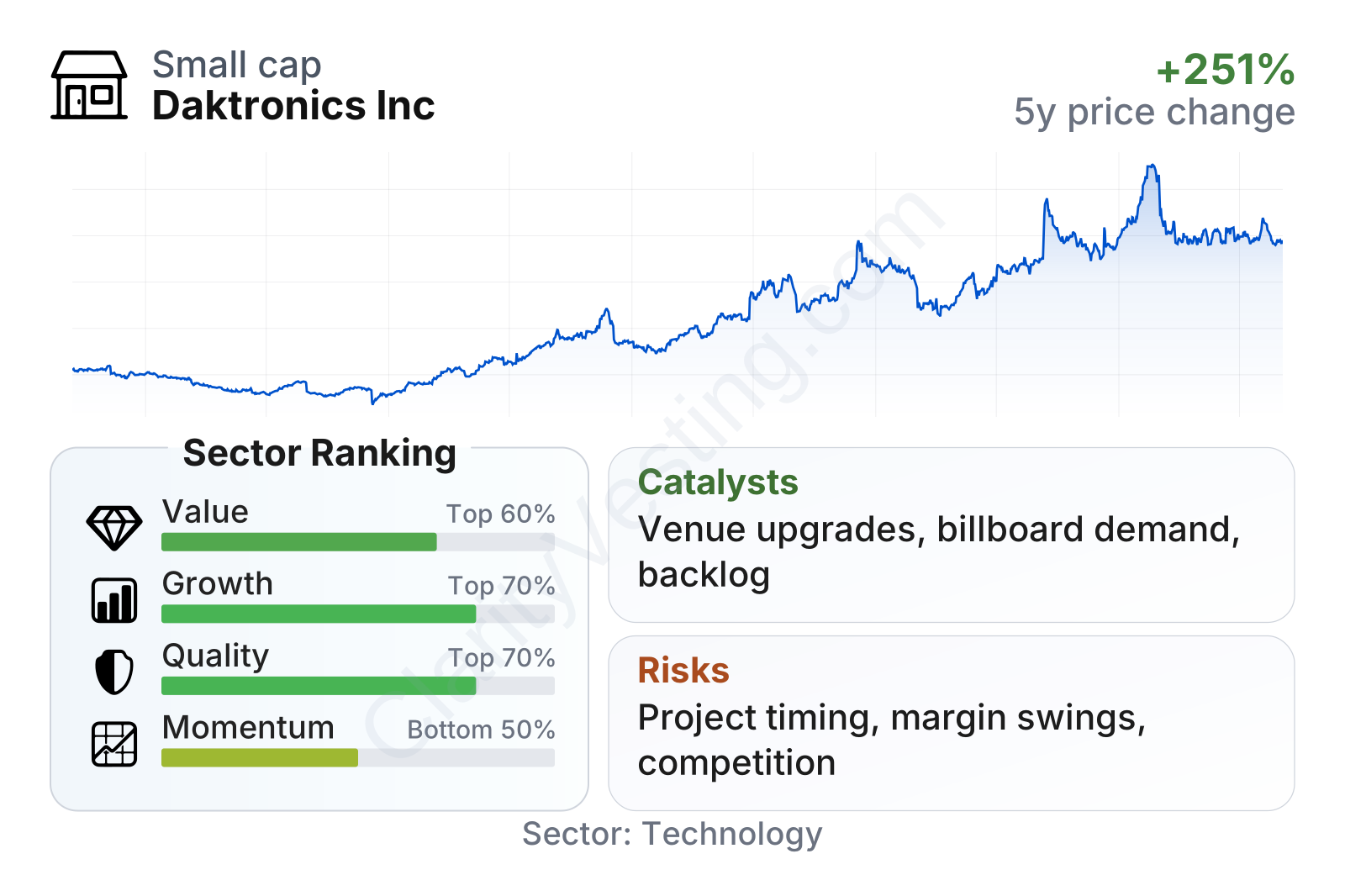
Daktronics is still a relatively small public company, with a market value below $1 billion, and its share price has been more volatile than the broader technology sector. On valuation, its earnings multiple is below the sector median, while its free cash flow yield is close to the sector norm and its EBIT relative to enterprise value looks stronger than many peers. Growth and quality measures are mixed but generally respectable: returns on invested capital are above sector medians, leverage is low, and earnings growth over five years has improved sharply from a depressed base. The weaker area is recent market momentum, which has cooled after a very strong multi-year rebound.
Growth
Daktronics operates in markets that still have room for long-term expansion. Sports venues continue upgrading from older fixed scoreboards to larger, higher-definition video systems. Businesses and cities are also replacing static signage with digital displays that can change messages instantly, carry advertising, or deliver real-time information. Transportation agencies and public venues increasingly rely on electronic displays for passenger information and safety communication. These trends support steady replacement demand as well as new installations.
The company’s strategy also fits these trends reasonably well. Daktronics combines display manufacturing, control software, installation, and after-sale service, which makes it more than a component supplier. That integrated model can matter for large projects because customers often want one provider that can design, build, and support the entire display environment. The company has also highlighted order flow, backlog conversion, manufacturing efficiency, and market-specific sales execution as key drivers in recent filings and investor communications.
Recent revenue growth has been uneven quarter to quarter, which is normal for a project-based business, but the broader pattern points to recovery after a difficult period in 2024 and 2025. The latest year-over-year readings moved back into positive territory, including several quarters above 20% before moderating. That suggests demand and project timing improved, although not yet to the pace seen in the strongest rebound phases.
Cash generation is one of the more encouraging parts of the current picture. Free cash flow was negative during the earlier downturn, then turned strongly positive and has stayed positive at meaningful levels. For a company selling custom, installation-heavy projects, that is important because it indicates the recovery was not only accounting-based. Better cash generation can support working capital needs, product investment, and balance sheet flexibility without relying heavily on borrowing.
A notable growth catalyst is the continuing upgrade cycle in live venues. Stadium and arena owners compete for fan experience, sponsorship revenue, and premium event hosting, and larger digital displays help on all three fronts. In commercial markets, digital-out-of-home advertising and high-visibility branded installations also create opportunities. Recent company updates have pointed to major project wins and ongoing demand across sports, transportation, and commercial end markets, which reinforces the view that Daktronics remains relevant in large-format display infrastructure.
Risks
This article is for informational purposes only and does not constitute financial advice. Some content is AI-generated. See Disclaimer


