Stock Analysis · Sprinklr Inc (CXM)
Overview
Sprinklr is a cloud software company focused on helping large organizations manage customer interactions across digital channels. Its platform is used for activities such as customer service, social media management, marketing, advertising, insights, and employee communications. In simple terms, Sprinklr sells software that helps companies listen to customers, respond to them, and run digital engagement from one system rather than through many disconnected tools.
The business model is mainly subscription-based, which generally brings recurring revenue and better visibility than one-time software sales. Based on the company’s recent filings, revenue is primarily split between software subscriptions and professional services.
- Subscription revenue: about 86% to 90% of total revenue. This includes access to Sprinklr’s software platform, such as customer experience management, contact center, social media management, and analytics tools.
- Professional services revenue: about 10% to 14% of total revenue. This covers implementation, training, consulting, and other support work tied to customer deployments.
Sprinklr does not rely on a broad consumer base. It is aimed mostly at enterprises and large global brands, which means contract sizes can be meaningful, but sales cycles can also be longer and more dependent on corporate software budgets.
One notable business trait is that Sprinklr has steadily expanded revenue over the last several years while improving operating discipline. Revenue rose from roughly $492 million for the fiscal year ended January 2022 to about $857 million for the fiscal year ended January 2026. Over that same period, the company moved from operating losses to positive operating income, even though the pace of growth has clearly slowed.
The broad financial flow shows a software company with strong gross profit generation, but also one that spends heavily on product development and sales. The encouraging part is that operating losses from earlier years have turned into operating profit, while total revenue has continued to rise. The less favorable detail is that net income has become more uneven recently, which suggests profitability is not yet fully settled.
Key Figures
| Metric | Value | Sector ⓘ |
|---|---|---|
| Date | Sep 12, 2026 | |
| Context | ||
| Sector | Technology | |
| Industry | Software - Application | |
| Market Cap ⓘ | $1.26B | |
| Beta ⓘ | 0.65 | |
Value (Cheapness) | ||
| P/E Ratio ⓘ | 54.40 | 29.51 |
| FCF Yield ⓘ | 9.87% | 4.25% |
| EBIT / EV ⓘ | 3.92% | 2.85% |
| PEG ⓘ | 0.82 | |
Growth (Business expansion) | ||
| Revenue Growth ⓘ | 0.80% | 15.40% |
| RPS Growth (5Y CAGR) ⓘ | 14.70% | 8.56% |
| EPS Growth (5Y CAGR) ⓘ | N/A | -11.88% |
| Margin Growth (5Y Trend) ⓘ | 24.66% | 0.46% |
| FCF Growth (5Y CAGR) ⓘ | N/A | 9.80% |
Quality (Business durability) | ||
| ROIC (Latest) ⓘ | 3.56% | 9.44% |
| ROIC (5Y Median) ⓘ | N/A | 8.30% |
| Net Debt / EBIT (Latest) ⓘ | -2.26 | 0.54 |
| Net Debt / EBIT (5Y Median) ⓘ | -3.42 | 0.44 |
| Operating Margin (Latest) ⓘ | 6.07% | 9.58% |
| Operating Margin (5Y Median) ⓘ | 3.36% | 8.25% |
| Debt to Equity (Latest) ⓘ | 7.96% | 33.33% |
| Profit Margin (Latest) ⓘ | 2.65% | 7.14% |
| Free Cash Flow (Latest) ⓘ | $124.70M | |
Momentum (Price trend) | ||
| 3Y Return ⓘ | -63.17% | +45.48% |
| 12M Return (excl. last month) ⓘ | -15.54% | +23.48% |
| 6M Return ⓘ | -6.80% | +20.93% |
| Price vs. 200-Day MA ⓘ | -11.14% | +7.43% |
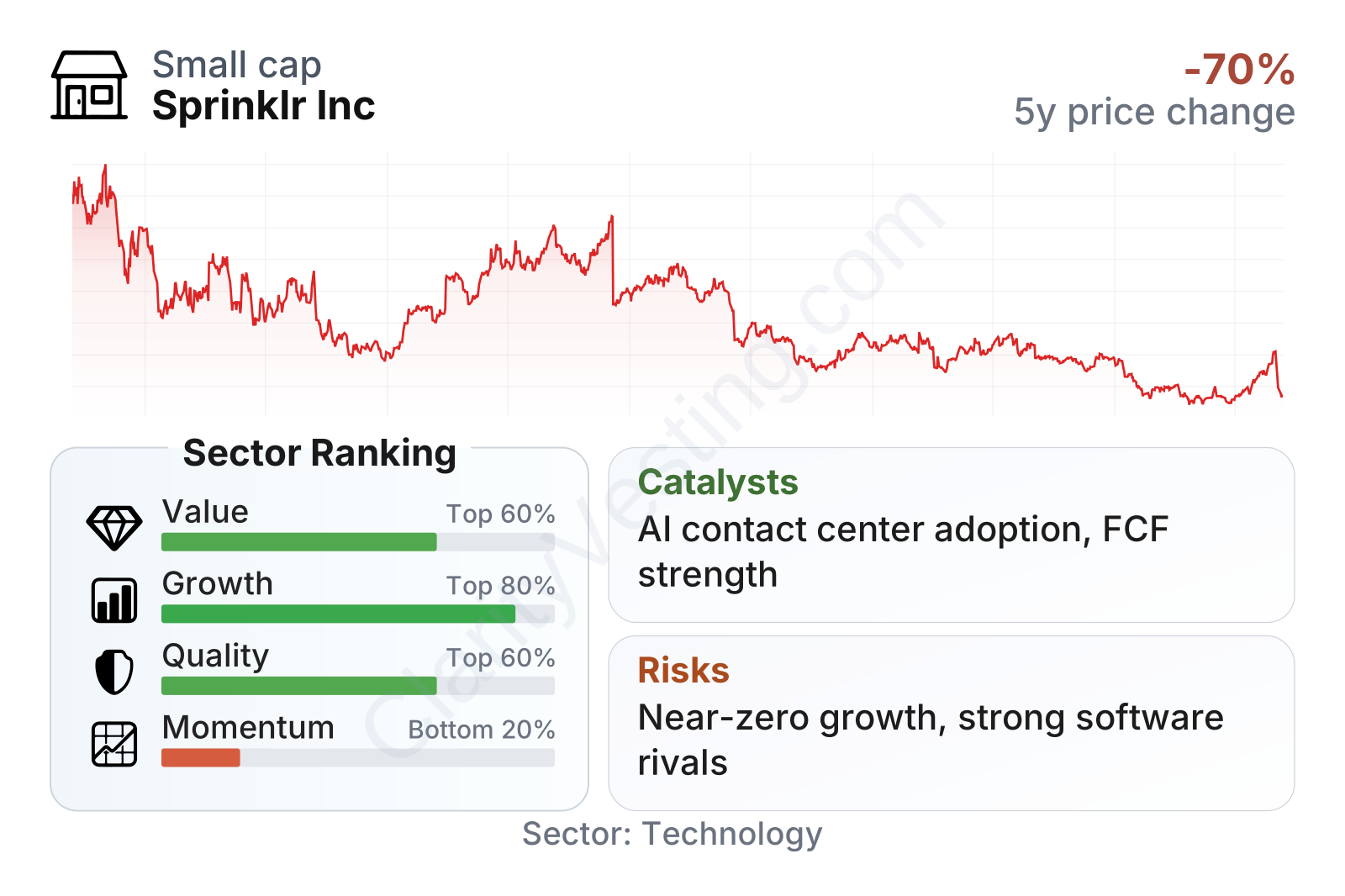
Sprinklr is now a small-cap software company with a share price that has fallen sharply from its earlier post-listing levels. That weak market performance stands in contrast to healthier balance-sheet and cash-flow metrics. The company ranks relatively well on value and quality measures for parts of the software sector, especially because it carries low debt and generates solid free cash flow. Growth, however, looks mixed: the long-term record is respectable, but the latest year-over-year revenue expansion has slowed to around 1%, far below the sector median. Momentum is the weakest area by far, showing that the market remains unconvinced.
Growth
Sprinklr operates in a part of enterprise software that still has long-term relevance. Companies continue shifting customer service, marketing, and brand engagement toward digital channels, and many want to add artificial intelligence to automate responses, analyze conversations, and improve service efficiency. That broader direction supports demand for unified customer experience platforms.
Sprinklr’s strategy also makes sense on paper. The company is trying to offer one integrated system across social media management, customer care, contact center, and insights. If customers prefer fewer vendors and more centralized data, that can be attractive. The company has also emphasized AI capabilities, especially in customer service and contact center use cases, where enterprises are looking for cost savings and faster response times.
The problem is that current growth is much slower than the market usually expects from a software company. Revenue growth has decelerated from above 20% a few years ago to nearly flat in the most recent period. That does not erase the longer-term expansion record, but it does change the investment case. Sprinklr now looks less like a fast grower and more like a maturing software business that must prove it can restart demand through product gains, better sales execution, or stronger adoption of newer offerings.
Free cash flow is a brighter area. The company has gone from negative free cash flow to well above $100 million on a trailing basis, showing that the business is capable of converting revenue into cash even while growth has cooled. That matters because it gives Sprinklr more flexibility to invest in product development, support sales efforts, and handle slower periods without heavy reliance on external financing.
Recent company updates have continued to focus on AI-enabled customer experience, contact center tools, and enterprise platform expansion. The biggest potential catalyst is not simply “AI” as a buzzword, but whether Sprinklr can turn AI features into measurable customer wins, larger contracts, and lower churn in service-heavy enterprise accounts. Another possible opportunity is share gains from companies that want a unified platform instead of stitching together separate tools for social media, support, and analytics.
Risks
This article is for informational purposes only and does not constitute financial advice. Some content is AI-generated. See Disclaimer