Stock Analysis · Carvana Co (CVNA)
Overview
Carvana Co is an online used-car retailer that lets customers shop, finance, trade in, and receive vehicles through a largely digital process. The company aims to make buying a car simpler than the traditional dealership experience by combining e-commerce, logistics, vehicle inspection and reconditioning, financing, and after-sale service into one platform. In practice, Carvana acquires used vehicles, prepares them for sale, lists them online, arranges financing for many customers, and delivers cars directly or through pickup locations.
Its revenue is driven mainly by retail used vehicle sales, with additional contributions from wholesale sales and other products tied to each transaction. Based on the company’s recent annual reporting structure, the main sources of revenue are approximately:
- Retail used vehicle sales: about 83% to 86% — revenue from selling used vehicles directly to consumers through Carvana’s online marketplace.
- Wholesale vehicle sales: about 9% to 12% — sales of vehicles, often those not kept for retail, sold through wholesale channels including auctions.
- Other sales and revenues: about 4% to 7% — mainly product, service, and financing-related items such as gains on loan sales, warranties, GAP waiver coverage, and related offerings attached to vehicle transactions.
What stands out in Carvana’s business model is that it is not just a website listing cars. It also controls important parts of the process, including sourcing inventory, inspecting and reconditioning vehicles, transportation, customer acquisition, and financing partnerships. That gives it more control over customer experience, but it also means the company must execute well across many moving parts.
The business flow also shows a notable recovery since the 2022 downturn. Revenue has moved back up strongly, gross profit has expanded, and selling costs have become more disciplined than they were during the earlier growth-at-any-cost phase. Even so, the model remains sensitive to vehicle pricing, funding costs, and operational efficiency.
Key Figures
| Metric | Value | Sector ⓘ |
|---|---|---|
| Date | Sep 12, 2026 | |
| Context | ||
| Sector | Consumer Cyclical | |
| Industry | Auto & Truck Dealerships | |
| Market Cap ⓘ | $77.90B | |
| Beta ⓘ | 3.50 | |
Value (Cheapness) | ||
| P/E Ratio ⓘ | 37.19 | 17.10 |
| FCF Yield ⓘ | 1.19% | 8.53% |
| EBIT / EV ⓘ | -0.16% | 6.46% |
| PEG ⓘ | -0.13 | |
Growth (Business expansion) | ||
| Revenue Growth ⓘ | 52.40% | 5.75% |
| RPS Growth (5Y CAGR) ⓘ | -12.52% | 9.14% |
| EPS Growth (5Y CAGR) ⓘ | N/A | -18.21% |
| Margin Growth (5Y Trend) ⓘ | N/A | -0.23% |
| FCF Growth (5Y CAGR) ⓘ | N/A | 4.91% |
Quality (Business durability) | ||
| ROIC (Latest) ⓘ | 1.59% | 12.61% |
| ROIC (5Y Median) ⓘ | -2.19% | 10.72% |
| Net Debt / EBIT (Latest) ⓘ | N/A | 2.10 |
| Net Debt / EBIT (5Y Median) ⓘ | N/A | 2.32 |
| Operating Margin (Latest) ⓘ | -0.52% | 9.25% |
| Operating Margin (5Y Median) ⓘ | -0.86% | 9.64% |
| Debt to Equity (Latest) ⓘ | 139.55% | 75.78% |
| Profit Margin (Latest) ⓘ | 6.26% | 5.33% |
| Free Cash Flow (Latest) ⓘ | $929.00M | |
Momentum (Price trend) | ||
| 3Y Return ⓘ | +580.71% | +14.53% |
| 12M Return (excl. last month) ⓘ | +5.01% | +3.08% |
| 6M Return ⓘ | +18.17% | +0.55% |
| Price vs. 200-Day MA ⓘ | -5.51% | -0.54% |
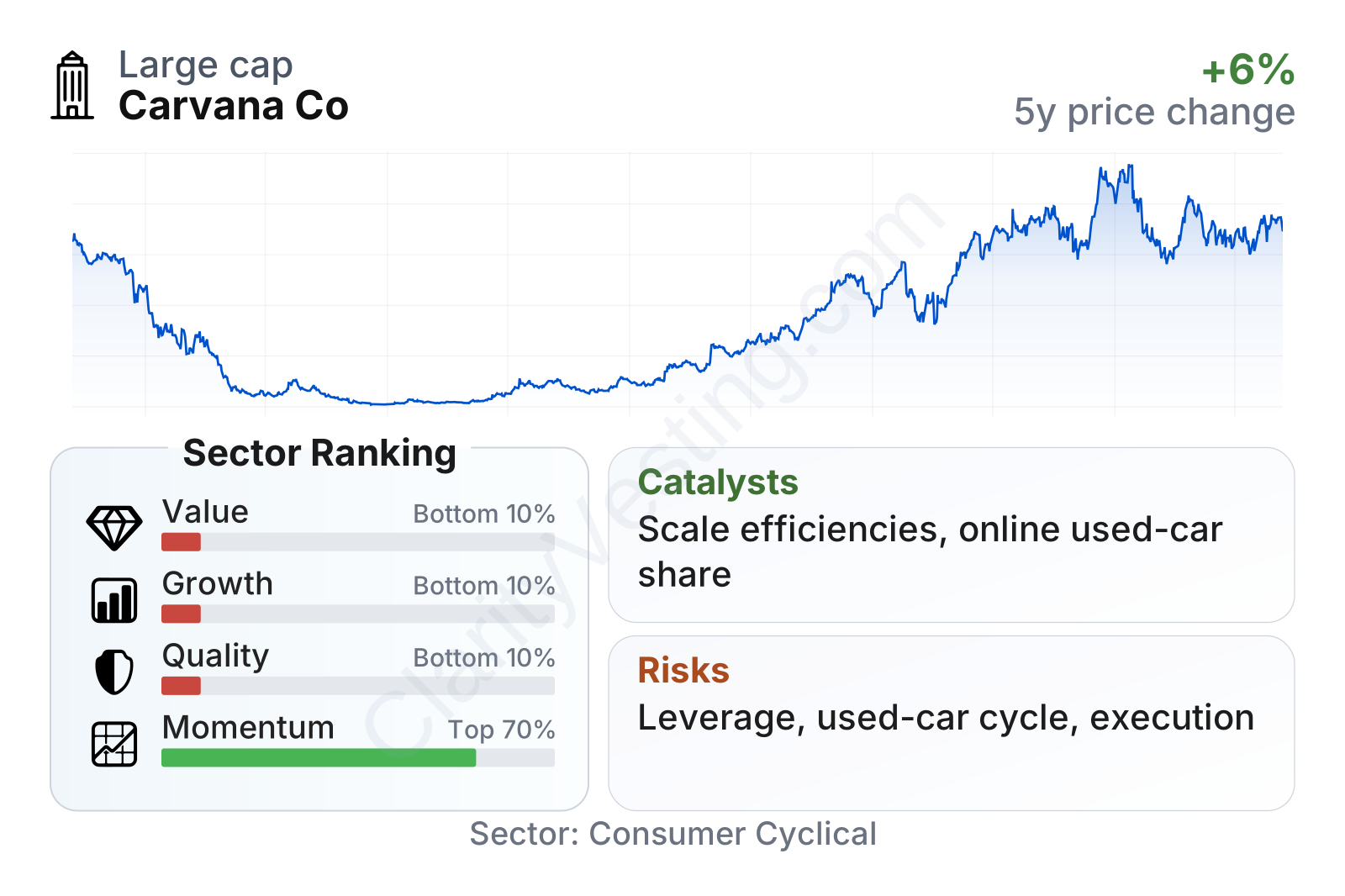
Carvana is now a very large public company by market value, but its trading profile remains unusually volatile, with a beta well above 3. The share price history reflects that instability: a collapse during the balance-sheet stress of 2022 and 2023, followed by a powerful recovery as profitability and cash generation improved.
The factor table paints a mixed picture. Growth has rebounded sharply on a year-over-year basis, but the longer-term growth record is weaker because the company went through a deep reset before recovering. Quality measures still trail much of the sector, largely because operating returns and margins have only recently improved from previously depressed levels. Value metrics also look stretched versus the sector median, which suggests the market is already pricing in a meaningful part of the turnaround. One bright spot is cash generation: free cash flow has turned positive and sizable, even though free-cash-flow yield remains low because the equity value has risen so much.
Growth
The company operates in a large and still evolving market. Used-car retail in the United States remains highly fragmented, and most transactions are still handled through traditional dealerships. That leaves room for digital share gains if online buying continues to become more accepted. Carvana’s addressable market is not limited to selling cars online; it also includes financing, trade-ins, vehicle protection products, and wholesale disposition of inventory.
Its strategy for future growth is logical. The company has spent years building national logistics, brand recognition, reconditioning capacity, and a digital purchasing process that can remove some of the friction found in traditional car buying. If management can keep unit economics healthy, higher sales volumes could spread fixed costs over a larger base and support margin expansion over time.
Recent revenue growth has been very strong, running above 50% year over year in the latest period, far ahead of the sector median. That is an important sign that demand has recovered and that Carvana has regained traction after its earlier contraction. It also suggests the turnaround is no longer just about cost cutting; growth has returned as well.
Free cash flow has improved dramatically from deep negative levels in 2022 to strongly positive territory more recently. That matters because Carvana’s earlier weakness was not just about accounting losses; it was also about financial flexibility. Positive cash generation gives the company more room to support operations, invest in capacity, and manage its debt burden without relying as heavily on outside capital.
One of the clearest catalysts is scale. Carvana’s model benefits when more vehicles move through the same infrastructure and when advertising, logistics, and reconditioning costs become more efficient on a per-unit basis. Another catalyst is broader consumer comfort with online vehicle purchasing. A more normalized used-car market, better credit availability, and continued execution in financing and inventory sourcing could also support growth.
Recent company communications have emphasized efficiency, stronger retail volume, and improved profitability metrics. In practical terms, that points to a significant opportunity: if Carvana can combine renewed growth with better discipline than in its earlier expansion phase, its earnings profile could look materially different from what the market saw during the downturn.
Risks
This article is for informational purposes only and does not constitute financial advice. Some content is AI-generated. See Disclaimer