Stock Analysis · CommVault Systems Inc (CVLT)
Overview
Commvault Systems is a software company focused on protecting, managing, and recovering data. In simple terms, it helps businesses make sure their information is backed up, secure, available when needed, and recoverable after cyberattacks, outages, human error, or system failures. Its products are used across on-premises systems, public cloud environments, and hybrid setups that combine both.
The company has increasingly positioned itself around cyber resilience, an area that combines backup, disaster recovery, ransomware recovery, threat detection, and clean-room recovery capabilities. That matters because many organizations no longer view backup as a basic IT task; they see it as part of business continuity and cybersecurity.
Commvault reports revenue primarily in two broad categories, with subscription and software-linked activity now representing the larger strategic priority. Based on recent annual reporting, the revenue mix is approximately:
- Subscription and SaaS software revenue: about 50% to 55% of total revenue. This includes recurring software subscriptions, software-as-a-service offerings, and term-based licenses tied to Commvault’s cloud and cyber resilience platform.
- Customer support and other services: about 35% to 40%. This includes support, maintenance, and certain customer success services tied to the installed base.
- Perpetual license and professional services: about 10% to 15%. This includes older-style license sales and implementation-related services, which are a smaller part of the business than in the past.
That mix is important because recurring subscription revenue usually produces better visibility than one-time license sales. It also helps explain why Commvault has spent several years shifting its business model toward cloud-delivered and subscription-based products.
The operating profile also shows a software business with high gross margins and meaningful spending on research, product development, and sales. Revenue has grown from roughly $770 million four years ago to more than $1.1 billion recently, while gross profit has remained very strong, showing the advantage of selling software rather than hardware-heavy products.
The business model has become larger and more profitable over time, although operating expenses have also climbed as Commvault invests in product capabilities and go-to-market expansion. The broad pattern is favorable: revenue and gross profit have both risen materially, while operating income has stayed positive after a weaker period in fiscal 2023.
Key Figures
| Metric | Value | Sector ⓘ |
|---|---|---|
| Date | Sep 12, 2026 | |
| Context | ||
| Sector | Technology | |
| Industry | Software - Application | |
| Market Cap ⓘ | $5.39B | |
| Beta ⓘ | 0.82 | |
Value (Cheapness) | ||
| P/E Ratio ⓘ | 83.92 | 29.51 |
| FCF Yield ⓘ | 4.79% | 4.25% |
| EBIT / EV ⓘ | 1.74% | 2.85% |
| PEG ⓘ | 3.17 | |
Growth (Business expansion) | ||
| Revenue Growth ⓘ | 11.40% | 15.40% |
| RPS Growth (5Y CAGR) ⓘ | 12.93% | 8.56% |
| EPS Growth (5Y CAGR) ⓘ | -32.03% | -11.88% |
| Margin Growth (5Y Trend) ⓘ | 2.45% | 0.46% |
| FCF Growth (5Y CAGR) ⓘ | 8.16% | 9.80% |
Quality (Business durability) | ||
| ROIC (Latest) ⓘ | 6.64% | 9.44% |
| ROIC (5Y Median) ⓘ | 12.13% | 8.30% |
| Net Debt / EBIT (Latest) ⓘ | -0.13 | 0.54 |
| Net Debt / EBIT (5Y Median) ⓘ | -3.58 | 0.44 |
| Operating Margin (Latest) ⓘ | 7.77% | 9.58% |
| Operating Margin (5Y Median) ⓘ | 8.10% | 8.25% |
| Debt to Equity (Latest) ⓘ | 1762.99% | 33.33% |
| Profit Margin (Latest) ⓘ | 5.62% | 7.14% |
| Free Cash Flow (Latest) ⓘ | $258.45M | |
Momentum (Price trend) | ||
| 3Y Return ⓘ | +90.83% | +45.48% |
| 12M Return (excl. last month) ⓘ | -26.42% | +23.48% |
| 6M Return ⓘ | +60.88% | +20.93% |
| Price vs. 200-Day MA ⓘ | +14.42% | +7.43% |
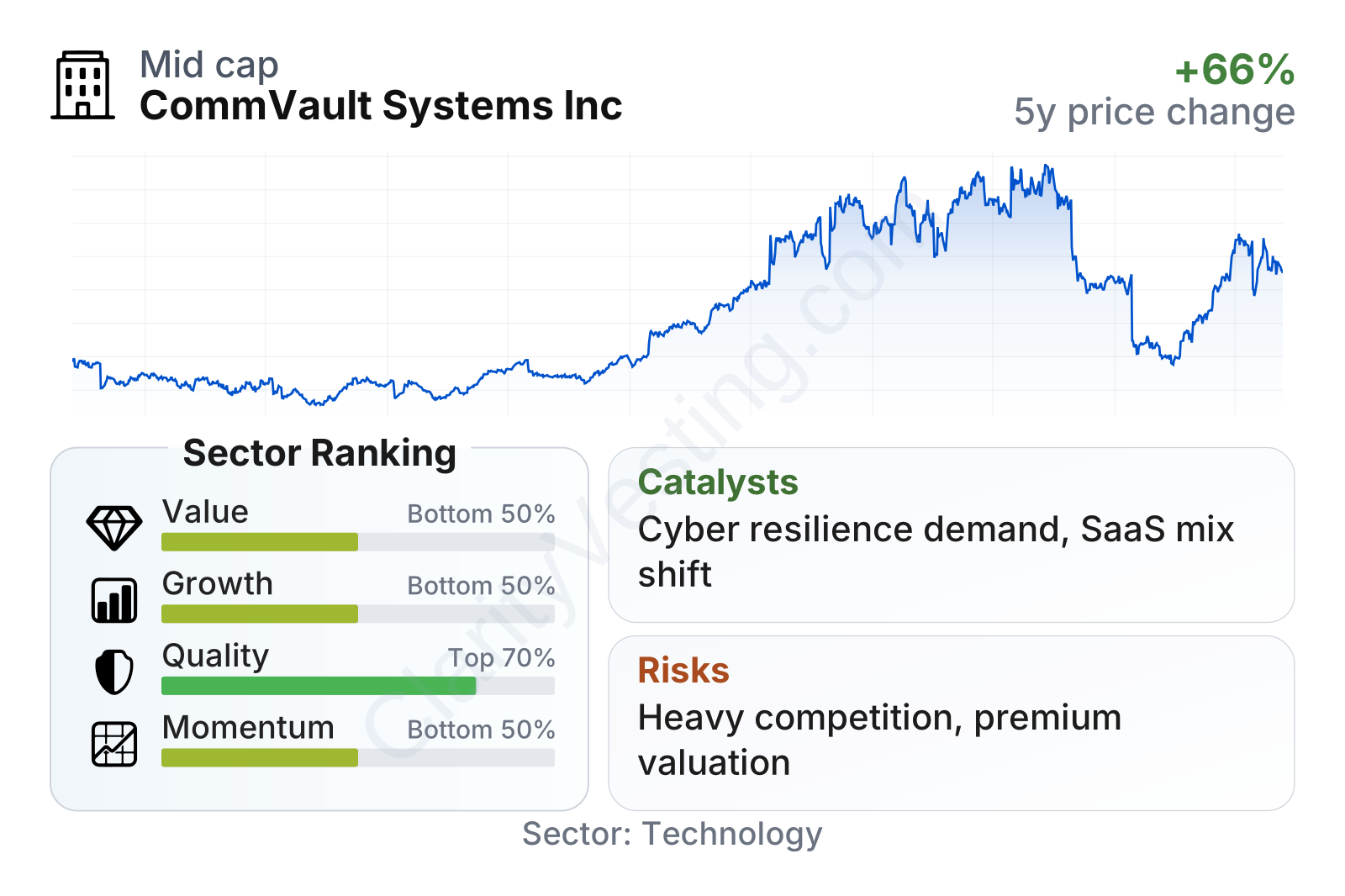
Commvault is a mid-sized software company with a relatively low beta, meaning its share price has historically been less volatile than many technology names. The quality profile is helped by strong cash generation and a net cash position, while growth and value scores are less compelling. Revenue growth remains positive, but current valuation multiples are well above the sector median, so the market is already recognizing a good part of the company’s improvement.
The share price history also shows a sharp re-rating through 2024 and early 2025, followed by a meaningful pullback and partial recovery. That pattern usually signals a company that moved from being overlooked to being taken more seriously by the market, but it also means expectations have become more demanding.
Growth
Commvault operates in a sector with durable long-term demand. Data volumes keep rising, cyberattacks remain frequent, and companies are spreading workloads across multiple clouds and legacy systems at the same time. That creates ongoing need for backup, recovery, governance, and cyber resilience tools. This is not a temporary theme: it is tied to how modern businesses operate.
The company’s strategy broadly fits that market direction. It has been moving away from a legacy perpetual-license model and toward recurring subscription software, SaaS delivery, and a cyber resilience message that is easier for customers to understand and prioritize. That shift can support steadier revenue, deeper customer relationships, and higher strategic relevance inside enterprise IT budgets.
Revenue growth has clearly improved compared with the softer period seen around fiscal 2023. More recently, growth has remained above 10%, even if it has moderated from higher peaks reached during the acceleration phase. In other words, Commvault still appears to be expanding, but the pace is no longer at its fastest point. Relative to many software peers, current growth is solid rather than exceptional.
Free cash flow adds an important layer to the growth case. Cash generation has moved steadily higher over the past several years and recently reached roughly a quarter of a billion dollars on a trailing basis. That suggests the company is not relying on aggressive spending or accounting adjustments to support expansion. It is growing while still producing real cash, which is a healthy sign for a software business in transition.
One of the clearest catalysts is the rising importance of cyber recovery. As ransomware incidents continue to pressure enterprises and public sector organizations, buyers are looking for platforms that can do more than store backups. Commvault’s positioning around fast recovery, clean restoration environments, and broader cyber resilience could help it win larger deals or deepen existing customer relationships.
Another positive driver is the company’s ability to serve hybrid environments. Many businesses are not fully cloud-based and may never be. A vendor that can protect data across on-premises systems, multiple clouds, virtual machines, containers, and SaaS applications remains relevant in a market where complexity often works against simpler point solutions.
Recent company communications have also emphasized partnerships and product expansion in cloud security and resilience. Those developments matter because large enterprise customers often prefer integrated platforms that work with existing infrastructure providers rather than isolated tools that add complexity.
Risks
This article is for informational purposes only and does not constitute financial advice. Some content is AI-generated. See Disclaimer