Stock Analysis · Cavco Industries Inc (CVCO)
Overview
Cavco Industries is a U.S. housing company focused on factory-built homes. In simple terms, it builds homes in manufacturing facilities and then delivers them to sites where they are installed. The company operates through brands such as Cavco, Fleetwood, Palm Harbor, Fairmont, Friendship, Chariot Eagle, and Solitaire. Its products include manufactured homes, modular homes, park model RVs, commercial buildings, vacation cabins, and accessory dwelling units. Cavco also has a finance-related activity that supports homebuyers and its retail network.
This business sits inside the broader affordable housing market. Factory-built housing is generally faster to produce and often cheaper than traditional site-built homes, which gives Cavco a clear role in serving cost-conscious buyers, land-lease communities, and developers.
Based on the latest annual reporting structure, Cavco’s revenue is heavily concentrated in homebuilding, with a much smaller contribution from financial services.
- Factory-built housing operations: about 96% to 98% of revenue. This includes the sale of manufactured homes, modular homes, commercial structures, park model RVs, cabins, and related services through company-owned stores and independent retailers.
- Financial services: about 2% to 4% of revenue. This segment includes consumer home loans and insurance-related products tied to manufactured housing transactions.
Within housing operations, home sales are the dominant driver, while insurance commissions, lending income, retail services, and other ancillary items represent a much smaller share. The business is therefore primarily a manufacturing and distribution company rather than a lender.
Cavco’s operating model is also geographically diversified across multiple U.S. plants and retail locations, which helps it serve different regional housing markets. The latest business flow shows a company that has rebuilt revenue after the 2024 slowdown while keeping operating profitability healthy, with low interest expense thanks to its very light debt load.
Key Figures
| Metric | Value | Sector ⓘ |
|---|---|---|
| Date | Sep 12, 2026 | |
| Context | ||
| Sector | Consumer Cyclical | |
| Industry | Residential Construction | |
| Market Cap ⓘ | $4.02B | |
| Beta ⓘ | 1.28 | |
Value (Cheapness) | ||
| P/E Ratio ⓘ | 23.42 | 17.10 |
| FCF Yield ⓘ | 5.83% | 8.53% |
| EBIT / EV ⓘ | 5.95% | 6.46% |
| PEG ⓘ | 45.77 | |
Growth (Business expansion) | ||
| Revenue Growth ⓘ | 9.50% | 5.75% |
| RPS Growth (5Y CAGR) ⓘ | 12.61% | 9.14% |
| EPS Growth (5Y CAGR) ⓘ | -38.90% | -18.21% |
| Margin Growth (5Y Trend) ⓘ | -2.15% | -0.23% |
| FCF Growth (5Y CAGR) ⓘ | 16.60% | 4.91% |
Quality (Business durability) | ||
| ROIC (Latest) ⓘ | 17.63% | 12.61% |
| ROIC (5Y Median) ⓘ | 17.62% | 10.72% |
| Net Debt / EBIT (Latest) ⓘ | -0.87 | 2.10 |
| Net Debt / EBIT (5Y Median) ⓘ | -1.03 | 2.32 |
| Operating Margin (Latest) ⓘ | 10.14% | 9.25% |
| Operating Margin (5Y Median) ⓘ | 11.19% | 9.64% |
| Debt to Equity (Latest) ⓘ | 3.58% | 75.78% |
| Profit Margin (Latest) ⓘ | 7.89% | 5.33% |
| Free Cash Flow (Latest) ⓘ | $234.66M | |
Momentum (Price trend) | ||
| 3Y Return ⓘ | +95.19% | +14.53% |
| 12M Return (excl. last month) ⓘ | +26.19% | +3.08% |
| 6M Return ⓘ | +6.22% | +0.55% |
| Price vs. 200-Day MA ⓘ | -5.57% | -0.54% |
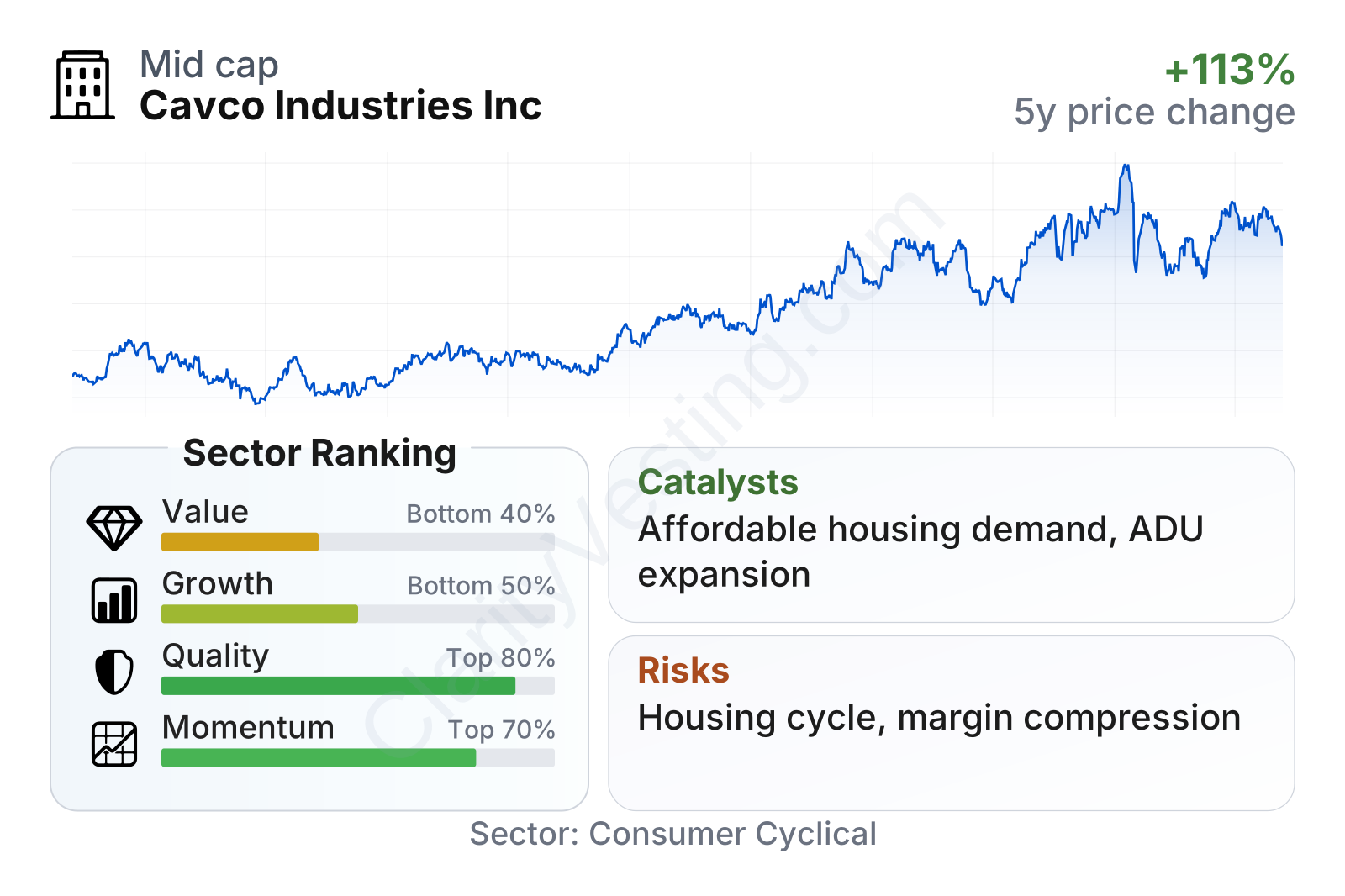
Cavco stands out more for business quality and balance sheet strength than for classic low-price valuation. Profitability remains above the sector median, returns on invested capital are strong, and the company carries very little leverage, with net cash rather than meaningful net debt. Growth metrics are mixed: revenue and free cash flow trends look solid over time, but earnings growth has been uneven because margins have come down from unusually strong post-pandemic levels. Share price performance over three years has been much stronger than the broader sector, although recent months have been more volatile.
Growth
Cavco operates in a part of housing that still has a long runway. The U.S. continues to face an affordability problem, and factory-built homes are one of the clearest lower-cost alternatives to traditional construction. That does not mean growth moves in a straight line, but structurally the company is serving a real need: lower-priced housing supply that can be produced faster and with more standardized processes.
Cavco’s strategy is fairly logical for that backdrop. The company combines manufacturing capacity, multiple brands, a retail footprint, community relationships, and financing support. That creates a fuller ecosystem around the customer than simply selling homes out of a factory. It also gives Cavco more ways to capture demand from first-time buyers, retirees, rural markets, and developers of land-lease communities.
Revenue growth has been cyclical rather than steady. The company went through an exceptional boom, then a pullback, and has since returned to positive growth. More recent year-over-year growth has settled into a healthier, more normal range around high single digits to low double digits, which suggests the business is no longer relying on the extraordinary demand conditions seen earlier in the cycle.
Cash generation is another encouraging point. Free cash flow has recovered to one of its stronger levels in the past several years, reaching roughly the low-$200 million range on a trailing basis. That matters because it shows Cavco is not only reporting accounting profits but also turning a meaningful portion of its business activity into cash that can support expansion, acquisitions, and share repurchases.
Recent company disclosures also support the growth case. In fiscal 2026 reporting, Cavco described higher home sales, improved orders, and stronger backlog trends in several periods, helped by demand for affordable housing and community channel activity. The company has also continued expanding product offerings such as accessory dwelling units and other alternative housing formats. These are not transformative overnight, but they fit the same affordability theme and widen Cavco’s addressable market.
A further catalyst is industry normalization if interest rates become less restrictive. Manufactured housing demand is still sensitive to financing costs, so a more favorable rate environment could improve customer affordability and retailer activity. Cavco is not dependent on that scenario to remain profitable, but it would likely help unit demand.
Risks
This article is for informational purposes only and does not constitute financial advice. Some content is AI-generated. See Disclaimer


