Stock Analysis · Cricut Inc (CRCT)
Overview
Cricut is a consumer crafting technology company best known for connected cutting machines used to make personalized cards, decals, apparel, labels, home décor, and small business merchandise. Its products combine physical machines, design software, digital content, and consumable materials into one ecosystem. In simple terms, Cricut sells the device, provides the software to design projects, and then earns repeat purchases when users subscribe to services or buy materials and accessories.
The business is organized around three main revenue streams. Based on recent annual reporting, the mix is approximately as follows:
- Connected machines: about 44% of revenue. This includes cutting machines and heat-press products such as Cricut Maker, Explore, Joy, and related hardware.
- Accessories and materials: about 42% of revenue. This covers vinyl, iron-on products, paper, blades, mats, pens, and other items that are used repeatedly after a machine is purchased.
- Subscriptions: about 14% of revenue. This mainly comes from Cricut Access, the company’s recurring subscription offering that provides design tools, fonts, images, and other creative content.
This revenue structure matters because subscriptions and consumables are usually more stable than hardware sales alone. Over the last few years, machine revenue has cooled after the pandemic-era demand spike, while the company has continued to lean on recurring and repeat-purchase categories to support profitability.
The business model also has a useful built-in loop: a new user often starts with a machine, then buys materials, and may later subscribe for software features and content. That gives Cricut a mix of one-time and recurring income, although it still remains heavily tied to the health of the hobby and crafting market.
The long-term pattern shows a company that became smaller after its 2021 peak in sales, but not structurally unprofitable. Revenue has come down materially from that high point, yet gross profit and operating income have remained positive, helped by tighter cost control and a larger contribution from higher-margin categories.
Key Figures
| Metric | Value | Sector ⓘ |
|---|---|---|
| Date | Aug 22, 2026 | |
| Context | ||
| Sector | Technology | |
| Industry | Computer Hardware | |
| Market Cap ⓘ | $1.13B | |
| Beta ⓘ | 0.14 | |
Value (Cheapness) | ||
| P/E Ratio ⓘ | 13.50 | 30.63 |
| FCF Yield ⓘ | 13.06% | 4.23% |
| EBIT / EV ⓘ | 13.29% | 2.79% |
| PEG ⓘ | N/A | |
Growth (Business expansion) | ||
| Revenue Growth ⓘ | -9.20% | 15.90% |
| RPS Growth (5Y CAGR) ⓘ | -13.93% | 8.68% |
| EPS Growth (5Y CAGR) ⓘ | 1.01% | -12.38% |
| Margin Growth (5Y Trend) ⓘ | 0.55% | 0.39% |
| FCF Growth (5Y CAGR) ⓘ | N/A | 9.76% |
Quality (Business durability) | ||
| ROIC (Latest) ⓘ | 24.03% | 9.19% |
| ROIC (5Y Median) ⓘ | 12.59% | 8.21% |
| Net Debt / EBIT (Latest) ⓘ | -2.24 | 0.46 |
| Net Debt / EBIT (5Y Median) ⓘ | -2.26 | 0.42 |
| Operating Margin (Latest) ⓘ | 16.59% | 9.23% |
| Operating Margin (5Y Median) ⓘ | 12.52% | 8.19% |
| Debt to Equity (Latest) ⓘ | 2.82% | 32.74% |
| Profit Margin (Latest) ⓘ | 12.71% | 7.01% |
| Free Cash Flow (Latest) ⓘ | $147.65M | |
Momentum (Price trend) | ||
| 3Y Return ⓘ | -18.98% | +46.51% |
| 12M Return (excl. last month) ⓘ | -15.36% | +18.95% |
| 6M Return ⓘ | +23.26% | +18.99% |
| Price vs. 200-Day MA ⓘ | +25.32% | +9.57% |
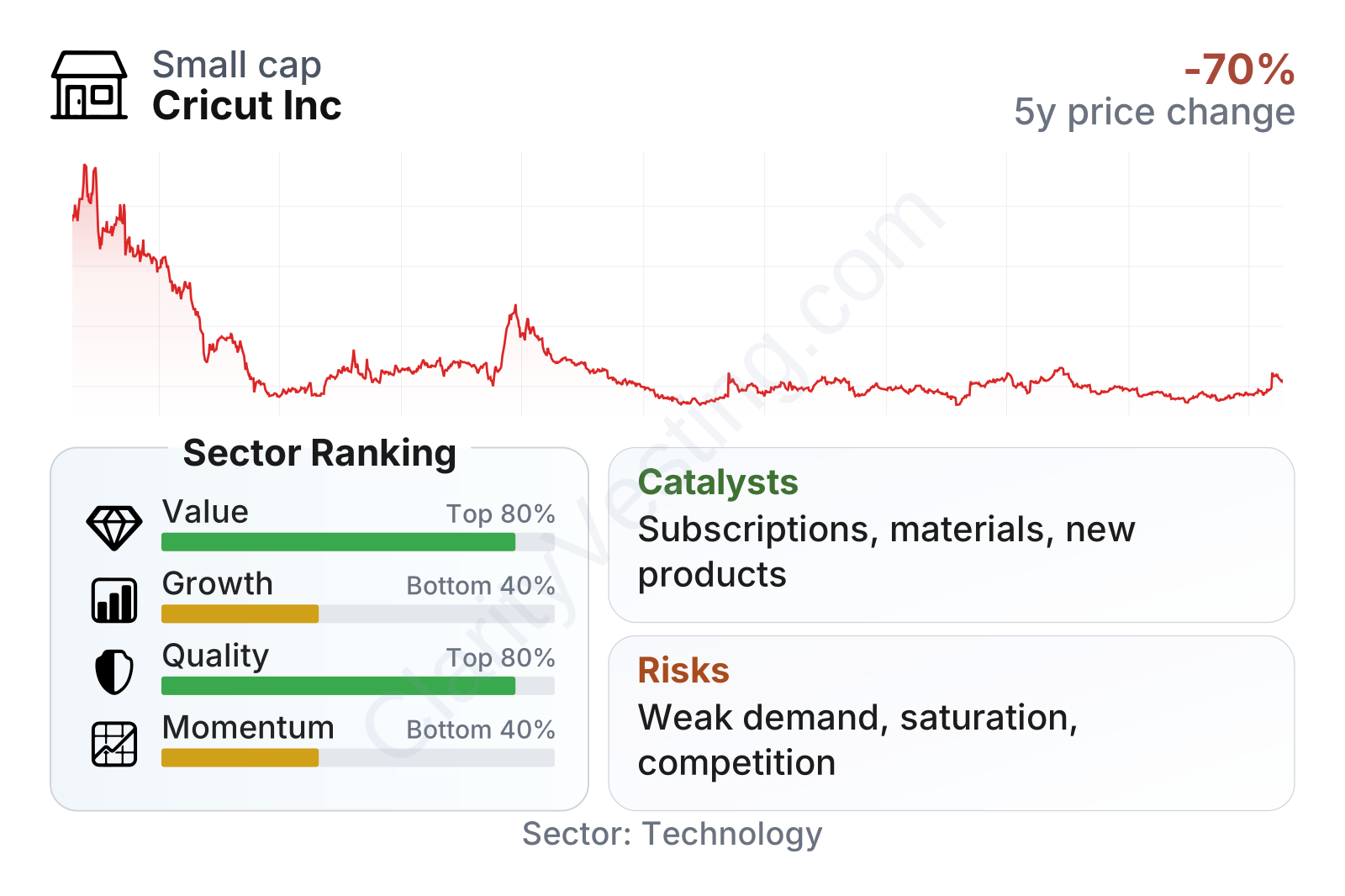
Cricut stands out more for balance-sheet strength and profitability than for growth. Relative to much of the technology sector, valuation metrics look lower, while quality measures look stronger. Growth and longer-term share-price performance are weaker areas, which fits a business that is mature in some categories and still trying to rebuild demand after a major post-pandemic reset.
The share price history reflects that reset clearly. After a steep decline from 2021 levels, the stock has spent a long period in a much lower range. More recently, price momentum has improved over six months, but the longer three-year picture still shows a company working through the aftermath of an earlier demand surge rather than a clean multi-year expansion trend.
Growth
Cricut operates in the broader creator, personalization, and at-home crafting market. This is a real and durable niche, supported by trends such as custom products, side hustles, gifting, event decoration, and small-scale online selling. However, it is not a fast-growing market in the same way as cloud software or artificial intelligence. Demand can be influenced by consumer confidence, discretionary spending, and whether people see crafting as a long-term hobby rather than a temporary trend.
Management’s strategy for future growth is sensible on paper: expand the user base, deepen engagement within the platform, increase subscription penetration, and drive more repeat purchases of materials and accessories. International expansion and product extensions also matter. A customer who stays active in the ecosystem can become much more valuable over time than the initial machine sale alone, which is why the software and consumables layer is so important.
Recent revenue trends still show a business that has not fully returned to durable expansion. Year-over-year comparisons improved from the sharp declines seen in 2022 and 2023, and there were periods of stabilization, but the latest readings point to renewed pressure. That suggests Cricut is still balancing user engagement, new customer acquisition, and more normalized demand after the extraordinary pandemic period.
One encouraging point is cash generation. Even with softer sales, Cricut has remained capable of producing meaningful free cash flow over time, though the most recent trailing figure is below the peak reached in prior years. For a company of this size, that is important because it gives management room to invest in products, return capital, and absorb periods of weaker demand without relying heavily on debt.
A practical catalyst is the company’s effort to broaden what users can do beyond simple cutting projects. New machine categories, heat-press tools, software features, and improved creative workflows can all raise engagement. Another useful catalyst is the small-business user base: crafters who make items for resale often purchase materials more frequently and may be less seasonal than casual hobby users. If Cricut can keep converting casual owners into active platform users, growth quality could improve even without rapid top-line expansion.
Recent company updates have also emphasized product innovation, community engagement, and international reach. None of these alone changes the trajectory overnight, but together they support the idea that Cricut is trying to shift from a one-time hardware purchase model toward a steadier platform model.
Risks
This article is for informational purposes only and does not constitute financial advice. Some content is AI-generated. See Disclaimer