Stock Analysis · Cinemark Holdings Inc (CNK)
Overview
Cinemark Holdings is a movie theater operator. The company runs theaters in the United States and Latin America, selling tickets to moviegoers and a wide range of food and beverages inside its locations. It also earns smaller amounts from screen advertising, loyalty programs, premium experiences, and other theater-related services. In simple terms, Cinemark makes money when people go to the movies, and it tries to increase spending per visit through premium formats, reserved seating, and concessions.
Based on recent company filings, Cinemark’s revenue is mainly split between admissions and concession sales, with a smaller contribution from other theater-related activities. A practical way to think about the business is:
- Admissions: about 55% to 60% of revenue. This is the money collected from movie tickets, before the company pays film rental costs to studios.
- Concessions: about 30% to 35% of revenue. This includes popcorn, drinks, candy, alcoholic beverages, and other food items sold at theaters. This category is especially important because it usually carries better margins than ticket sales.
- Other revenue: about 8% to 12% of revenue. This can include advertising, screen rentals, loyalty-related items, premium auditorium surcharges, and other ancillary activities.
Cinemark is one of the largest theater chains in North America and also has a meaningful presence in Latin America, which gives it more geographic diversification than some domestic-only exhibitors. The business recovered significantly from the pandemic era, and recent years show a return to positive earnings and cash generation, although performance still depends heavily on the strength and timing of film releases.
The financial flow over the last several years shows a business that moved from heavy losses in 2021 and 2022 to positive operating income and net income in 2023 and 2024. Revenue has broadly recovered to around the low-$3 billion range, while interest expense remains material, which makes debt reduction an important part of the long-term picture.
Key Figures
| Metric | Value | Sector ⓘ |
|---|---|---|
| Date | Sep 12, 2026 | |
| Context | ||
| Sector | Communication Services | |
| Industry | Entertainment | |
| Market Cap ⓘ | $4.07B | |
| Beta ⓘ | 0.98 | |
Value (Cheapness) | ||
| P/E Ratio ⓘ | 19.75 | 18.61 |
| FCF Yield ⓘ | 7.68% | 13.68% |
| EBIT / EV ⓘ | 6.12% | 4.54% |
| PEG ⓘ | 1.72 | |
Growth (Business expansion) | ||
| Revenue Growth ⓘ | 15.50% | 5.40% |
| RPS Growth (5Y CAGR) ⓘ | 15.84% | 4.62% |
| EPS Growth (5Y CAGR) ⓘ | -64.54% | -18.01% |
| Margin Growth (5Y Trend) ⓘ | 27.78% | 1.10% |
| FCF Growth (5Y CAGR) ⓘ | 25.82% | 5.88% |
Quality (Business durability) | ||
| ROIC (Latest) ⓘ | 15.61% | 8.38% |
| ROIC (5Y Median) ⓘ | 11.21% | 8.32% |
| Net Debt / EBIT (Latest) ⓘ | 3.50 | 1.99 |
| Net Debt / EBIT (5Y Median) ⓘ | 6.85 | 2.94 |
| Operating Margin (Latest) ⓘ | 11.94% | 14.89% |
| Operating Margin (5Y Median) ⓘ | 10.19% | 12.96% |
| Debt to Equity (Latest) ⓘ | 92.71% | 59.59% |
| Profit Margin (Latest) ⓘ | 6.44% | 8.77% |
| Free Cash Flow (Latest) ⓘ | $313.00M | |
Momentum (Price trend) | ||
| 3Y Return ⓘ | +118.70% | +46.64% |
| 12M Return (excl. last month) ⓘ | +48.85% | +2.16% |
| 6M Return ⓘ | +38.20% | +5.05% |
| Price vs. 200-Day MA ⓘ | +21.72% | +2.88% |
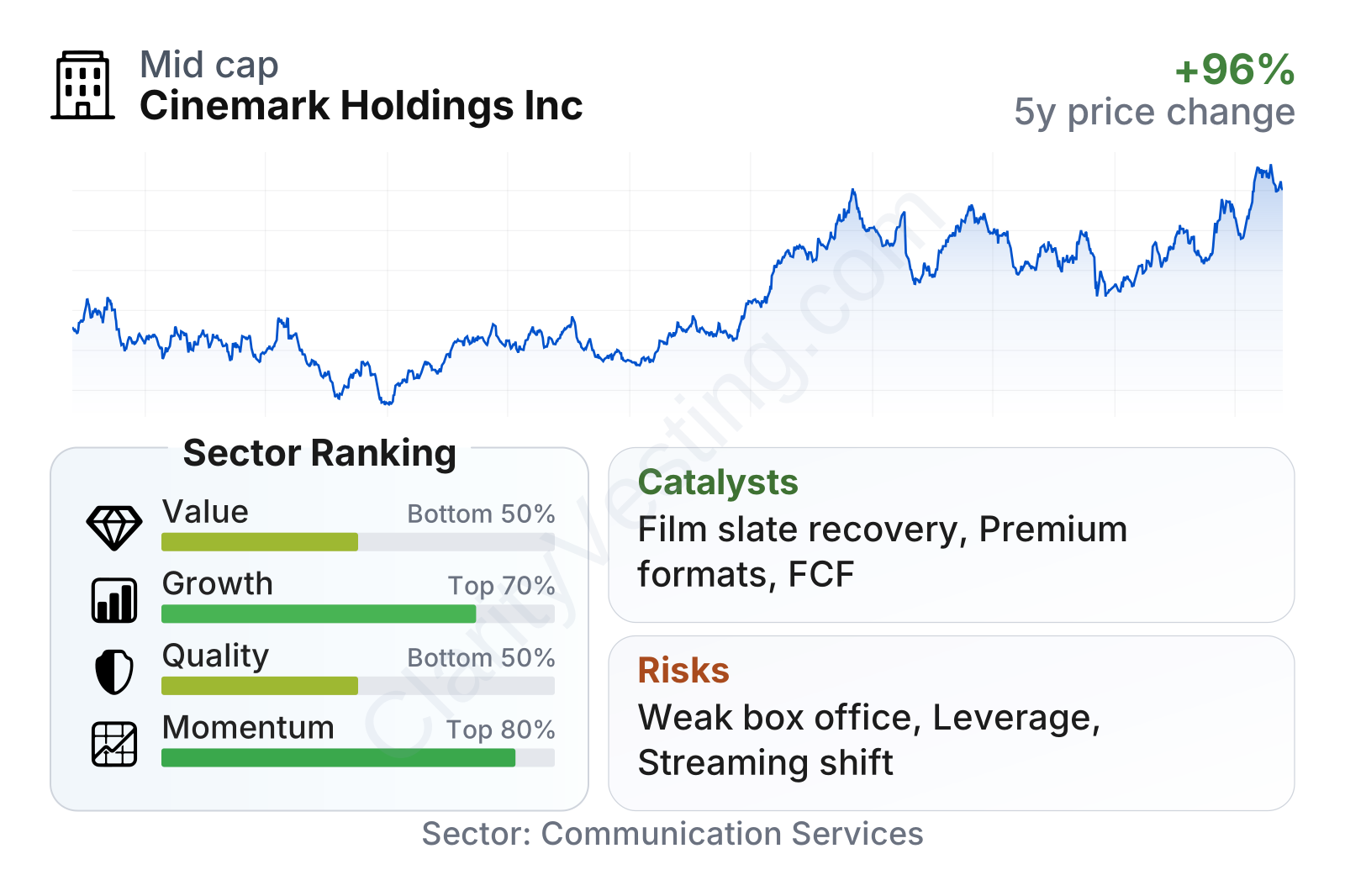
Cinemark currently sits in the lower half of the sector on value and overall quality measures, while ranking better on growth and especially recent price momentum. Revenue growth has been stronger than the sector median, return on invested capital is solid, and free cash flow is positive, but leverage remains elevated and profit margins still trail many peers. That mix points to a company with real operational recovery, but not yet the balance-sheet strength or consistency of the strongest businesses in the sector.
The stock has been volatile over the last several years, which matches the company’s cyclical profile and dependence on movie release schedules. More recently, the share price trend has been much stronger than the sector median, suggesting the market has been recognizing the improvement in attendance, profitability, and cash generation.
Growth
The movie exhibition business is not a classic high-growth industry, but it can still expand when the film slate is healthy, premium experiences gain traction, and theaters improve spending per guest. Cinemark’s strategy is built around exactly those points: premium large-format screens, recliner seating, food and beverage upgrades, loyalty programs, and disciplined capital spending. For a mature industry, that is a sensible playbook because it focuses less on opening large numbers of new sites and more on extracting better economics from each visit.
Revenue growth has been uneven quarter to quarter, which is normal for theaters because results depend on the timing and popularity of movie releases. Still, the most recent year-over-year growth rate is around the mid-teens, clearly above the sector median. Over a five-year view, revenue per share growth has also been much stronger than the typical company in the sector, showing that Cinemark has participated well in the theatrical recovery.
Free cash flow has also improved meaningfully from post-pandemic levels and has remained positive, recently reaching roughly the low-$300 million range on a trailing basis. That matters because cash generation gives the company more room to pay down debt, reinvest in premium theater formats, and absorb periods when the release calendar is weaker.
A major catalyst for future growth is the normalization of the film pipeline after the disruption caused by Hollywood strikes. As more wide releases return to theaters, exhibitors like Cinemark can benefit from both higher attendance and better concession sales. Another support is the company’s international footprint, especially in Latin America, where moviegoing can add some diversification beyond the U.S. market. Recent company communications have also emphasized continued demand for blockbuster titles and premium experiences, which supports the view that theatrical exhibition remains relevant when content is strong.
Risks
This article is for informational purposes only and does not constitute financial advice. Some content is AI-generated. See Disclaimer


