Stock Analysis · Comcast Corp (CMCSA)
Overview
Comcast is a large communications and media company with three main businesses: broadband and wireless connectivity, entertainment and content, and theme parks. In simple terms, it sells internet access and mobile phone service to households and businesses, operates television and streaming platforms, owns film and television studios through NBCUniversal, and runs the Universal theme parks business.
Its revenue mix is diversified, but connectivity remains the core engine. Based on Comcast’s recent segment reporting in its latest annual filing, the main sources of revenue are approximately:
- Connectivity & Platforms: about 65% to 70% — This includes residential broadband, wireless, business services, video, advertising tied to cable distribution, and other communication services. Broadband is the most important piece inside this segment.
- Content & Experiences: about 30% to 35% — This includes media networks, studios, and theme parks. It covers TV networks, film releases, licensing, Peacock streaming, and admissions and in-park spending at Universal destinations.
Looking more closely at the business model, broadband and business connectivity generally provide recurring monthly revenue, which tends to be steadier than movie releases or advertising. By contrast, the media and parks operations can add growth and brand value, but they are usually more cyclical and more exposed to consumer demand.
Comcast’s scale matters here. It is one of the biggest broadband providers in the United States, and it also owns strong entertainment assets such as NBC, Universal Pictures, Peacock, and Universal theme parks. That combination gives the company several ways to earn money from the same customer relationship: internet service at home, mobile plans, advertising, streaming subscriptions, and entertainment experiences.
The long-term financial picture shows a business with fairly stable total revenue, improving gross profit over time, and a meaningful rebound in net income after the weaker 2022 period. That suggests Comcast has recently been managing costs and monetization more effectively even without strong top-line expansion.
Key Figures
| Metric | Value | Sector ⓘ |
|---|---|---|
| Date | Sep 12, 2026 | |
| Context | ||
| Sector | Communication Services | |
| Industry | Telecom Services | |
| Market Cap ⓘ | $89.32B | |
| Beta ⓘ | 0.66 | |
Value (Cheapness) | ||
| P/E Ratio ⓘ | 7.89 | 18.61 |
| FCF Yield ⓘ | 22.89% | 13.68% |
| EBIT / EV ⓘ | 10.81% | 4.54% |
| PEG ⓘ | 2.39 | |
Growth (Business expansion) | ||
| Revenue Growth ⓘ | -1.20% | 5.40% |
| RPS Growth (5Y CAGR) ⓘ | 8.00% | 4.62% |
| EPS Growth (5Y CAGR) ⓘ | -17.92% | -18.01% |
| Margin Growth (5Y Trend) ⓘ | 4.31% | 1.10% |
| FCF Growth (5Y CAGR) ⓘ | 6.39% | 5.88% |
Quality (Business durability) | ||
| ROIC (Latest) ⓘ | 7.55% | 8.38% |
| ROIC (5Y Median) ⓘ | 10.19% | 8.32% |
| Net Debt / EBIT (Latest) ⓘ | 4.50 | 1.99 |
| Net Debt / EBIT (5Y Median) ⓘ | 4.02 | 2.94 |
| Operating Margin (Latest) ⓘ | 14.71% | 14.89% |
| Operating Margin (5Y Median) ⓘ | 20.08% | 12.96% |
| Debt to Equity (Latest) ⓘ | 100.68% | 59.59% |
| Profit Margin (Latest) ⓘ | 8.97% | 8.77% |
| Free Cash Flow (Latest) ⓘ | $20.44B | |
Momentum (Price trend) | ||
| 3Y Return ⓘ | -33.58% | +46.64% |
| 12M Return (excl. last month) ⓘ | -11.24% | +2.16% |
| 6M Return ⓘ | -14.32% | +5.05% |
| Price vs. 200-Day MA ⓘ | -4.70% | +2.88% |
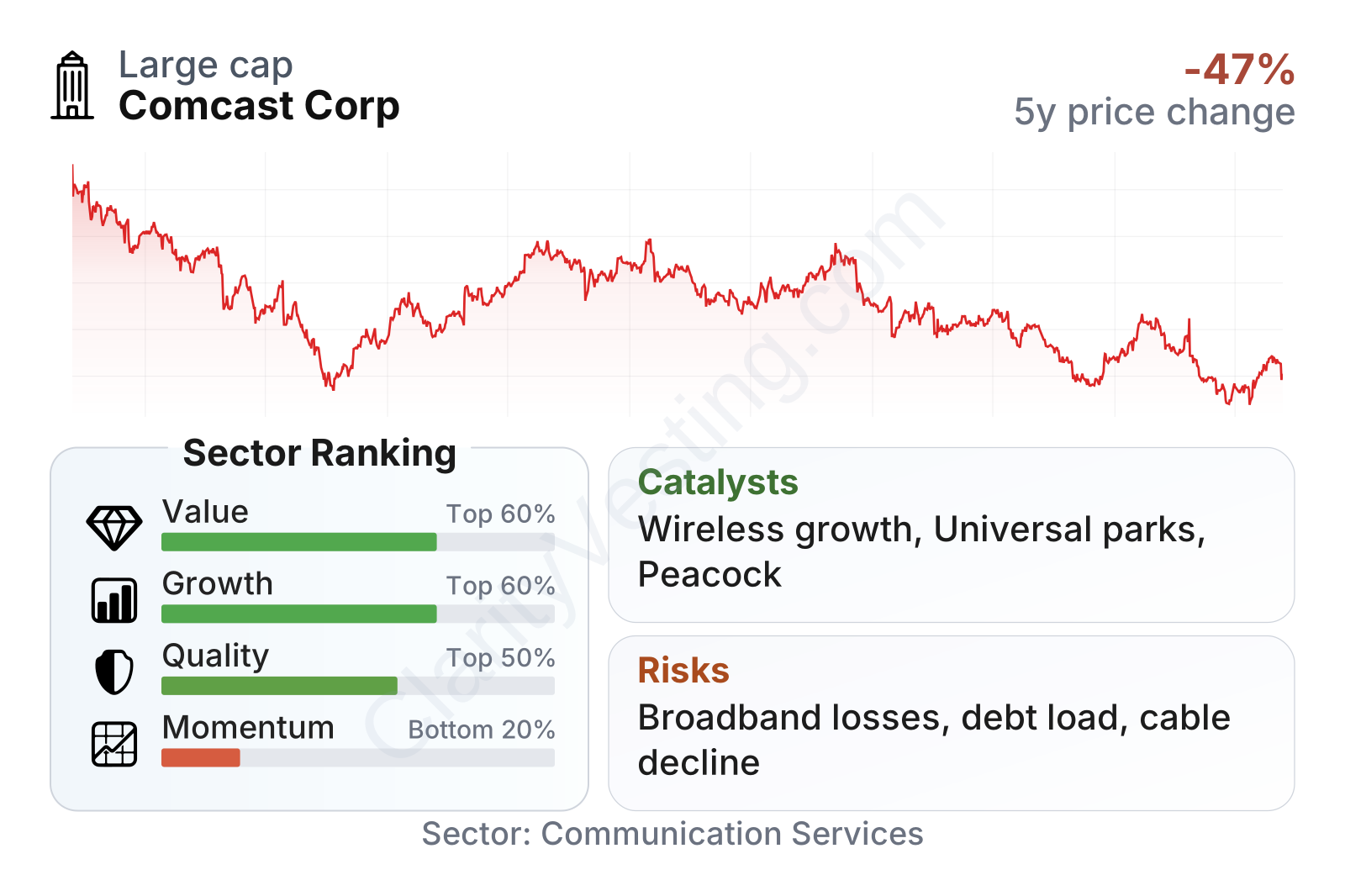
Comcast stands out as a large-cap company with relatively low share-price volatility and unusually inexpensive valuation multiples compared with much of the communication services sector. Free cash flow generation is strong, while growth is more mixed: longer-term per-share revenue and cash flow trends are respectable, but recent year-over-year revenue has been slightly negative. Quality measures are solid overall, although leverage remains heavier than the sector median. Market momentum is clearly weak, reflecting the market’s caution toward cable and legacy media businesses.
Growth
Comcast operates in a sector that is growing in some areas and shrinking in others. Broadband usage, mobile data consumption, streaming distribution, business connectivity, and location-based entertainment remain structurally important markets. At the same time, traditional cable television continues to decline, and media advertising can be uneven. That means Comcast’s growth outlook depends less on simple industry expansion and more on whether it can shift its revenue mix toward stronger categories fast enough.
A central part of that strategy is broadband retention, wireless expansion, and monetizing its entertainment brands across multiple platforms. Wireless is especially important because it gives Comcast another recurring service to bundle with broadband, which can reduce customer losses and increase revenue per household. Business services also remains an attractive area because enterprise connectivity tends to carry good margins and can grow even when consumer video contracts.
On the media side, Comcast’s future growth case is tied to making its content library work across films, licensing, streaming, and parks. Universal has shown that successful intellectual property can travel across several businesses at once. A hit movie franchise can support streaming viewership, consumer products, and theme park attractions. That is strategically valuable because it spreads the return from content spending across more than one revenue stream.
Theme parks are another notable growth lever. Comcast has continued investing in the Universal parks platform, including major expansion projects. Parks are capital-intensive, but they also offer a different kind of earnings driver than telecom: consumer experiences with pricing power, tourism exposure, and strong brand reinforcement. If execution remains strong, this business can help offset the maturity of the cable side.
Recent revenue growth has been uneven rather than consistently strong. The pattern suggests Comcast is dealing with a mature core business and periodic pressure in media, even as some newer areas improve. That is not the profile of a fast-growing company, but it can still support long-term value if the business mix keeps improving and profitability remains disciplined.
Cash generation is a more encouraging part of the picture. Free cash flow has recovered sharply from earlier lows and is now running at a much stronger level, which gives Comcast flexibility to fund network investments, support entertainment expansion, service debt, and continue shareholder returns. For a mature company, that kind of cash production is often more important than headline revenue growth.
A recent opportunity to watch is the company’s continued push around broadband upgrades, mobile customer additions, Peacock monetization, and Universal’s expansion pipeline. None of these on its own transforms Comcast overnight, but together they form a credible plan to keep the company relevant as viewing habits and connectivity needs change.
Risks
This article is for informational purposes only and does not constitute financial advice. Some content is AI-generated. See Disclaimer


