Stock Analysis · Chewy Inc (CHWY)
Overview
Chewy is an online retailer focused on pet products and pet health services in the United States. Its business is built around a simple idea: make recurring pet care purchases easy through a broad product catalog, home delivery, and subscription-like reordering. The company sells food, treats, supplies, medications, and increasingly health-related services for dogs, cats, and other pets.
Revenue still comes primarily from product sales rather than services, but the mix has been gradually expanding beyond basic retail. Based on recent company disclosures, the business can be understood through these main revenue streams:
- Pet food, treats, and hardgoods: approximately 80% to 90% of revenue. This includes everyday consumables such as food and litter, plus supplies like toys, crates, beds, and accessories.
- Autoship recurring sales: approximately 75% to 80% of net sales. This is not a separate product line, but it is a crucial driver of repeat purchases and customer retention across categories.
- Healthcare and pharmacy: approximately 10% to 20% of revenue. This includes prescription medications, over-the-counter health products, practice management and clinic-related offerings, and the broader push into pet health.
- Advertising and other services: a small but growing share of revenue. This includes sponsored placements and brand marketing programs on Chewy’s platform, along with selected service initiatives.
For long-term analysis, the important point is that Chewy is not just an e-commerce storefront. It is trying to become a repeat-purchase platform centered on pet essentials and, over time, a larger health and care ecosystem. Financially, revenue has continued to rise, gross profit has expanded, and operating income has improved materially versus the loss-making period a few years ago. That said, most of the business still operates on thin retail margins, so scale and efficiency remain central to the investment case.
The business flow shows a clear improvement over the last several years: sales have climbed steadily, gross profit has widened, and Chewy has moved from operating losses to positive operating income. The biggest expense remains fulfillment, marketing, customer support, and other overhead inside selling and administrative costs, which means execution on efficiency matters almost as much as top-line growth.
Key Figures
| Metric | Value | Sector ⓘ |
|---|---|---|
| Date | Sep 14, 2026 | |
| Context | ||
| Sector | Consumer Cyclical | |
| Industry | Internet Retail | |
| Market Cap ⓘ | $8.22B | |
| Beta ⓘ | 1.42 | |
Value (Cheapness) | ||
| P/E Ratio ⓘ | 31.45 | 17.10 |
| FCF Yield ⓘ | 6.92% | 8.53% |
| EBIT / EV ⓘ | 2.92% | 6.46% |
| PEG ⓘ | 0.42 | |
Growth (Business expansion) | ||
| Revenue Growth ⓘ | 7.30% | 5.75% |
| RPS Growth (5Y CAGR) ⓘ | 8.32% | 9.14% |
| EPS Growth (5Y CAGR) ⓘ | 43.09% | -18.19% |
| Margin Growth (5Y Trend) ⓘ | 2.94% | -0.23% |
| FCF Growth (5Y CAGR) ⓘ | 184.76% | 4.91% |
Quality (Business durability) | ||
| ROIC (Latest) ⓘ | 35.90% | 12.61% |
| ROIC (5Y Median) ⓘ | 38.41% | 10.72% |
| Net Debt / EBIT (Latest) ⓘ | 2.16 | 2.11 |
| Net Debt / EBIT (5Y Median) ⓘ | -0.86 | 2.32 |
| Operating Margin (Latest) ⓘ | 1.97% | 9.25% |
| Operating Margin (5Y Median) ⓘ | 0.54% | 9.64% |
| Debt to Equity (Latest) ⓘ | 313.41% | 75.99% |
| Profit Margin (Latest) ⓘ | 2.09% | 5.34% |
| Free Cash Flow (Latest) ⓘ | $568.10M | |
Momentum (Price trend) | ||
| 3Y Return ⓘ | -6.67% | +14.39% |
| 12M Return (excl. last month) ⓘ | -38.28% | +3.08% |
| 6M Return ⓘ | -16.91% | +0.55% |
| Price vs. 200-Day MA ⓘ | -20.09% | -0.54% |
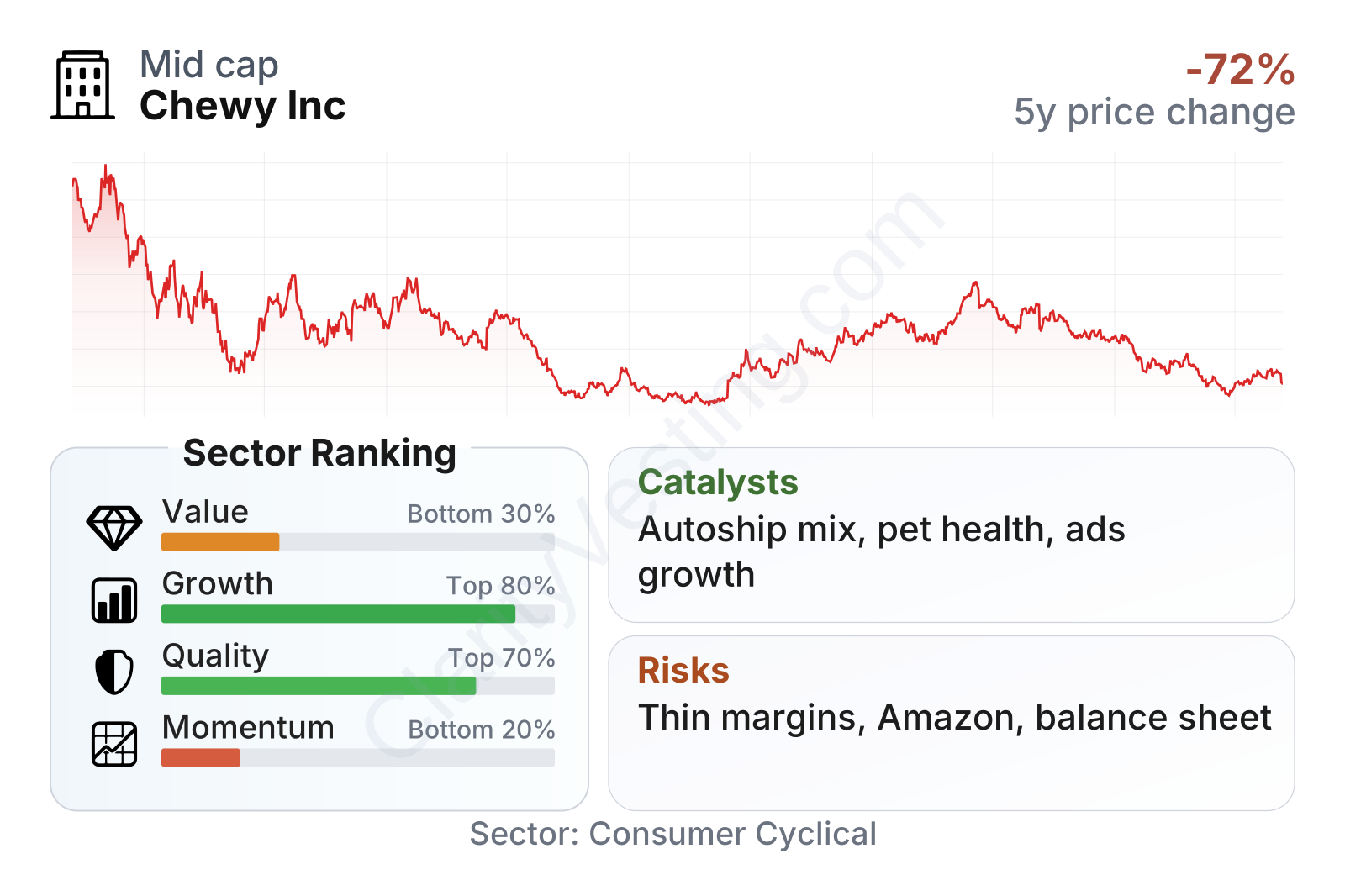
Chewy currently looks mixed across the main financial characteristics. Growth and business quality rank above much of the sector, helped by rising revenue, strong improvement in earnings per share over five years, and solid returns on invested capital. Value looks weaker because the earnings multiple remains above the sector median, while free cash flow yield and operating earnings relative to enterprise value are not especially low-cost compared with peers. Momentum is clearly the softest area, with the stock trailing much of the sector over recent periods despite the underlying business becoming more profitable.
In size terms, Chewy sits in the mid-cap range, large enough to benefit from scale but still small compared with the biggest retail and platform competitors. The stock’s beta above 1 suggests that share price swings can be more pronounced than the broader market.
Growth
The pet industry has attractive long-term characteristics. Pet spending is often more resilient than many other consumer categories because food, medication, and routine care are recurring needs rather than discretionary purchases. In Chewy’s case, this matters because a large portion of sales comes from consumables and repeat orders, which can provide steadier demand than one-time retail purchases.
Chewy’s growth strategy also makes logical sense. The company has been deepening customer relationships through Autoship, broadening its private-label and category mix, and pushing further into higher-value healthcare. Pet pharmacy, prescription management, and clinic-related capabilities are especially important because health categories tend to support stronger retention and can deepen the customer relationship beyond commodity retail. If Chewy succeeds here, it could gradually shift part of the business toward categories with better economics than general merchandise.
Revenue growth has clearly cooled from the unusually strong rates seen earlier in the decade, but the more recent pattern suggests stabilization rather than collapse. The latest year-over-year pace sits above the sector median, which is encouraging after a period of normalization in online retail and consumer spending.
One of the most constructive developments is cash generation. Free cash flow has moved from very modest levels a few years ago to well over half a billion dollars on a trailing basis. That improvement suggests the company is converting scale into actual financial flexibility, even if accounting margins are still relatively thin.
A meaningful recent catalyst is the continued buildout of the vet and pet health platform. Public company materials in 2026 highlighted ongoing expansion in pharmacy, sponsored ads, and the broader ecosystem around pet parents. These initiatives matter because they create more ways to monetize an existing customer base rather than relying only on adding new shoppers. In a mature e-commerce environment, that is often the more durable path to growth.
Risks
This article is for informational purposes only and does not constitute financial advice. Some content is AI-generated. See Disclaimer


