Stock Analysis · Charter Communications Inc (CHTR)
Overview
Charter Communications is a large U.S. broadband and cable operator best known through its Spectrum brand. The company sells high-speed internet, mobile phone service, video packages, and voice services to households and businesses. Its network reaches tens of millions of homes and businesses, and its strategy is centered on using that network to deepen customer relationships rather than relying on a single product.
The business is still led by connectivity. Residential internet access remains the core service, while mobile has become a more important second engine as Charter bundles wireless plans with broadband. Video continues to shrink as consumers move to streaming, but it still produces meaningful revenue. Commercial services add another layer through connectivity and communications products for small businesses and larger enterprises.
Based on recent company reporting, Charter’s revenue mix can be summarized approximately as follows:
- Residential internet: about 40% to 45% of revenue. This includes broadband subscriptions for households and is the company’s most important profit driver.
- Video: about 20% to 25%. This includes traditional cable TV packages, which remain sizable but continue to face secular pressure.
- Mobile: about 10% to 15%. This includes Spectrum Mobile wireless plans and has been one of the faster-growing parts of the company.
- Commercial services: about 10% to 15%. This covers internet, networking, voice, and related services for businesses.
- Residential voice: about 5% to 7%. This is the home phone business, which is mature and slowly declining.
- Advertising and other: about 3% to 5%. This includes local advertising and smaller ancillary activities.
Financially, Charter stands out for producing large revenue and operating income with relatively stable margins, but also for carrying heavy debt. The business model is capital-intensive: it requires continuous network investment, yet once the network is in place, incremental customers can be attractive economically. Over the last several years, revenue has been broadly stable in the mid-$50 billion range, operating income has remained strong, and interest expense has stayed high because of the company’s leverage.
The broad picture is a business with resilient operating profitability, limited top-line growth, and a large financing burden that absorbs a meaningful share of earnings.
Key Figures
| Metric | Value | Sector ⓘ |
|---|---|---|
| Date | Sep 12, 2026 | |
| Context | ||
| Sector | Communication Services | |
| Industry | Telecom Services | |
| Market Cap ⓘ | $18.94B | |
| Beta ⓘ | 0.69 | |
Value (Cheapness) | ||
| P/E Ratio ⓘ | 3.48 | 18.61 |
| FCF Yield ⓘ | 23.00% | 13.68% |
| EBIT / EV ⓘ | 11.00% | 4.54% |
| PEG ⓘ | 0.76 | |
Growth (Business expansion) | ||
| Revenue Growth ⓘ | -1.70% | 5.40% |
| RPS Growth (5Y CAGR) ⓘ | 10.40% | 4.62% |
| EPS Growth (5Y CAGR) ⓘ | -11.81% | -18.01% |
| Margin Growth (5Y Trend) ⓘ | 2.65% | 1.10% |
| FCF Growth (5Y CAGR) ⓘ | -15.54% | 5.88% |
Quality (Business durability) | ||
| ROIC (Latest) ⓘ | 8.33% | 8.38% |
| ROIC (5Y Median) ⓘ | 8.61% | 8.32% |
| Net Debt / EBIT (Latest) ⓘ | 7.70 | 1.99 |
| Net Debt / EBIT (5Y Median) ⓘ | 8.09 | 2.94 |
| Operating Margin (Latest) ⓘ | 22.68% | 14.89% |
| Operating Margin (5Y Median) ⓘ | 22.25% | 12.96% |
| Debt to Equity (Latest) ⓘ | 563.68% | 59.59% |
| Profit Margin (Latest) ⓘ | 9.05% | 8.77% |
| Free Cash Flow (Latest) ⓘ | $4.36B | |
Momentum (Price trend) | ||
| 3Y Return ⓘ | -66.61% | +46.64% |
| 12M Return (excl. last month) ⓘ | -42.90% | +2.16% |
| 6M Return ⓘ | -32.23% | +5.05% |
| Price vs. 200-Day MA ⓘ | -19.48% | +2.88% |
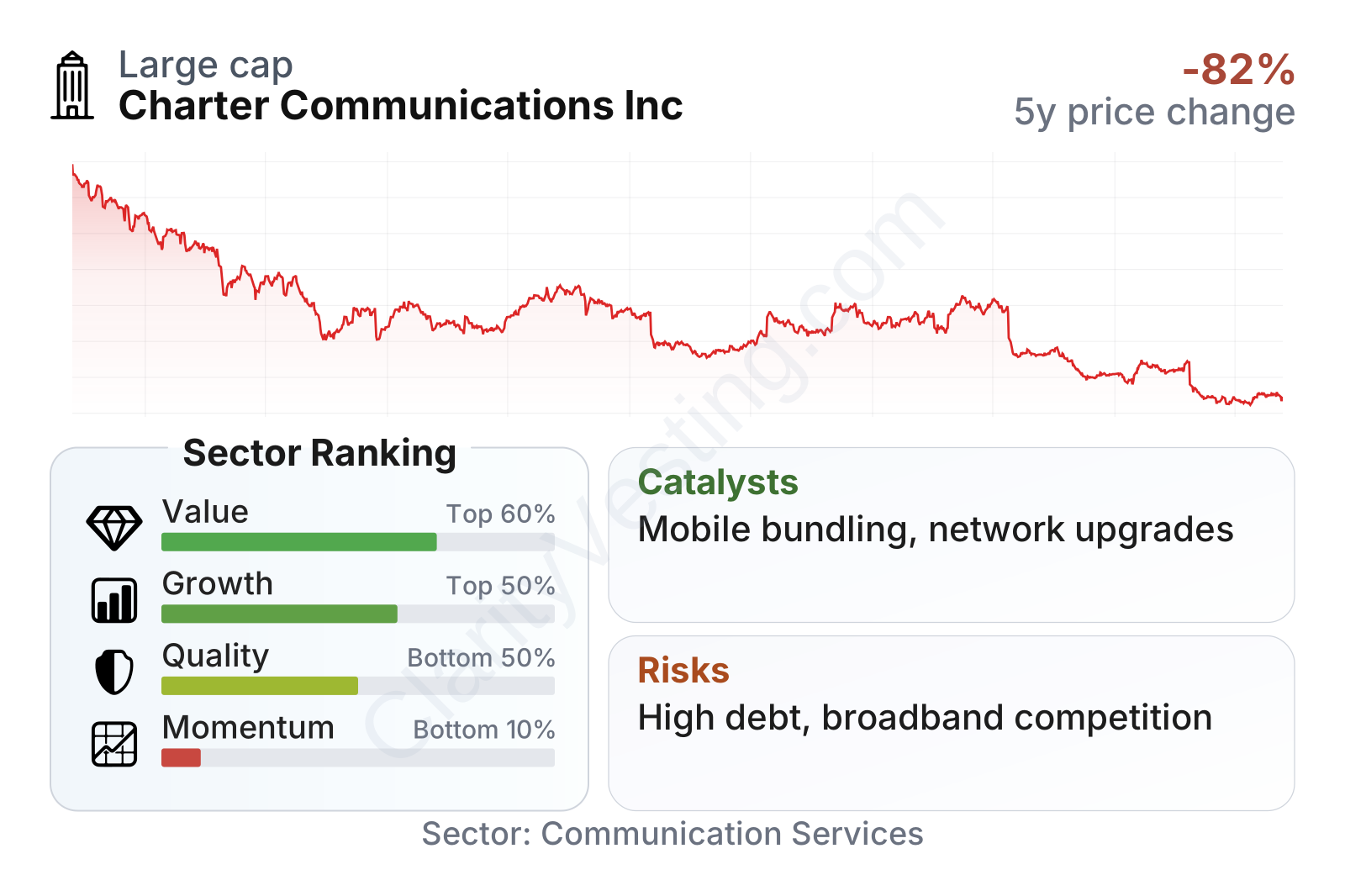
Charter looks unusual at a glance. On valuation measures, it screens cheaply versus much of the sector, with a very low earnings multiple and a free cash flow yield that is well above the sector median. On profitability, operating margin remains clearly stronger than the industry midpoint. The weaker side is balance-sheet pressure: net debt relative to earnings is elevated, and debt-to-equity is far above sector norms. Growth indicators are mixed, with decent longer-term revenue per share progress but softer recent sales momentum and weak share price momentum.
The stock chart also shows how sharply market sentiment has changed over the last few years. Charter moved from being priced like a steady compounder to being treated more like a mature utility-like network operator with subscriber and leverage concerns.
Growth
Charter operates in a sector that still matters deeply for the long term. Demand for bandwidth continues to rise as homes use more streaming, cloud applications, gaming, remote work tools, connected devices, and increasingly AI-enabled services. That supports the strategic importance of fixed broadband infrastructure. In that sense, Charter is in a durable sector, even if the easiest phase of growth has passed.
The main question is not whether connectivity demand grows, but whether Charter can capture enough of that demand to offset mature and declining categories. The company’s strategy makes sense on that front: protect and upgrade the broadband network, expand mobile penetration through bundled offers, and improve product quality through faster speeds and broader service reach. Charter has also pushed network expansion into new passings through rural buildouts and government-supported programs, which can add customers over time.
Recent revenue growth has slowed materially and has even turned slightly negative on a year-over-year basis. That shows Charter is no longer in an easy expansion phase. Even so, the slowdown is not coming from a collapsing business; it reflects a mature core market, ongoing video attrition, and a tougher competitive environment in broadband. For a long-term view, the more relevant point is whether mobile growth, broadband retention, and network expansion can stabilize the top line again.
Mobile is one of the clearest catalysts. Charter has continued adding wireless lines by selling mobile as part of a bundle with home internet. This improves customer stickiness and raises revenue per household without requiring the company to build a nationwide wireless network from scratch. It is a practical extension of the broadband relationship and can support growth even if traditional cable products keep shrinking.
Another catalyst is network evolution. Charter has been investing in upgrades designed to improve speed, capacity, and service reliability. In fixed-line telecom, product quality matters because churn tends to be lower when customers view broadband as essential and dependable. Better speeds can also help defend against fiber competitors and fixed wireless alternatives.
Free cash flow has come down from earlier peaks but remains substantial in absolute dollars. That matters because the company’s long-term flexibility depends on keeping cash generation strong enough to fund network spending, service debt, and preserve optionality. The current level still points to a business with meaningful internal cash production, even if it is less abundant than it was several years ago.
Recent company updates have also highlighted continued mobile expansion, broadband product upgrades, and efforts to improve customer experience. Those are not transformative on their own, but together they are the main building blocks for renewed momentum.
Risks
This article is for informational purposes only and does not constitute financial advice. Some content is AI-generated. See Disclaimer


