Stock Analysis · Choice Hotels International Inc (CHH)
Overview
Choice Hotels International is a hotel franchisor. In simple terms, it mainly does not own most of the hotels carrying its brands. Instead, it licenses brands such as Comfort, Quality, Clarion, Cambria, Sleep Inn, Everhome Suites, WoodSpring Suites, MainStay Suites, and the upscale Radisson brands in the Americas to hotel owners. It also provides reservation systems, loyalty program support, marketing, technology, and other services that help franchisees operate their properties.
This business model is important for long-term analysis because franchising is usually lighter on capital than owning real estate directly. That can support strong margins and cash generation when hotel demand is healthy, although it also means revenue depends heavily on franchisee economics, room demand, and the company’s ability to keep its brands relevant.
Based on the company’s reporting structure and annual disclosures, Choice Hotels’ revenue comes primarily from franchise-related fees and services, with a smaller contribution from owned or leased hotel operations and other items. A practical breakdown is:
- Royalty, franchise, and management fees: approximately 55% to 65% of revenue. These fees are tied to hotel room sales, franchise agreements, and, where applicable, management arrangements.
- Procurement, marketing, reservation, and other platform-related fees: approximately 20% to 30%. This includes system, loyalty, distribution, and other services provided to franchisees.
- Owned and leased hotel revenue and other items: approximately 10% to 20%. This is the less predictable part of the business and can be affected by acquisitions, brand integration, and timing.
Choice’s network is concentrated in the midscale, upper-midscale, and extended-stay segments, which tends to give it exposure to value-oriented travelers and domestic road travel. That positioning has historically been more resilient than luxury lodging during some weaker economic periods, although it is still a cyclical industry.
The business mix also shows why Choice can remain highly profitable even when revenue growth is modest. Over the last several years, revenue has trended upward overall, while operating income and net income have remained strong relative to sales, reflecting the economics of a franchise-heavy model rather than a real-estate-heavy one.
Key Figures
| Metric | Value | Sector ⓘ |
|---|---|---|
| Date | Sep 12, 2026 | |
| Context | ||
| Sector | Consumer Cyclical | |
| Industry | Lodging | |
| Market Cap ⓘ | $4.40B | |
| Beta ⓘ | 0.67 | |
Value (Cheapness) | ||
| P/E Ratio ⓘ | 13.71 | 17.10 |
| FCF Yield ⓘ | 5.04% | 8.53% |
| EBIT / EV ⓘ | 7.47% | 6.46% |
| PEG ⓘ | 1.73 | |
Growth (Business expansion) | ||
| Revenue Growth ⓘ | 7.10% | 5.75% |
| RPS Growth (5Y CAGR) ⓘ | 15.69% | 9.14% |
| EPS Growth (5Y CAGR) ⓘ | -14.21% | -18.21% |
| Margin Growth (5Y Trend) ⓘ | -5.25% | -0.23% |
| FCF Growth (5Y CAGR) ⓘ | -20.10% | 4.91% |
Quality (Business durability) | ||
| ROIC (Latest) ⓘ | 18.66% | 12.61% |
| ROIC (5Y Median) ⓘ | 23.29% | 10.72% |
| Net Debt / EBIT (Latest) ⓘ | 4.22 | 2.10 |
| Net Debt / EBIT (5Y Median) ⓘ | 3.81 | 2.32 |
| Operating Margin (Latest) ⓘ | 30.22% | 9.25% |
| Operating Margin (5Y Median) ⓘ | 34.28% | 9.64% |
| Debt to Equity (Latest) ⓘ | 1481.73% | 75.78% |
| Profit Margin (Latest) ⓘ | 32.63% | 5.33% |
| Free Cash Flow (Latest) ⓘ | $221.74M | |
Momentum (Price trend) | ||
| 3Y Return ⓘ | -21.01% | +14.53% |
| 12M Return (excl. last month) ⓘ | -12.27% | +3.08% |
| 6M Return ⓘ | +1.57% | +0.55% |
| Price vs. 200-Day MA ⓘ | -7.81% | -0.54% |
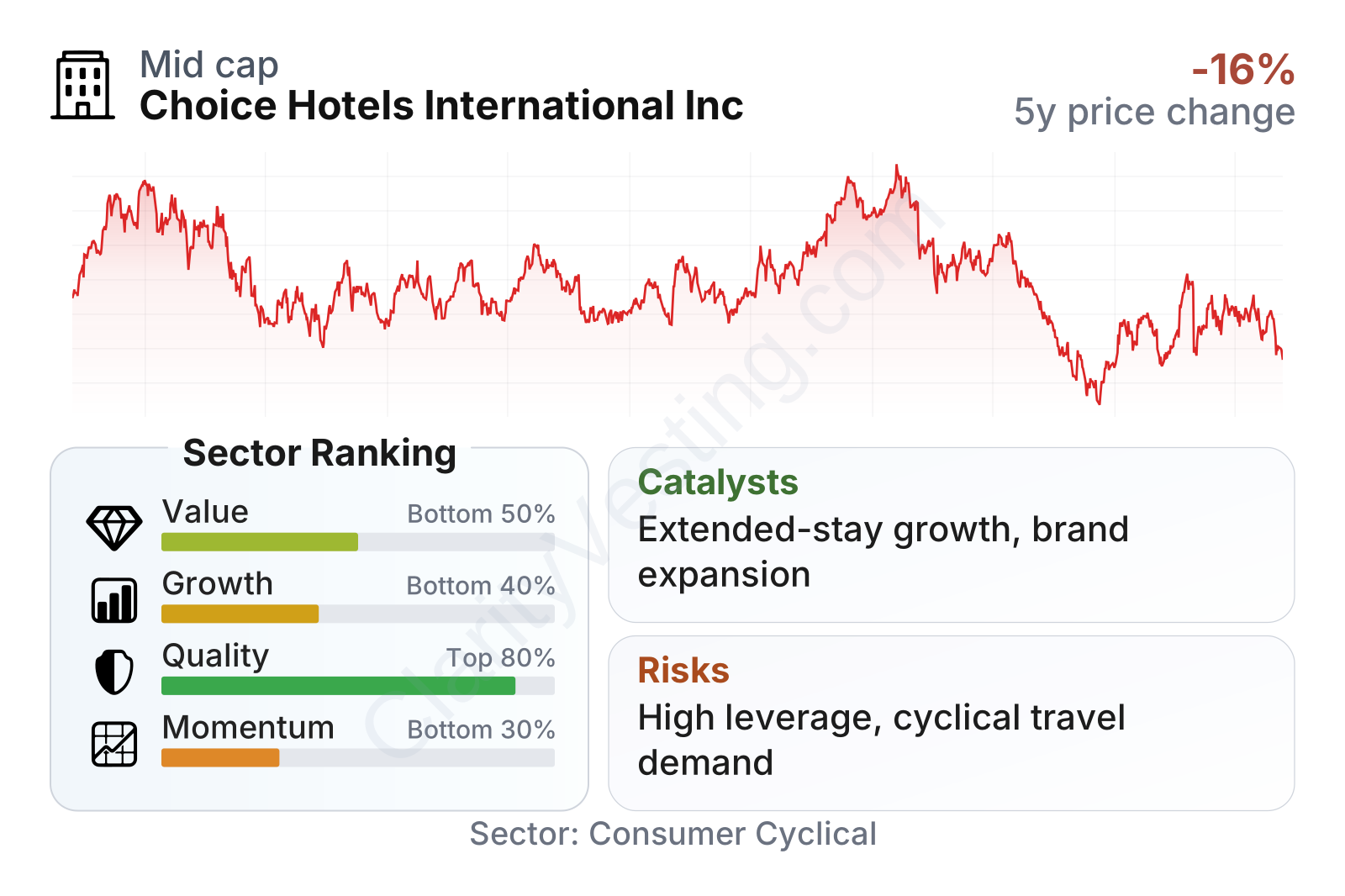
Choice Hotels is a mid-sized lodging company with a relatively low beta of about 0.68, meaning its stock has historically moved less than the broader market. Profitability stands out: operating margin is around 30% and profit margin is above 30%, both well above the sector median. Returns on invested capital are also strong, sitting around 20% recently and even higher on a five-year median basis. The weaker areas are leverage and recent market performance. Net debt relative to EBIT is above 4x, debt-to-equity is unusually high because of the company’s capital structure, and momentum has lagged much of the sector over the last one- and three-year periods. Growth is mixed: revenue has still expanded faster than the sector over some longer periods, but free cash flow growth and margin trends have been less favorable.
Growth
The lodging sector is mature, but not stagnant. Long-term demand is supported by domestic travel, small business travel, highway travel, and the growing appeal of extended-stay lodging. Choice is well placed in several of those categories, especially economy, midscale, and extended stay. Those segments do not always deliver the fastest room-rate growth, but they can be more durable because they serve practical travel needs rather than purely discretionary luxury demand.
Choice’s strategy for growth is centered on expanding its franchise base, strengthening direct booking and loyalty capabilities, and building up higher-value segments such as extended stay and upscale. The integration of Radisson Hotels Americas broadened its brand reach, while brands such as WoodSpring Suites and Everhome Suites give it exposure to the extended-stay market, where demand can benefit from project workers, relocating households, healthcare travel, and budget-conscious longer trips.
Recent revenue growth has cooled sharply from the post-reopening surge seen in 2021 and 2022, which is normal for the industry. More recently, growth has been positive but modest, generally in the low-single-digit range, showing that Choice is now operating in a steadier demand environment rather than a rebound phase. That makes unit growth, brand expansion, and pricing power more important than simple travel recovery.
Cash generation has been uneven over the past few years, but the latest trailing twelve-month figure shows improvement from the weaker levels seen in 2024. For a franchisor, that matters because recurring fee income can produce meaningful cash even without large asset sales or heavy hotel ownership. If Choice can keep adding hotels and improve systemwide sales, free cash flow could remain a central support for the business.
A notable catalyst is continued development in extended stay. This is one of the more attractive parts of the hotel market because it often combines lower operating complexity with longer guest stays. Choice has also been working on portfolio quality, brand modernization, and loyalty integration, which can help franchisees generate better returns and make the platform more competitive when recruiting new owners.
Risks
This article is for informational purposes only and does not constitute financial advice. Some content is AI-generated. See Disclaimer