Stock Analysis · CAVA Group Inc (CAVA)
Overview
CAVA Group is a fast-casual restaurant company built around Mediterranean-inspired bowls, pitas, salads, dips, and spreads. Its brand focuses on a customizable menu, a health-oriented image, and a format designed to serve both in-store and digital orders efficiently. The company operates primarily in the United States and has been expanding its restaurant base at a rapid pace.
The business is much simpler than many larger restaurant groups because revenue is concentrated in one main concept. Based on company filings, the largest sources of revenue are:
- CAVA restaurant sales: approximately 98% to 99% of total revenue. This includes food and beverage sales from company-operated restaurants, whether ordered in person, through the company’s app and website, or via third-party delivery platforms.
- Manufactured products and other revenue: approximately 1% to 2% of total revenue. This mainly includes packaged dips, spreads, and related products, plus limited ancillary revenue.
CAVA no longer depends on a broad mix of brands. That concentration makes the business easier to understand: long-term performance is driven mainly by opening more restaurants, increasing sales at existing locations, and protecting restaurant-level profitability as the chain scales.
The multi-year financial flow also shows a notable improvement. Revenue has climbed from about $500 million in 2021 to nearly $1.2 billion in 2025, while the company moved from operating losses to positive operating income and positive net income. That shift suggests the model has gained scale, even though margins still move around from year to year.
Key Figures
| Metric | Value | Sector ⓘ |
|---|---|---|
| Date | Sep 12, 2026 | |
| Context | ||
| Sector | Consumer Cyclical | |
| Industry | Restaurants | |
| Market Cap ⓘ | $6.53B | |
| Beta ⓘ | 1.74 | |
Value (Cheapness) | ||
| P/E Ratio ⓘ | 96.34 | 17.10 |
| FCF Yield ⓘ | 0.75% | 8.53% |
| EBIT / EV ⓘ | 1.37% | 6.46% |
| PEG ⓘ | 4.69 | |
Growth (Business expansion) | ||
| Revenue Growth ⓘ | 31.30% | 5.75% |
| RPS Growth (5Y CAGR) ⓘ | -65.22% | 9.14% |
| EPS Growth (5Y CAGR) ⓘ | -1.98% | -18.21% |
| Margin Growth (5Y Trend) ⓘ | 12.49% | -0.23% |
| FCF Growth (5Y CAGR) ⓘ | N/A | 4.91% |
Quality (Business durability) | ||
| ROIC (Latest) ⓘ | 8.28% | 12.61% |
| ROIC (5Y Median) ⓘ | 20.94% | 10.72% |
| Net Debt / EBIT (Latest) ⓘ | 2.27 | 2.10 |
| Net Debt / EBIT (5Y Median) ⓘ | 0.21 | 2.32 |
| Operating Margin (Latest) ⓘ | 6.36% | 9.25% |
| Operating Margin (5Y Median) ⓘ | 4.31% | 9.64% |
| Debt to Equity (Latest) ⓘ | 61.90% | 75.78% |
| Profit Margin (Latest) ⓘ | 4.82% | 5.33% |
| Free Cash Flow (Latest) ⓘ | $49.02M | |
Momentum (Price trend) | ||
| 3Y Return ⓘ | +55.27% | +14.53% |
| 12M Return (excl. last month) ⓘ | -17.79% | +3.08% |
| 6M Return ⓘ | -30.45% | +0.55% |
| Price vs. 200-Day MA ⓘ | -22.66% | -0.54% |
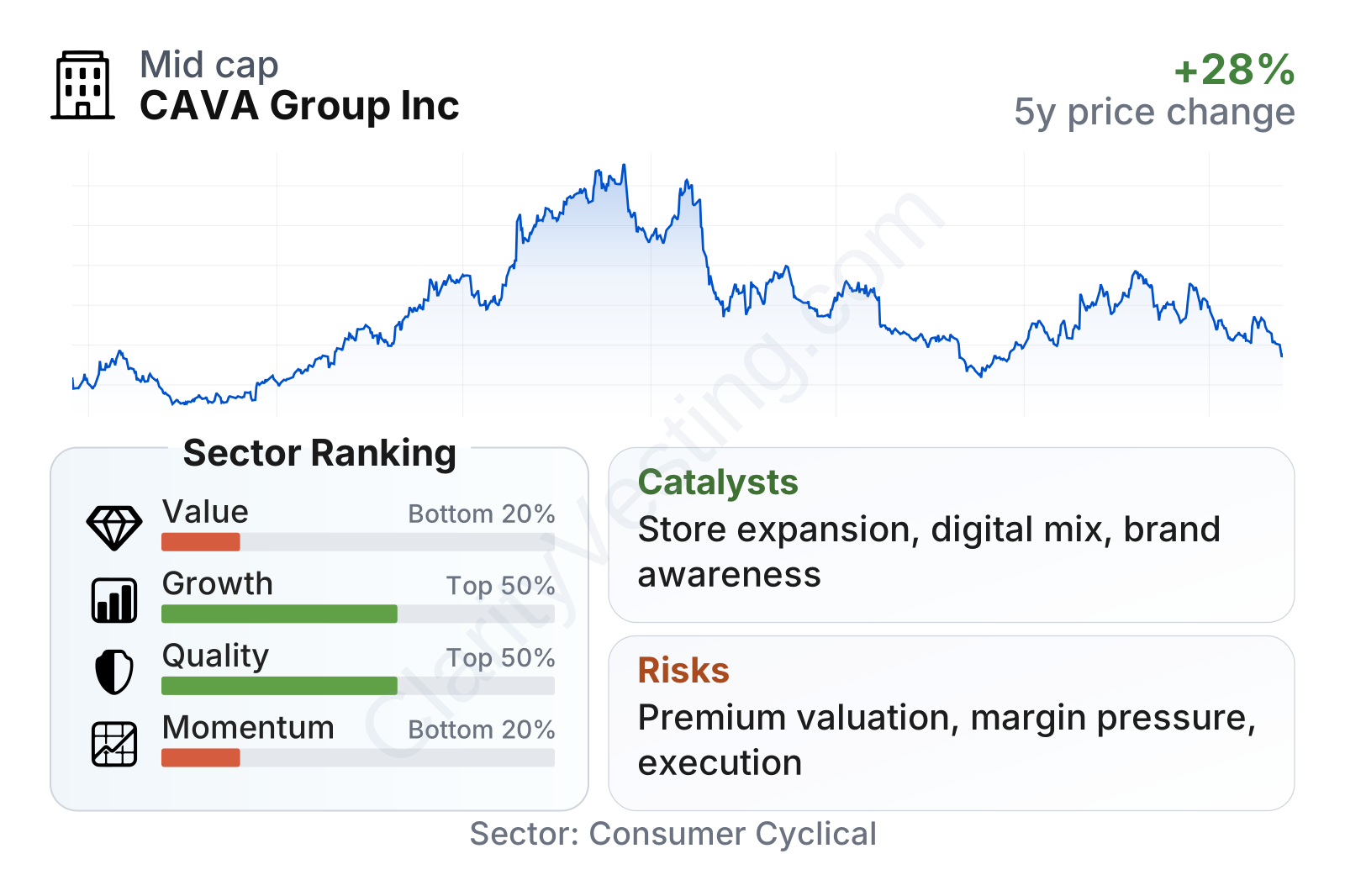
CAVA is now a mid-sized public restaurant company with a stock that has been volatile since its 2023 listing. The share price surged strongly after the IPO, then gave back part of those gains before recovering again, which fits a business the market still prices mainly on future expansion rather than mature stability.
The metrics table points to a mixed profile. Growth remains clearly above the sector median, and operating efficiency has improved over time, but valuation stands out as very demanding. Profitability is positive, though still not at the level of stronger, more mature restaurant operators. Financial leverage looks manageable rather than aggressive, which is important for a company still opening many new locations.
Growth
CAVA operates in a part of the restaurant market that continues to attract consumer demand: fast-casual dining with a perceived health, freshness, and customization angle. Mediterranean food also occupies a favorable niche. It is differentiated enough to stand out from burgers and pizza, but broad enough to scale nationally. That sector positioning matters because it gives the company room to win customers looking for convenience without moving entirely into traditional fast food.
The company’s strategy for future expansion is straightforward and sensible. It is opening new restaurants, building density in existing markets, growing digital ordering, and using a relatively focused menu that can support speed and consistency. For a chain at this stage, unit growth is the main engine. Same-restaurant sales growth adds a second layer, especially when traffic and average check both contribute rather than price increases alone.
Recent revenue growth has remained strong, generally around the low-30% range in the most recent quarters, far above the sector median of roughly 6%. That suggests CAVA is still in an expansion phase rather than a mature restaurant cycle. Growth has slowed from some earlier peaks, but the overall pace remains high enough to show that new store openings and brand demand are still working together.
Cash generation is also more encouraging than it was earlier in the company’s development. Free cash flow moved from negative territory in 2023 to positive territory later on, although it has not increased in a straight line. For a restaurant chain that is still spending on expansion, positive trailing free cash flow is a useful sign because it suggests the business is starting to fund more of its own growth internally.
A meaningful catalyst is the runway for unit expansion. CAVA still has a much smaller national footprint than major fast-casual chains, so white space remains substantial if execution stays strong. Another opportunity comes from further brand awareness: as more consumers become familiar with the menu and the concept enters additional markets, repeat traffic and digital engagement can reinforce new store economics. Recent company updates have also emphasized continued restaurant openings and sustained demand trends, which supports the case that expansion has not yet reached a natural ceiling.
Risks
This article is for informational purposes only and does not constitute financial advice. Some content is AI-generated. See Disclaimer


