Stock Analysis · Breville Group Ltd (BVILY)
Overview
Breville Group Ltd is a premium small-appliance company best known for kitchen products sold under brands such as Breville, Sage, Kambrook, Solis, and in some markets Beanz for coffee subscriptions. Its products include espresso machines, coffee grinders, ovens, blenders, juicers, food processors, kettles, toasters, and other countertop appliances. The company focuses on the higher end of the household appliance market, where product design, brand reputation, and retail placement matter more than competing only on low price.
Revenue comes mainly from selling small kitchen appliances through retail partners, distributors, and direct channels. Based on company reporting and brand positioning, the main sources of revenue are approximately:
- Coffee-related appliances and accessories: likely the largest category, estimated at more than 40% of sales. This includes espresso machines, grinders, and related products, which are central to Breville’s premium positioning.
- Food preparation appliances: estimated around 20% to 30%. This includes blenders, juicers, mixers, and food processors.
- Cooking appliances: estimated around 15% to 25%. This includes countertop ovens, air-frying and multi-function cooking products.
- Other kitchen appliances: estimated around 10% to 20%. This includes kettles, toasters, and smaller everyday products.
- Geographic mix: the Americas appear to be the largest regional contributor, followed by Europe, Middle East and Africa, then Asia-Pacific. Exact percentages vary by year, but the United States is a key profit driver.
Breville’s business model is relatively straightforward: design premium appliances, build strong brand recognition, refresh products regularly, and sell globally through large retailers and specialty channels. That model has produced steady revenue expansion over time, while margins have improved as scale increased and the mix shifted toward more premium products.
The flow of the business has generally improved in recent years: sales have moved upward, gross profit has expanded faster than revenue, and interest costs have eased. That combination suggests better pricing power and a healthier operating structure than a typical low-end appliance manufacturer.
Key Figures
| Metric | Value | Sector ⓘ |
|---|---|---|
| Date | Sep 12, 2026 | |
| Context | ||
| Sector | Consumer Cyclical | |
| Industry | Furnishings, Fixtures & Appliances | |
| Market Cap ⓘ | $2.09B | |
| Beta ⓘ | 1.26 | |
Value (Cheapness) | ||
| P/E Ratio ⓘ | 28.30 | 17.10 |
| FCF Yield ⓘ | 3.82% | 8.53% |
| EBIT / EV ⓘ | N/A | 6.46% |
| PEG ⓘ | 5.81 | |
Growth (Business expansion) | ||
| Revenue Growth ⓘ | 1.90% | 5.75% |
| RPS Growth (5Y CAGR) ⓘ | -11.32% | 9.14% |
| EPS Growth (5Y CAGR) ⓘ | 18.54% | -18.21% |
| Margin Growth (5Y Trend) ⓘ | 0.95% | -0.23% |
| FCF Growth (5Y CAGR) ⓘ | N/A | 4.91% |
Quality (Business durability) | ||
| ROIC (Latest) ⓘ | N/A | 12.61% |
| ROIC (5Y Median) ⓘ | 14.35% | 10.72% |
| Net Debt / EBIT (Latest) ⓘ | 0.40 | 2.10 |
| Net Debt / EBIT (5Y Median) ⓘ | 0.22 | 2.32 |
| Operating Margin (Latest) ⓘ | 12.86% | 9.25% |
| Operating Margin (5Y Median) ⓘ | 11.66% | 9.64% |
| Debt to Equity (Latest) ⓘ | 32.84% | 75.78% |
| Profit Margin (Latest) ⓘ | 7.63% | 5.33% |
| Free Cash Flow (Latest) ⓘ | $79.96M | |
Momentum (Price trend) | ||
| 3Y Return ⓘ | -1.68% | +14.53% |
| 12M Return (excl. last month) ⓘ | +1.80% | +3.08% |
| 6M Return ⓘ | +0.91% | +0.55% |
| Price vs. 200-Day MA ⓘ | +0.64% | -0.54% |
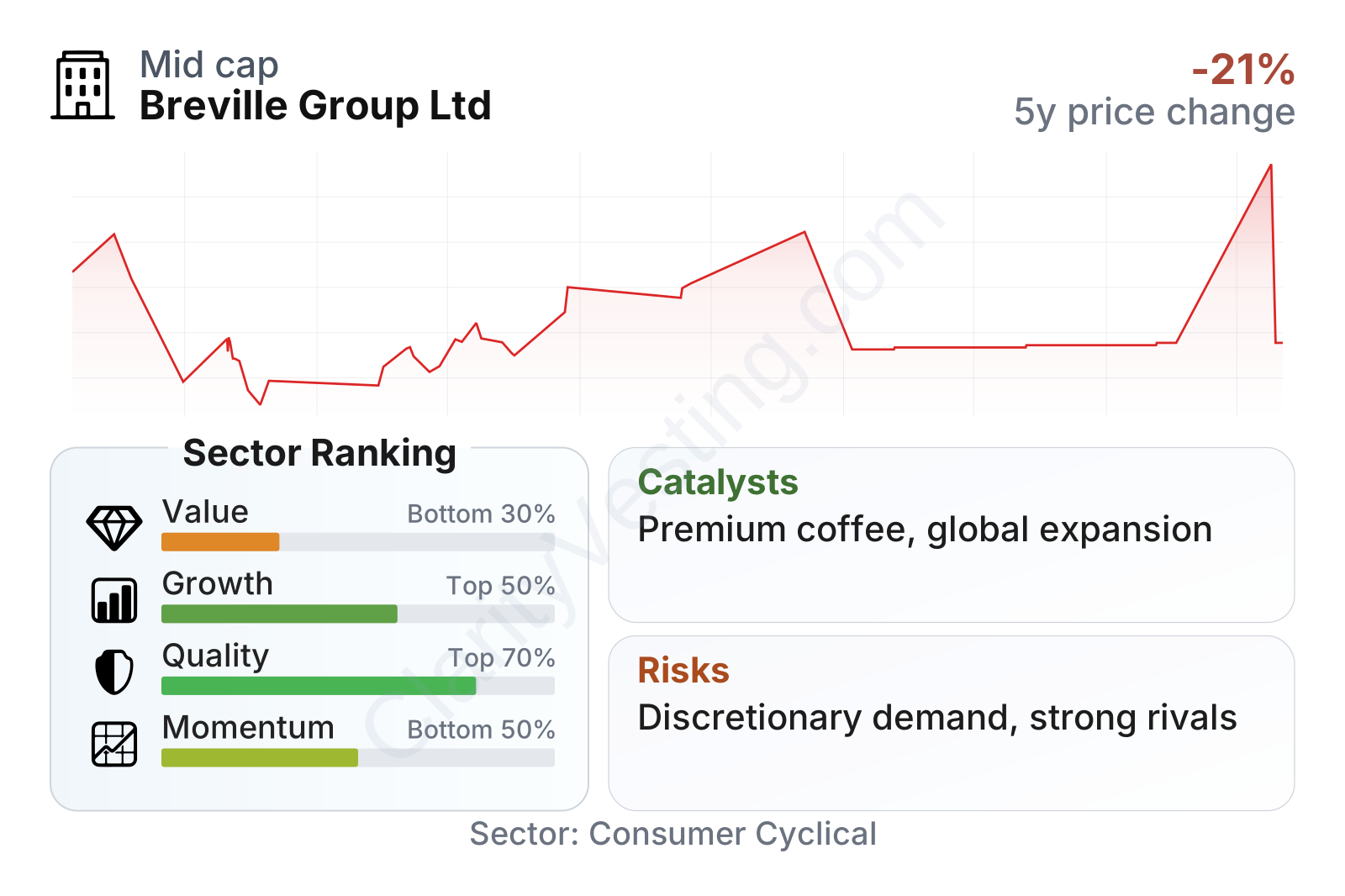
Breville is a mid-sized consumer appliance company with a stock that has been relatively flat over the last few years despite continued business growth. On the operating side, the picture is stronger than the share-price trend suggests: profitability is above the sector median, leverage is clearly lower than many peers, and earnings growth over five years has been solid. The weaker areas are valuation and top-line growth relative to the broader consumer sector, which helps explain why the market has not rewarded the company more aggressively.
Growth
Breville operates in a part of the consumer market that still has room for long-term expansion. Small kitchen appliances are not a high-growth technology industry, but premiumization remains a real driver. Consumers continue to spend on better coffee equipment, multifunction cooking appliances, and products that bring café-style or convenience-oriented experiences into the home. That trend is especially relevant for Breville because it is positioned above mass-market brands and benefits when customers trade up rather than simply replace low-cost appliances.
Its strategy also looks coherent for future growth. The company has built a portfolio centered on premium kitchen categories where brand, design, and usability can support repeat demand and better margins. The emphasis on coffee is especially important because espresso systems and grinders tend to carry higher average selling prices and can deepen customer engagement. Geographic expansion also remains a practical lever, particularly in North America and Europe, where brand recognition and premium appliance demand are already well established.
Recent financial progression supports the idea of a company still moving forward, even if not at a rapid pace every single year. Revenue has climbed from roughly $1.4 billion in fiscal 2022 to more than $1.8 billion in fiscal 2026, while net income has also trended higher. This is not explosive growth, but it does show durable demand and disciplined execution in a category that can be cyclical.
Cash generation is another constructive point. Free cash flow remains positive, which matters because premium consumer brands need constant product development, marketing, and inventory management. Breville’s ability to stay cash generative while growing suggests its expansion has not been dependent on excessive borrowing or repeated shareholder dilution.
One meaningful catalyst is the ongoing global shift toward premium at-home coffee preparation. Breville is already closely associated with that segment, and continued adoption of home espresso machines, grinders, and related accessories could support both revenue mix and margins. Product innovation is another catalyst, since the company’s model depends on staying relevant through design-led upgrades rather than competing mainly on price. Continued international scaling and deeper direct customer relationships, including coffee-related ecosystem offerings, could also strengthen growth over time.
Risks
This article is for informational purposes only and does not constitute financial advice. Some content is AI-generated. See Disclaimer


