Stock Analysis · Bosideng International Holdings Ltd (BSDGY)
Overview
Bosideng International Holdings Ltd is a China-based apparel company best known for down jackets and winter outerwear. Over time, it has developed from a single-category cold-weather brand into a broader apparel group with branded clothing, original equipment manufacturing for other labels, and a smaller women’s wear business. For long-term analysis, the most important point is that Bosideng is still primarily a branded outerwear company, with its own labels carrying the business.
The company’s revenue is led by its branded apparel segment, especially the Bosideng core brand. Based on recent annual disclosures, the business mix is approximately as follows:
- Branded down apparel: about 80% to 85% — the core business, including Bosideng-branded down jackets and related winter clothing sold through self-operated stores, distributors, and online channels.
- OEM management: about 10% to 15% — manufacturing and supply-chain services for international and domestic apparel customers.
- Ladieswear: about 3% to 6% — women’s fashion brands within the group.
- Diversified apparel and other businesses: about 1% to 3% — children’s wear and other smaller operations.
This structure matters because it shows where Bosideng’s economics come from: brand strength, pricing power, and direct consumer demand are much more important than pure manufacturing scale. The company has also steadily expanded premium positioning, functional products, and omni-channel retail, which has helped lift revenue and margins over the last several years.
The multi-year operating picture has improved meaningfully. Revenue rose from roughly RMB 16.2 billion in fiscal 2022 to about RMB 26.5 billion in fiscal 2026, while net income climbed from about RMB 2.1 billion to about RMB 3.9 billion. Gross profit also expanded strongly, suggesting that the company has not grown only by selling more volume, but also by keeping a favorable product mix and pricing structure.
The operating flow shows a business that has become larger and more profitable over time. Sales have risen substantially since fiscal 2022, gross profit has expanded with them, and interest expense has trended lower, which supports earnings quality.
Key Figures
| Metric | Value | Sector ⓘ |
|---|---|---|
| Date | Sep 12, 2026 | |
| Context | ||
| Sector | Consumer Cyclical | |
| Industry | Apparel Manufacturing | |
| Market Cap ⓘ | $6.28B | |
| Beta ⓘ | 0.59 | |
Value (Cheapness) | ||
| P/E Ratio ⓘ | 10.56 | 17.10 |
| FCF Yield ⓘ | 129.22% | 8.53% |
| EBIT / EV ⓘ | 235.60% | 6.46% |
| PEG ⓘ | 2.13 | |
Growth (Business expansion) | ||
| Revenue Growth ⓘ | 7.70% | 5.75% |
| RPS Growth (5Y CAGR) ⓘ | 12.27% | 9.14% |
| EPS Growth (5Y CAGR) ⓘ | 61.02% | -18.21% |
| Margin Growth (5Y Trend) ⓘ | 4.47% | -0.23% |
| FCF Growth (5Y CAGR) ⓘ | 26.98% | 4.91% |
Quality (Business durability) | ||
| ROIC (Latest) ⓘ | N/A | 12.61% |
| ROIC (5Y Median) ⓘ | 17.60% | 10.72% |
| Net Debt / EBIT (Latest) ⓘ | 0.28 | 2.10 |
| Net Debt / EBIT (5Y Median) ⓘ | 0.12 | 2.32 |
| Operating Margin (Latest) ⓘ | 20.00% | 9.25% |
| Operating Margin (5Y Median) ⓘ | 18.32% | 9.64% |
| Debt to Equity (Latest) ⓘ | 34.90% | 75.78% |
| Profit Margin (Latest) ⓘ | 14.60% | 5.33% |
| Free Cash Flow (Latest) ⓘ | $8.12B | |
Momentum (Price trend) | ||
| 3Y Return ⓘ | +67.61% | +14.53% |
| 12M Return (excl. last month) ⓘ | +19.42% | +3.08% |
| 6M Return ⓘ | +9.46% | +0.55% |
| Price vs. 200-Day MA ⓘ | +13.93% | -0.54% |
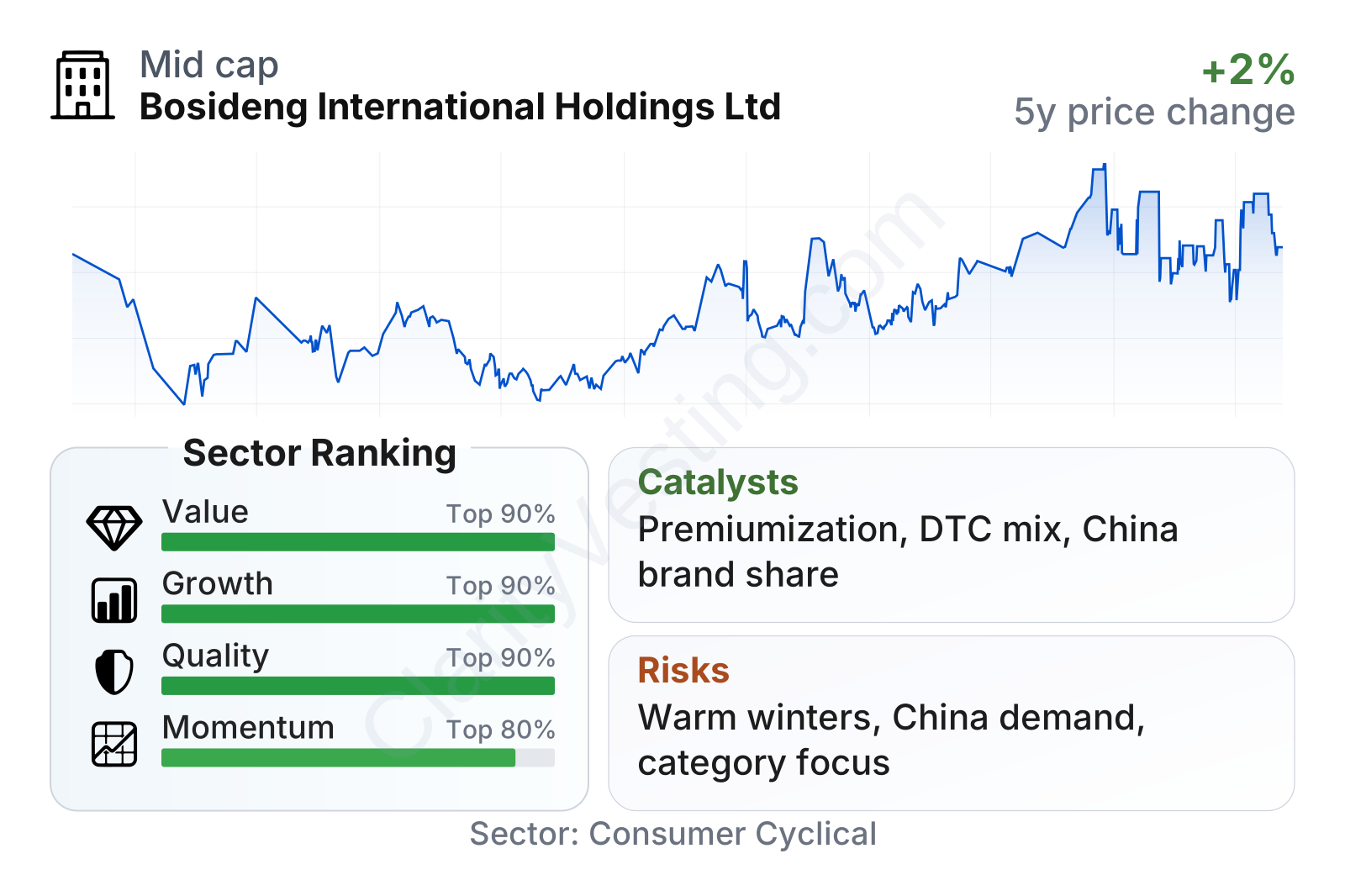
Bosideng stands out for combining above-sector growth with strong profitability and a fairly conservative balance sheet. The quality and growth profile ranks well within its sector, helped by operating margins around 20%, profit margins in the mid-teens, and low net debt relative to earnings. The valuation measures also point to a stock that screens cheaper than many sector peers on earnings and enterprise-value-based metrics, although that discount needs to be considered alongside China consumer exposure and fashion-related risks.
Growth
Bosideng operates in a part of apparel that is more specialized than general fashion retail. Down jackets and performance outerwear benefit from product functionality, winter seasonality, and premium branding, which can make customer decisions less price-driven than in basic clothing. In China, consumers have also shown a willingness to spend on local brands with stronger design, technical features, and recognizable positioning. That creates a more favorable backdrop than undifferentiated mass apparel.
The company’s strategy appears coherent for future expansion. Management has focused on strengthening the flagship Bosideng brand, moving further into premium categories, improving product technology, and expanding direct-to-consumer and digital capabilities. That matters because stronger direct sales typically improve control over pricing, inventory, and customer data. Bosideng has also been investing in lighter seasonal products and broader apparel categories, which could reduce some dependence on the coldest part of the year.
The growth trend has been solid rather than explosive. Recent year-over-year revenue growth is modestly above the sector median, while the longer five-year record is more impressive: revenue per share, earnings per share, and operating margin have all advanced faster than the typical company in the sector. That suggests Bosideng’s expansion has been supported by better business quality, not just temporary demand.
Cash generation is another important positive. Free cash flow has improved sharply over time, and the five-year growth rate is far ahead of the sector median. For a consumer brand, that is significant because it gives the company flexibility to fund store upgrades, brand marketing, product development, and shareholder distributions without relying heavily on borrowing.
A visible catalyst is the continued premiumization of Chinese domestic brands. Bosideng has spent years repositioning itself from a practical winterwear label toward a more premium, technology-led brand. If that shift continues to resonate, it can support higher average selling prices and more resilient margins. Another catalyst is channel optimization: deeper online integration and a larger contribution from self-operated retail can improve sales productivity over time. The company’s latest annual results also showed continued revenue and profit growth into fiscal 2026, reinforcing that the business momentum has not disappeared after the large post-pandemic rebound.
Risks
This article is for informational purposes only and does not constitute financial advice. Some content is AI-generated. See Disclaimer


