Stock Analysis · Braze Inc (BRZE)
Overview
Braze is a cloud software company focused on customer engagement. In simple terms, it helps brands communicate with their users across channels such as mobile push notifications, in-app messages, email, SMS, web messaging, content cards, and messaging apps. Its platform is designed to let companies collect customer data, segment audiences, automate campaigns, personalize messages, and measure results in one system. Customers include businesses in areas such as retail, media, financial services, travel, and food delivery.
Braze makes most of its money from recurring software subscriptions. A much smaller portion comes from professional services, such as onboarding, implementation, training, and support work tied to getting customers up and running.
- Subscription revenue: approximately 94% to 95% of total revenue in recent fiscal years. This is the core business and includes access to Braze’s platform and related usage-based elements.
- Professional services and other revenue: approximately 5% to 6% of total revenue. This usually includes implementation, technical assistance, and advisory services.
The business model is attractive on paper because subscription software can scale well: once the platform is built, each additional customer can generate high gross profit. That pattern is visible in Braze’s financial structure. Revenue has expanded sharply over the last several years, and gross profit has also risen, but operating expenses have remained heavy, especially in research and development and sales and marketing. In other words, the platform is proving commercially useful, but the company is still working through the path from growth to durable accounting profits.
The overall revenue mix has stayed consistent, and the biggest visible trend is scale. Total revenue has grown from roughly $238 million to about $738 million over four fiscal years, while gross profit has also increased strongly. At the same time, spending on product development and customer acquisition has continued to absorb much of that gross profit, which explains why reported earnings remain negative.
Key Figures
| Metric | Value | Sector ⓘ |
|---|---|---|
| Date | Sep 14, 2026 | |
| Context | ||
| Sector | Technology | |
| Industry | Software - Application | |
| Market Cap ⓘ | $2.72B | |
| Beta ⓘ | 0.88 | |
Value (Cheapness) | ||
| P/E Ratio ⓘ | N/A | 29.51 |
| FCF Yield ⓘ | 3.07% | 4.25% |
| EBIT / EV ⓘ | -4.63% | 2.85% |
| PEG ⓘ | 1.25 | |
Growth (Business expansion) | ||
| Revenue Growth ⓘ | 26.20% | 15.40% |
| RPS Growth (5Y CAGR) ⓘ | 27.85% | 8.56% |
| EPS Growth (5Y CAGR) ⓘ | -54.75% | -11.88% |
| Margin Growth (5Y Trend) ⓘ | N/A | 0.46% |
| FCF Growth (5Y CAGR) ⓘ | N/A | 9.80% |
Quality (Business durability) | ||
| ROIC (Latest) ⓘ | -14.44% | 9.44% |
| ROIC (5Y Median) ⓘ | -24.41% | 8.30% |
| Net Debt / EBIT (Latest) ⓘ | N/A | 0.54 |
| Net Debt / EBIT (5Y Median) ⓘ | N/A | 0.44 |
| Operating Margin (Latest) ⓘ | -13.36% | 9.58% |
| Operating Margin (5Y Median) ⓘ | -30.67% | 8.25% |
| Debt to Equity (Latest) ⓘ | 16.06% | 33.33% |
| Profit Margin (Latest) ⓘ | -13.55% | 7.14% |
| Free Cash Flow (Latest) ⓘ | $83.58M | |
Momentum (Price trend) | ||
| 3Y Return ⓘ | -49.34% | +45.48% |
| 12M Return (excl. last month) ⓘ | +14.81% | +23.48% |
| 6M Return ⓘ | +28.85% | +20.93% |
| Price vs. 200-Day MA ⓘ | -3.07% | +7.43% |
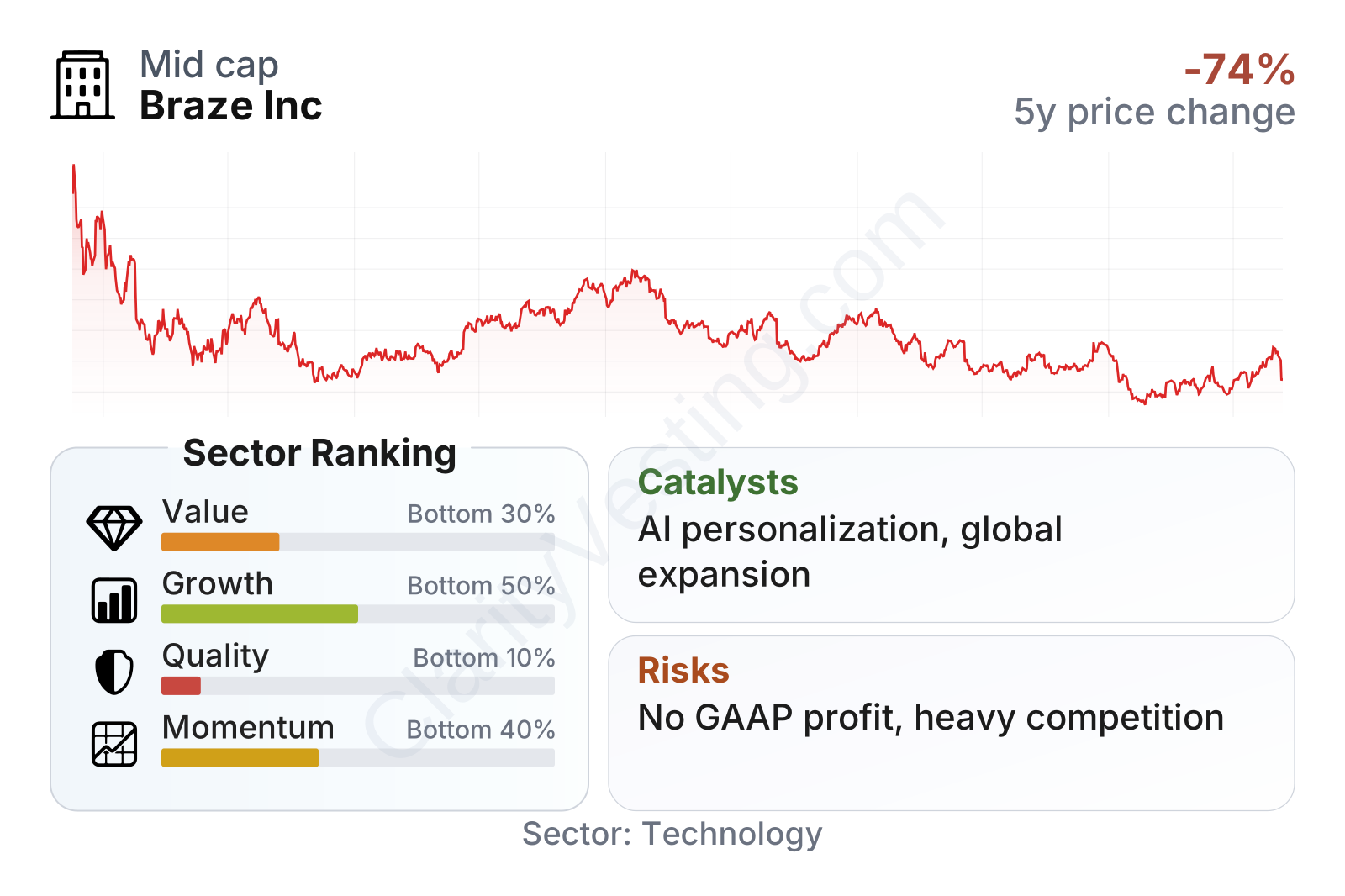
Braze sits in the mid-cap range and has shown lower share-price volatility than many software names, as suggested by a beta below 1. The more important point for long-term analysis is the contrast inside the metrics: revenue growth remains stronger than the sector median, but quality and value metrics lag because profitability is still negative. Free cash flow has turned positive, which is encouraging, yet returns on capital and operating margins remain well below typical software peers. This creates a mixed profile: strong commercial traction, but incomplete financial maturity.
Growth
Braze operates in a market that has favorable long-term demand drivers. Companies increasingly want direct relationships with customers, more personalized marketing, better data usage, and less reliance on broad advertising alone. Customer engagement platforms benefit from these trends because they sit close to revenue generation: if a brand can improve retention, repeat purchases, and campaign efficiency, software spending can be easier to justify than many other IT tools.
The company’s strategy also makes sense for future expansion. Braze is not just a messaging tool; it is trying to be a central operating layer for customer engagement. That matters because the more channels, workflows, and customer data a brand manages inside one platform, the harder it becomes to switch away. Over time, this can support larger contract values, cross-sell opportunities, and better retention. The company has also continued to expand internationally and deepen relationships with system integrators and cloud partners, which can widen distribution without relying only on direct sales.
Revenue growth has clearly cooled from the very high levels seen just after listing, but it still remains solid by software standards. Recent annual growth has been around the mid-20% range, which is still comfortably above the sector median. More importantly, growth has not collapsed into low double digits, which suggests the product continues to resonate even in a more disciplined corporate spending environment.
Cash generation is one of the most encouraging operating developments. Free cash flow moved from negative territory a few years ago to clearly positive territory more recently. That shift matters because it suggests the business is gaining scale even before full GAAP profitability arrives. For a software company, this can be a meaningful milestone: it shows that customer relationships are producing cash, not just accounting revenue.
Recent company updates have highlighted continued demand for AI-driven personalization, orchestration across multiple communication channels, and stronger real-time decisioning for marketers. These features align well with what enterprise customers are looking for. If Braze can keep positioning itself as the platform that turns customer data into timely, personalized interactions, that could remain a meaningful growth catalyst. Another notable support is the broader move by brands toward first-party data strategies, especially as privacy changes make older digital advertising methods less predictable.
Risks
This article is for informational purposes only and does not constitute financial advice. Some content is AI-generated. See Disclaimer


