Stock Analysis · Liberty Global PLC (LBTYA)
Overview
Liberty Global PLC is a telecommunications company focused on building and operating fixed networks (mainly broadband internet) and related services. Historically it operated cable and broadband businesses across multiple European countries, but in recent years it has reshaped its footprint through sales, joint ventures, and investments. Today, the company’s profile is more of a mix between (1) operating telecom assets in select markets and (2) holding stakes in telecom ventures and other strategic investments, with results that can be influenced by transactions, ownership changes, and accounting items linked to these investments.
In practical terms, the underlying business is about providing connectivity (high-speed internet), sometimes bundled with video/TV and fixed-line voice, to households and businesses. These services tend to be subscription-based, meaning customers pay monthly fees, which can support recurring revenue—although competition and customer churn can affect stability.
Liberty Global reports revenue by business/geographic segments in its annual report, and the mix can change over time as the company buys/sells assets or reorganizes holdings. In general, the largest recurring revenue sources typically come from:
- Broadband internet subscriptions (usually the largest component in cable/fixed-network operators)
- Video/TV services (often declining structurally over time versus broadband)
- Fixed-line voice (generally a smaller and declining portion)
- Mobile-related services (where offered directly or through partnerships)
- Business-to-business connectivity and related services (for enterprises and small businesses)
The company’s reported totals can also be meaningfully affected by non-operating items (for example, gains/losses tied to investments, changes in ownership stakes, restructuring, or impairment charges), which may make headline profit figures less intuitive than they are for a more “plain vanilla” telecom operator.
Across the years shown, total revenue is in the mid-single-digit billions of dollars, while operating income and net income swing sharply between positive and negative. This pattern is consistent with a company where results can be heavily influenced by one-time items and investment-related impacts, rather than only the day-to-day performance of selling broadband and connectivity.
Key Figures
| Metric | Value | Industry ⓘ |
|---|---|---|
| Date | Mar 02, 2026 | |
| Context | ||
| Sector | Communication Services | |
| Industry | Telecom Services | |
| Market Cap ⓘ | $4.27B | |
| Beta ⓘ | 0.84 | |
| Fundamental | ||
| P/E Ratio ⓘ | N/A | 16.24 |
| Profit Margin ⓘ | -146.32% | 6.34% |
| Revenue Growth ⓘ | 9.60% | 2.05% |
| Debt to Equity ⓘ | 104.39% | 119.24% |
| PEG ⓘ | 1.61 | |
| Free Cash Flow ⓘ | $782.50M | |
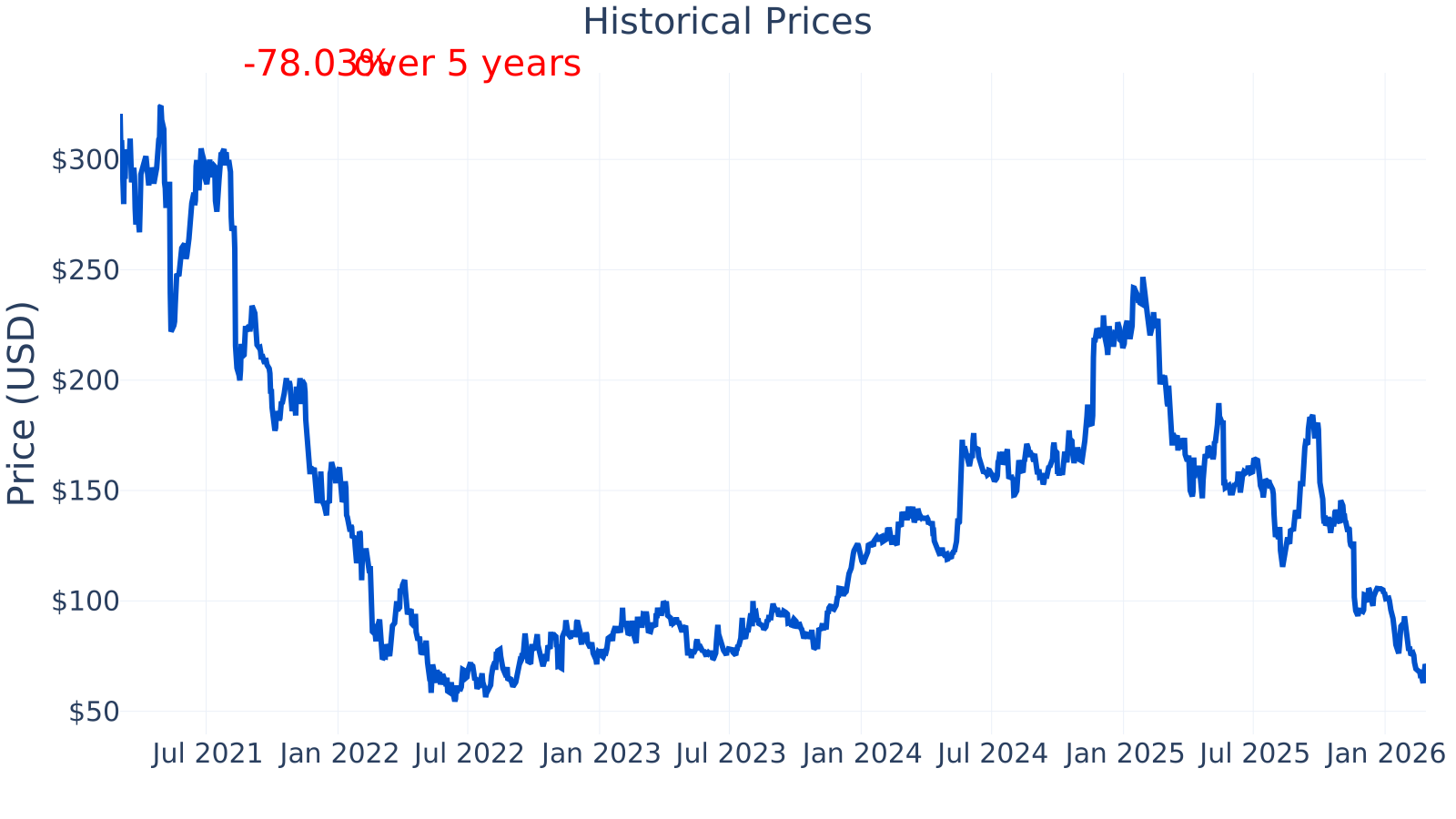
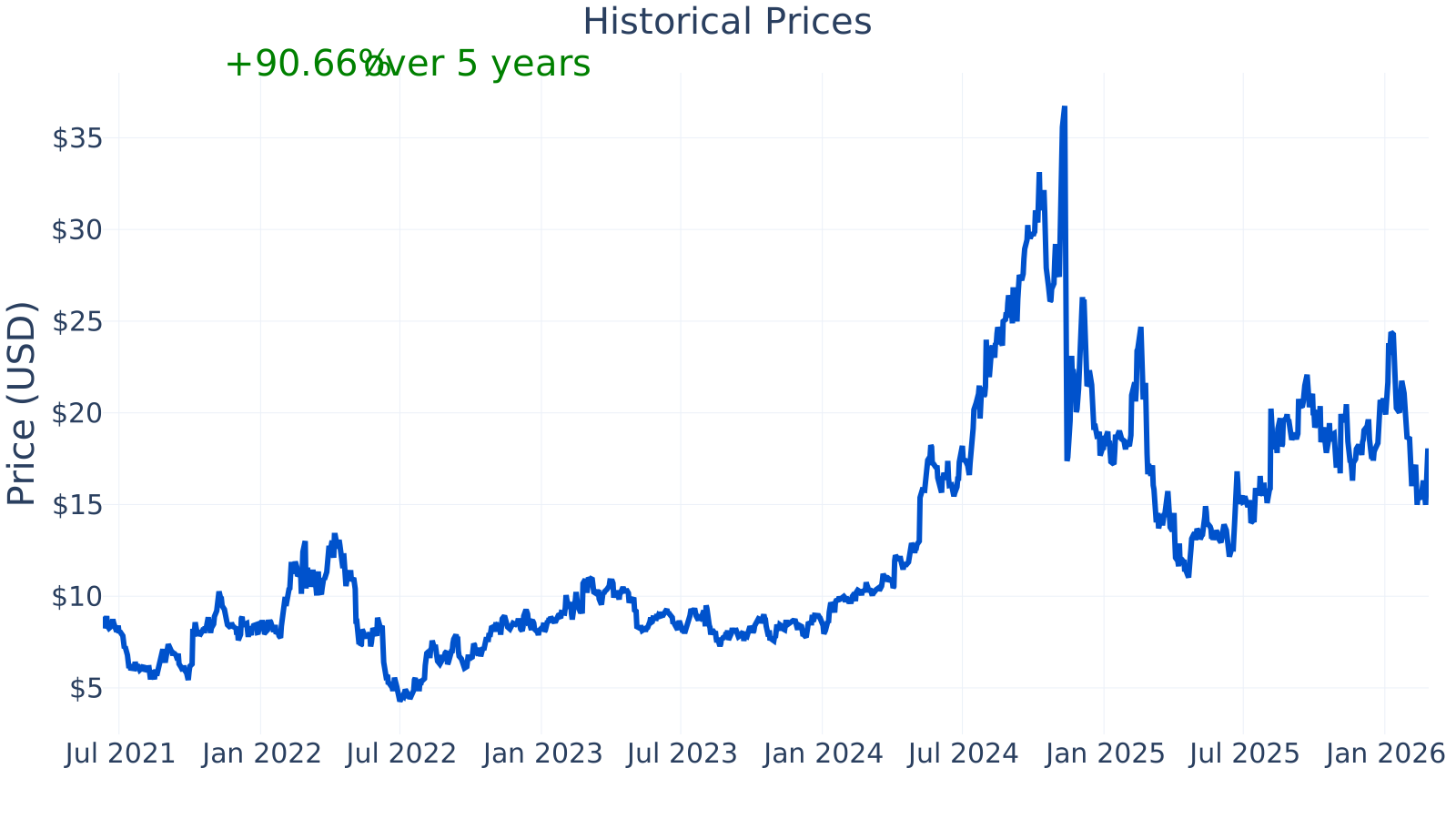
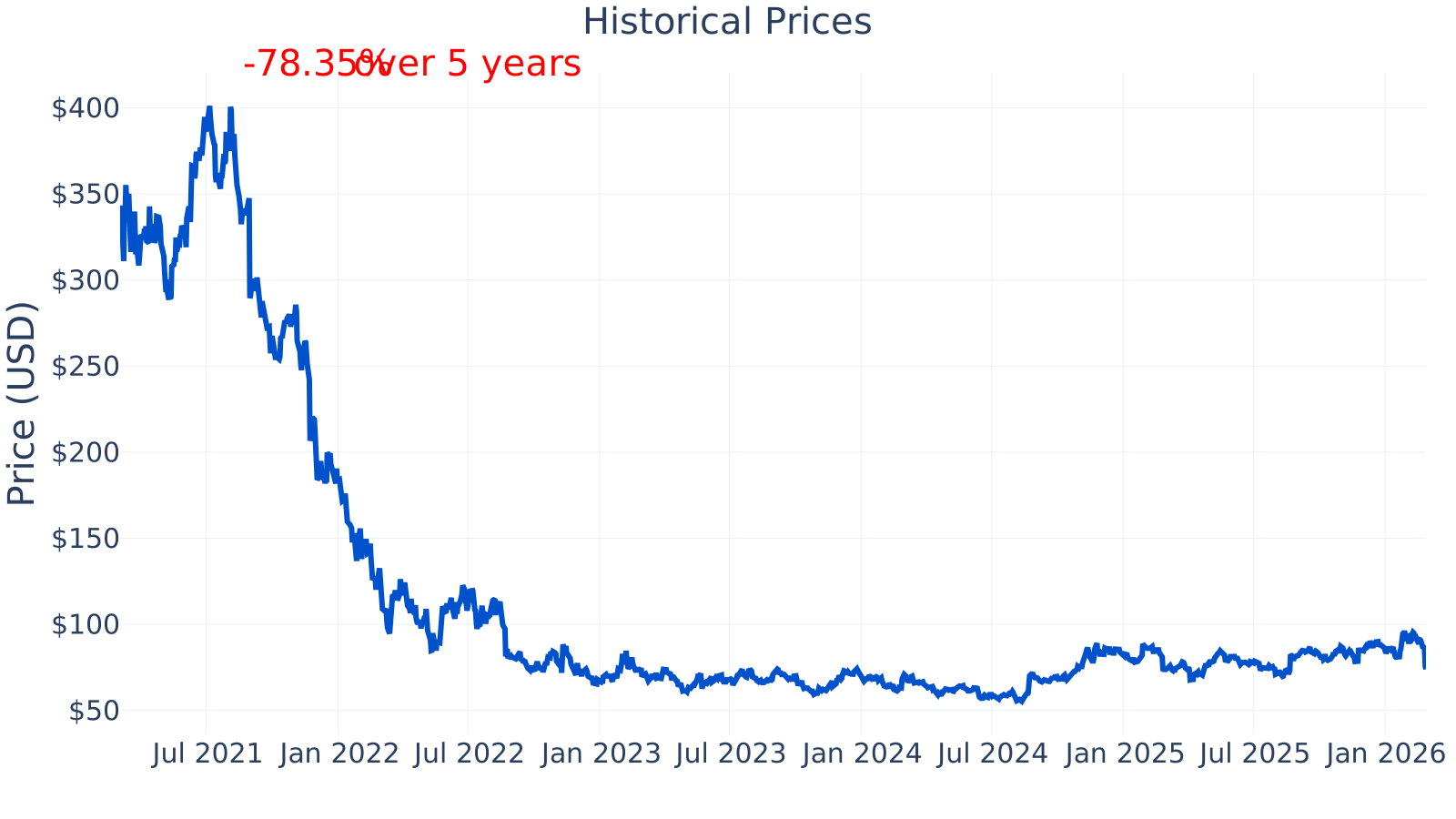
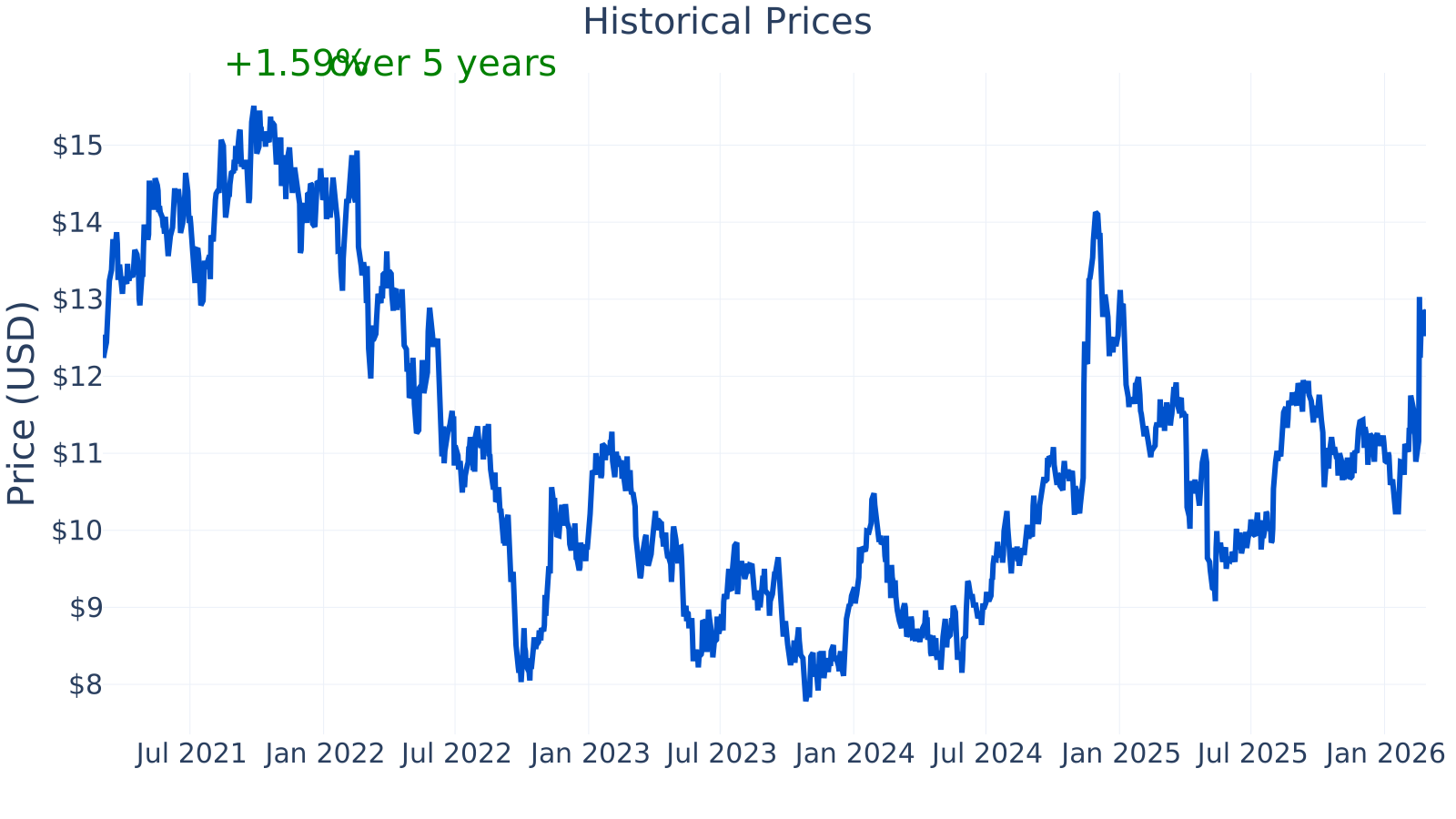
Liberty Global’s market capitalization is about $4.27B, and the stock’s beta of ~0.84 suggests price moves have been somewhat less volatile than the broader market on average. The latest profit margin is -146%, well below the industry median of about 6%, which highlights how reported earnings have recently been weighed down by significant charges or losses. By contrast, the latest year-over-year revenue growth is ~9.6% versus an industry median near 2.1%, indicating faster top-line expansion in the most recent period shown. Debt-to-equity is ~104%, slightly below the industry median of about 119%, reflecting a capital structure that is leveraged but not unusual for telecom. Trailing twelve-month free cash flow is about $783M, which matters because telecom networks require ongoing investment, and cash generation can be more informative than net income in some periods.
Growth (Medium)
The company operates in the telecom and broadband industry, where demand for data connectivity has been supported by long-term trends such as streaming, remote work, cloud services, and connected devices. That said, in many developed markets broadband is mature: growth often comes from taking share, upgrading customers to faster tiers, improving pricing, expanding into adjacent services (for example, mobile bundles), or network expansion in underpenetrated areas.
Liberty Global’s strategy in recent years has emphasized portfolio reshaping (including joint ventures and asset sales) and focusing capital on networks and markets where it sees stronger returns. For long-term business momentum, the most important operational drivers tend to be broadband customer trends, pricing discipline, and network quality (for example, fiber upgrades or next-generation cable technology).
Revenue growth has been volatile across the timeline shown, swinging from steep declines in several periods to positive growth more recently, including a very large spike in the latest quarter shown. When revenue growth moves this sharply, it can reflect more than just “more customers” or “higher prices”—it may also reflect changes in the company’s structure, consolidation of entities, or other reporting effects. For readers, this makes it important to separate underlying operating momentum from transaction-driven changes.
Free cash flow has trended down from about $3.15B (2021) to about $0.97B (2025 period shown), with the latest trailing figure around $783M. For a network operator, this trend can matter because cash flow supports network investment, debt service, and flexibility for corporate actions. A lower run-rate can reduce room for error if competitive intensity rises or if capital spending needs increase.
Potential catalysts over time typically relate to (1) operational execution in core markets (customer growth, churn, pricing), (2) the economic returns on network upgrades, and (3) outcomes from portfolio actions (changes in stakes, mergers/joint ventures, and simplification of the structure). Whether these catalysts translate into durable improvement depends on competitive dynamics and the cost of maintaining and upgrading the network.
Risks (High)
This article is for informational purposes only and does not constitute financial advice. Some content is AI-generated. See Disclaimer