Stock Analysis · Backblaze Inc (BLZE)
Overview
Backblaze is a cloud storage company focused on making data backup and cloud storage simpler and cheaper than many larger enterprise-focused providers. Its best-known products are computer backup for individuals and businesses, and cloud object storage for developers, software companies, and organizations that need to store large amounts of digital content. In simple terms, the company helps customers protect files, recover lost data, and store information in the cloud without managing their own hardware.
The business is built around recurring subscription revenue, which is important for a long-term analysis because it can create a more predictable revenue base. Backblaze operates in cloud infrastructure, a part of technology that benefits from long-term demand tied to data growth, cybersecurity needs, compliance requirements, and the expansion of AI-related workloads.
Based on company disclosures, revenue is primarily generated from two main product families:
- B2 Cloud Storage: approximately 45% to 55% of revenue in recent periods. This product is object storage sold largely on usage, and it includes storage, data access, and related cloud services. It is aimed at developers, enterprises, media workflows, and increasingly AI and data-intensive use cases.
- Computer Backup: approximately 45% to 55% of revenue in recent periods. This includes backup subscriptions for consumers and businesses, covering laptops, desktops, and server-related backup offerings.
That mix matters because B2 Cloud Storage is the more strategic engine for larger-scale expansion, while the backup business provides a steadier and more established customer base. Financially, the company has been growing revenue while also improving gross profit, but profitability remains negative, which means the business is still in the transition from expansion mode toward a more mature earnings profile.
The long-term operating picture shows a useful shift: revenue and gross profit have climbed steadily over the last several years, while operating losses have narrowed from their worst levels. Research and development remains a meaningful expense, showing that management is still investing for product depth and platform growth rather than maximizing short-term earnings.
Key Figures
| Metric | Value | Sector ⓘ |
|---|---|---|
| Date | Sep 12, 2026 | |
| Context | ||
| Sector | Technology | |
| Industry | Software - Infrastructure | |
| Market Cap ⓘ | $1.01B | |
| Beta ⓘ | 1.57 | |
Value (Cheapness) | ||
| P/E Ratio ⓘ | N/A | 29.51 |
| FCF Yield ⓘ | 2.05% | 4.25% |
| EBIT / EV ⓘ | -1.52% | 2.85% |
| PEG ⓘ | N/A | |
Growth (Business expansion) | ||
| Revenue Growth ⓘ | 17.70% | 15.40% |
| RPS Growth (5Y CAGR) ⓘ | 3.96% | 8.56% |
| EPS Growth (5Y CAGR) ⓘ | -67.61% | -11.88% |
| Margin Growth (5Y Trend) ⓘ | N/A | 0.46% |
| FCF Growth (5Y CAGR) ⓘ | N/A | 9.80% |
Quality (Business durability) | ||
| ROIC (Latest) ⓘ | -14.39% | 9.44% |
| ROIC (5Y Median) ⓘ | -43.69% | 8.30% |
| Net Debt / EBIT (Latest) ⓘ | N/A | 0.54 |
| Net Debt / EBIT (5Y Median) ⓘ | N/A | 0.44 |
| Operating Margin (Latest) ⓘ | -10.08% | 9.58% |
| Operating Margin (5Y Median) ⓘ | -35.15% | 8.25% |
| Debt to Equity (Latest) ⓘ | 93.11% | 33.33% |
| Profit Margin (Latest) ⓘ | -13.07% | 7.14% |
| Free Cash Flow (Latest) ⓘ | $20.60M | |
Momentum (Price trend) | ||
| 3Y Return ⓘ | +259.91% | +45.48% |
| 12M Return (excl. last month) ⓘ | +148.98% | +23.48% |
| 6M Return ⓘ | +263.22% | +20.93% |
| Price vs. 200-Day MA ⓘ | +113.47% | +7.43% |
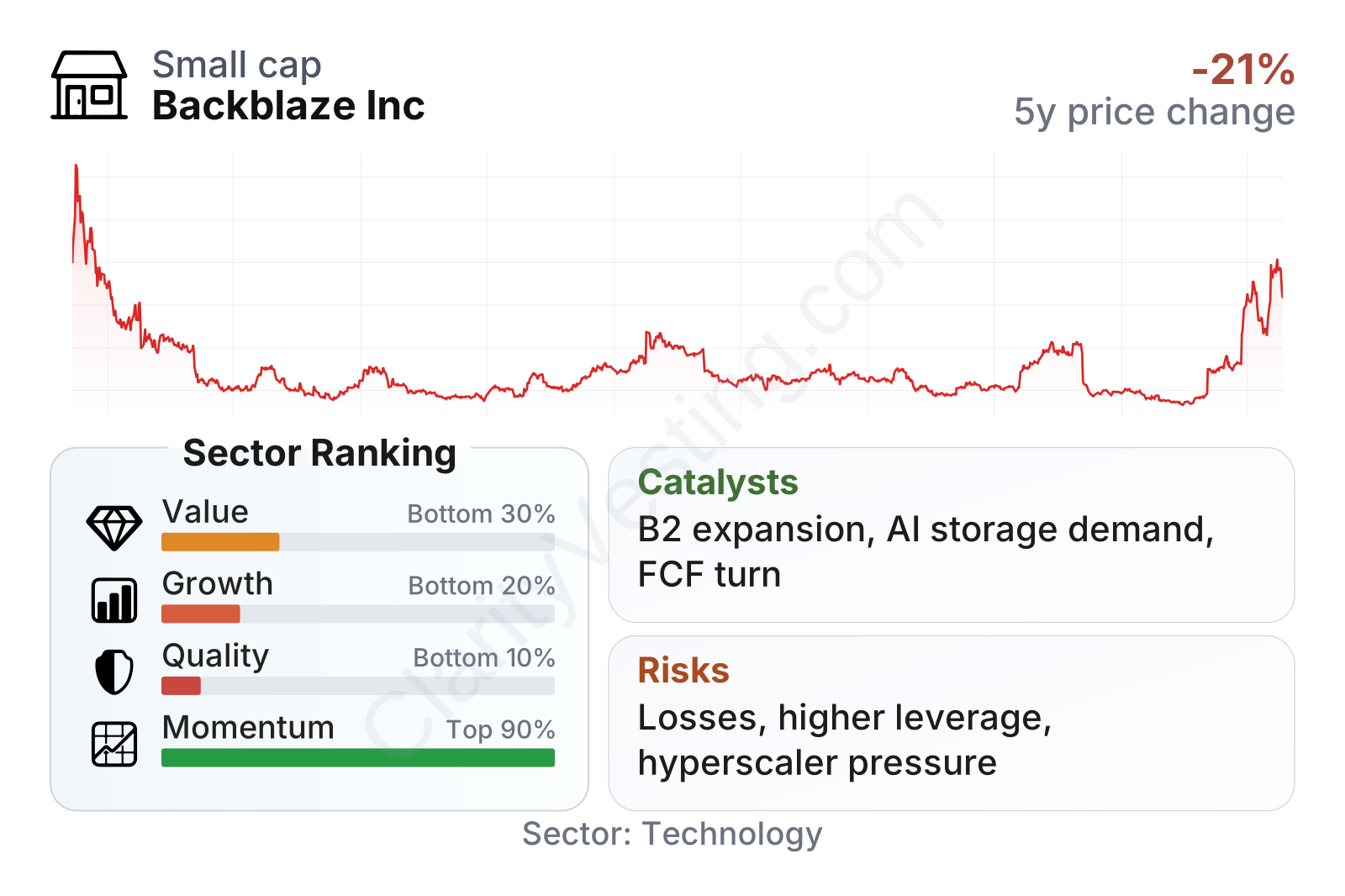
Backblaze is still a relatively small public company in the infrastructure software space, with above-average share price volatility. The market-based picture is strong, with stock momentum ranking near the top of the sector over the last several measured periods. Fundamental rankings are weaker: value, growth quality, and business quality all sit in the lower part of the sector, mainly because the company remains unprofitable and its cash flow yield is still modest. Revenue growth is still ahead of the sector median, but the longer-term record is less impressive than the recent rebound suggests.
Growth
Backblaze operates in a sector with durable long-term tailwinds. The amount of digital information stored globally keeps rising, and businesses increasingly want cloud services that are easier to use and more affordable. That trend supports demand for backup, archiving, and object storage. On top of that, AI development is creating another layer of opportunity because training and inference workflows need large, accessible, and cost-efficient data repositories.
The company’s strategy is fairly coherent. Instead of trying to match the full breadth of hyperscale cloud platforms, Backblaze emphasizes lower-cost storage, ease of use, and customer-friendly pricing. That gives it a clearer niche. This is especially relevant for customers that want a simpler alternative for backups, media assets, data lakes, and application storage without committing to a massive all-in-one cloud vendor.
Revenue growth has cooled from the high-20% range seen earlier in the company’s public life, but it is still running at a healthy mid-to-high teens pace, including a recent acceleration. That is slower than the most optimistic cloud narratives, yet still solid for a company trying to balance expansion with improving economics. The key question for the long term is not just whether sales keep rising, but whether each additional dollar of revenue becomes more profitable.
One encouraging sign is free cash flow. After several years of negative levels, the business has moved into positive territory on a trailing basis. That does not mean the company has fully solved profitability, but it does suggest the operating model is improving. If Backblaze can continue growing while keeping infrastructure and customer acquisition costs under control, the path toward stronger self-funded growth becomes more credible.
A notable catalyst is the company’s positioning around B2 Cloud Storage. This product can benefit from larger customer workloads, partner integrations, and use cases tied to media, cybersecurity, and AI data storage. Recent company communications have also emphasized product enhancements, channel partnerships, and efforts to win more business customers. Those developments matter because larger accounts can raise average revenue per customer and make the business less dependent on smaller consumer subscriptions.
Risks
This article is for informational purposes only and does not constitute financial advice. Some content is AI-generated. See Disclaimer