Stock Analysis · Bullish (BLSH)
Overview
Bullish operates a digital asset exchange focused on cryptocurrency trading and related market infrastructure. In simple terms, it runs a platform where institutions and other professional market participants can trade crypto assets, while the company also provides brokerage, custody-related arrangements through partners, and trading technology services tied to digital markets. Bullish became publicly listed through its merger with Fairmatic Holdings, and its positioning is closer to a financial market operator than to a traditional software subscription business, even if it is classified in technology by market databases.
The business is mainly driven by transaction activity. Based on company disclosures and the way exchanges typically report results, Bullish’s revenue base is centered on trading-related income, with smaller contributions from other services.
- Trading revenue: the clear majority of revenue, likely well above 90% in recent periods. This includes fees, spreads, and other income linked to cryptocurrency transactions executed on the platform.
- Brokerage and related services: a smaller contribution, likely in the low single-digit percentage range when separately visible. This can include execution support and institutional trading services.
- Technology and other revenue: limited contribution relative to core exchange activity. This may include infrastructure, connectivity, and ancillary services tied to digital asset market access.
Bullish’s financial profile reflects the nature of an exchange: revenue can scale quickly when volumes are strong, but results can swing sharply when crypto prices, volatility, or client activity slow down. The long-term question is therefore less about whether digital assets exist as a market, and more about whether Bullish can build durable share in institutional crypto trading while controlling costs and navigating regulation.
The long-term picture shows a business that has handled very large trading flows but with uneven profitability. Revenue expanded dramatically from 2021 through 2024 before easing in 2025, while net income and operating income moved from deep losses to profitability and then back into losses. That pattern underlines both the platform’s scale potential and the fact that earnings are still heavily tied to market conditions.
Key Figures
| Metric | Value | Sector ⓘ |
|---|---|---|
| Date | Sep 12, 2026 | |
| Context | ||
| Sector | Technology | |
| Industry | Software - Infrastructure | |
| Market Cap ⓘ | $5.14B | |
| Beta ⓘ | N/A | |
Value (Cheapness) | ||
| P/E Ratio ⓘ | N/A | 29.51 |
| FCF Yield ⓘ | 1.89% | 4.25% |
| EBIT / EV ⓘ | -24.71% | 2.85% |
| PEG ⓘ | N/A | |
Growth (Business expansion) | ||
| Revenue Growth ⓘ | 68.80% | 15.40% |
| RPS Growth (5Y CAGR) ⓘ | 281.65% | 8.56% |
| EPS Growth (5Y CAGR) ⓘ | N/A | -11.88% |
| Margin Growth (5Y Trend) ⓘ | N/A | 0.46% |
| FCF Growth (5Y CAGR) ⓘ | -52.51% | 9.80% |
Quality (Business durability) | ||
| ROIC (Latest) ⓘ | -23.82% | 9.44% |
| ROIC (5Y Median) ⓘ | N/A | 8.30% |
| Net Debt / EBIT (Latest) ⓘ | N/A | 0.54 |
| Net Debt / EBIT (5Y Median) ⓘ | N/A | 0.44 |
| Operating Margin (Latest) ⓘ | -0.70% | 9.58% |
| Operating Margin (5Y Median) ⓘ | -0.30% | 8.25% |
| Debt to Equity (Latest) ⓘ | 21.46% | 33.33% |
| Profit Margin (Latest) ⓘ | N/A | 7.14% |
| Free Cash Flow (Latest) ⓘ | $96.99M | |
Momentum (Price trend) | ||
| 3Y Return ⓘ | N/A | +45.48% |
| 12M Return (excl. last month) ⓘ | -33.43% | +23.48% |
| 6M Return ⓘ | -3.09% | +20.93% |
| Price vs. 200-Day MA ⓘ | +3.31% | +7.43% |
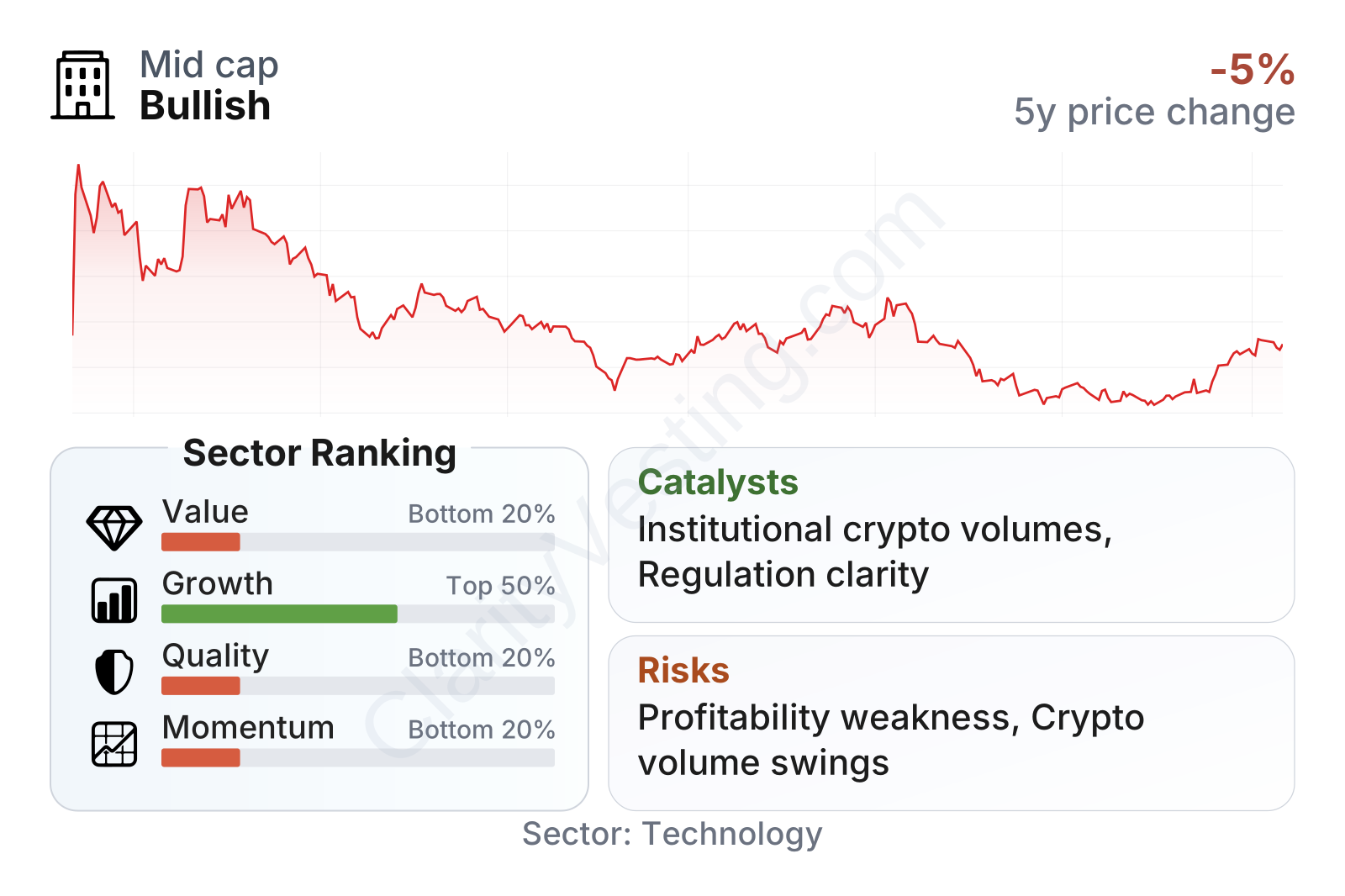
Bullish currently sits in a difficult mix of strengths and weaknesses. On growth, it ranks around the middle of its sector and shows headline expansion that is stronger than many software names. On quality, value, and momentum, it ranks near the bottom of the peer group. That combination usually describes a company with meaningful business activity and market opportunity, but with profitability, consistency, and market confidence still not firmly established.
The share price path over the past year has also been volatile, with sharp swings followed by a notable decline into mid-2026. That is consistent with a company exposed to crypto sentiment and trading conditions. In short, Bullish is not being treated by the market as a stable compounder today; it is being priced as a business whose future depends on execution and industry conditions improving from here.
Growth
Bullish operates in a sector that still has meaningful long-term expansion potential. Digital assets remain a developing financial market, and institutional adoption has continued to broaden through spot products, custody solutions, trading infrastructure, and more formal regulatory frameworks in several jurisdictions. If crypto trading becomes more institutionalized over time, exchanges built for deeper liquidity, compliance, and professional-grade execution could benefit.
Bullish’s strategy makes sense in that context. Rather than targeting retail users first, it has focused on institutions and professional traders, where larger balances, repeat trading, and demand for reliable execution can create a more defensible niche. That approach can be attractive if the company succeeds in becoming a preferred venue for larger counterparties. It also fits with the broader idea that digital asset markets are moving closer to traditional market structure, where trust, liquidity, and operational resilience matter a great deal.
The near-term growth picture is less clean than the longer-term industry thesis. Bullish’s broader growth metrics remain strong versus many sector peers, but the most recent year-over-year revenue trend has turned sharply negative. That suggests activity has weakened materially in the latest reported periods, likely reflecting softer trading conditions rather than a straightforward loss of all business relevance. For a company like Bullish, revenue growth should be read together with crypto market volumes and volatility, because those often drive client engagement.
One encouraging sign is cash generation. Free cash flow moved from negative territory at the end of 2025 to positive territory in early 2026. That does not erase the company’s uneven earnings profile, but it suggests Bullish has some ability to convert periods of stronger operating performance into actual cash. For long-term analysis, that matters because exchanges can sometimes look active on revenue while still failing to create durable cash returns.
A key catalyst is any sustained rebound in institutional crypto trading volumes. Additional regulatory clarity, expansion into new geographies, deeper liquidity partnerships, or stronger integration of Bullish’s exchange and media-related ecosystem could also improve market visibility and operating leverage. In a business like this, scale is powerful: if volumes rise faster than expenses, margins can improve quickly.
Risks
This article is for informational purposes only and does not constitute financial advice. Some content is AI-generated. See Disclaimer