Stock Analysis · Bel Fuse B Inc (BELFB)
Overview
Bel Fuse is a manufacturer of electronic components that help move, convert, protect, and connect electrical power and data inside equipment. Its products are used in areas such as data centers, networking equipment, telecommunications systems, industrial automation, transportation, defense, aerospace, and eMobility applications. In simple terms, the company sells the parts that allow more complex machines and systems to operate reliably.
The business is organized into three main operating segments. Based on the latest annual mix disclosed by the company, revenue is spread across the portfolio as follows:
- Power Solutions and Protection: approximately 46% of revenue. This segment includes power supplies, power converters, magnetics, circuit protection devices, and products used in server, storage, networking, and industrial applications.
- Connectivity Solutions: approximately 37% of revenue. This segment includes high-speed copper and fiber interconnect products, cable assemblies, connectors, lugs, cinch connectivity products, and ruggedized solutions for industrial, aerospace, and defense markets.
- Magnetic Solutions: approximately 17% of revenue. This business includes integrated connector modules, discrete magnetics, and power transformers used in networking, telecom, and commercial markets.
Geographically, Bel Fuse serves a global customer base, and its demand profile depends heavily on capital spending cycles in communications, computing infrastructure, industrial electronics, and specialized defense and transportation programs. That creates a business with exposure to attractive end markets, but also one that can swing with customers’ inventory adjustments and project timing.
One encouraging feature is that the company has gradually improved the amount of profit it keeps from each dollar of sales over the last several years, even though revenue has not moved in a straight line. That suggests management has been improving product mix, pricing discipline, or operating efficiency rather than relying only on volume growth.
The long-term picture shows a company that has expanded gross profit and operating income more quickly than revenue since 2021, although 2024 was a softer year before activity recovered again in 2025.
Key Figures
| Metric | Value | Sector ⓘ |
|---|---|---|
| Date | Sep 12, 2026 | |
| Context | ||
| Sector | Technology | |
| Industry | Electronic Components | |
| Market Cap ⓘ | $3.51B | |
| Beta ⓘ | 1.39 | |
Value (Cheapness) | ||
| P/E Ratio ⓘ | 63.28 | 29.51 |
| FCF Yield ⓘ | 2.09% | 4.25% |
| EBIT / EV ⓘ | 3.23% | 2.85% |
| PEG ⓘ | 1.71 | |
Growth (Business expansion) | ||
| Revenue Growth ⓘ | 25.20% | 15.40% |
| RPS Growth (5Y CAGR) ⓘ | 8.78% | 8.56% |
| EPS Growth (5Y CAGR) ⓘ | -6.15% | -11.88% |
| Margin Growth (5Y Trend) ⓘ | 10.58% | 0.46% |
| FCF Growth (5Y CAGR) ⓘ | N/A | 9.80% |
Quality (Business durability) | ||
| ROIC (Latest) ⓘ | 12.12% | 9.44% |
| ROIC (5Y Median) ⓘ | 13.55% | 8.30% |
| Net Debt / EBIT (Latest) ⓘ | -2.64 | 0.54 |
| Net Debt / EBIT (5Y Median) ⓘ | 1.49 | 0.44 |
| Operating Margin (Latest) ⓘ | 13.85% | 9.58% |
| Operating Margin (5Y Median) ⓘ | 12.32% | 8.25% |
| Debt to Equity (Latest) ⓘ | 3.77% | 33.33% |
| Profit Margin (Latest) ⓘ | 7.21% | 7.14% |
| Free Cash Flow (Latest) ⓘ | $73.34M | |
Momentum (Price trend) | ||
| 3Y Return ⓘ | +453.09% | +45.48% |
| 12M Return (excl. last month) ⓘ | +118.96% | +23.48% |
| 6M Return ⓘ | +28.34% | +20.93% |
| Price vs. 200-Day MA ⓘ | +5.46% | +7.43% |
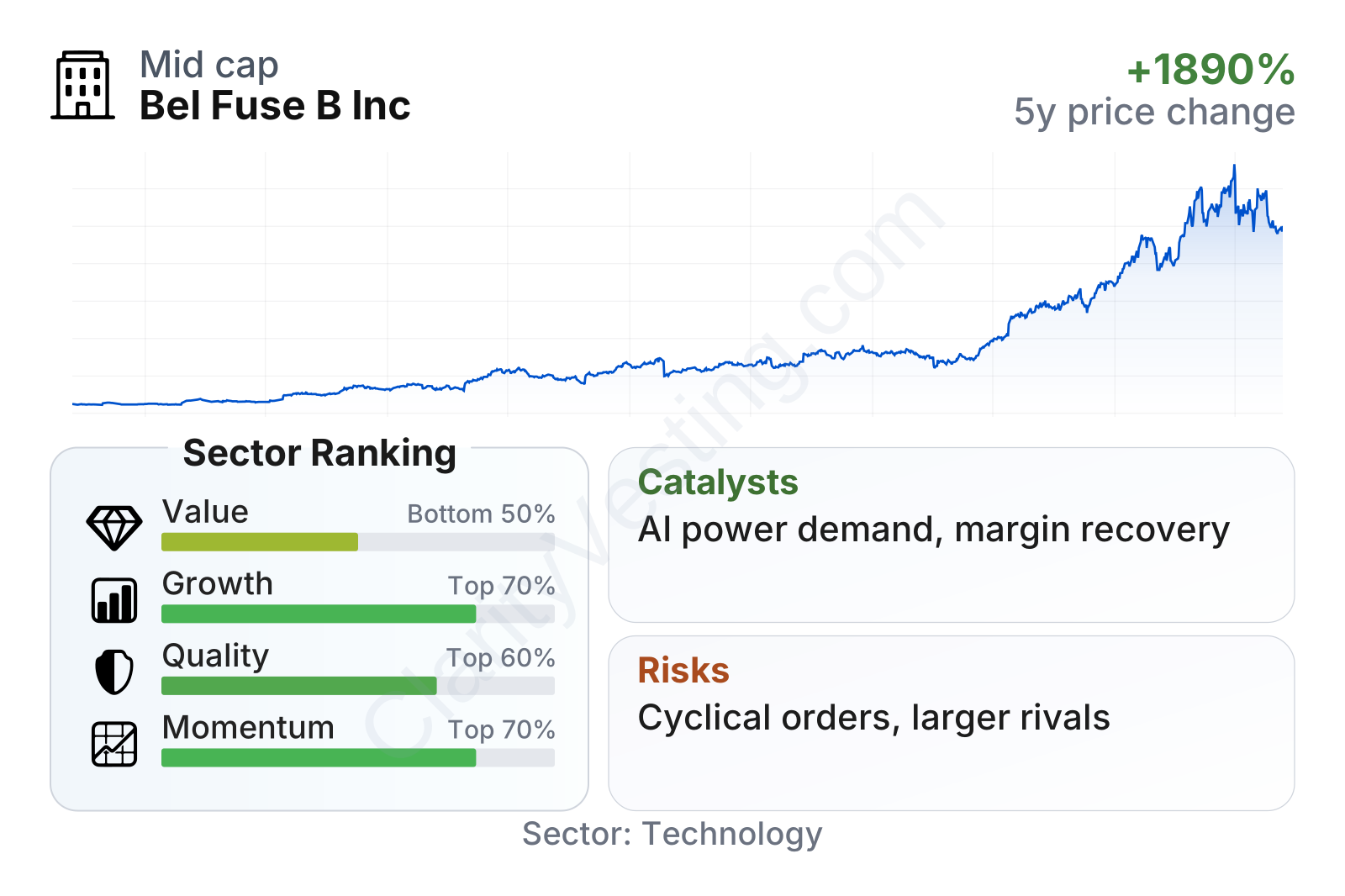
Bel Fuse is a mid-sized technology hardware company with a stock that has been much more volatile than the broader market, as shown by its beta above 1. The stock’s recent performance has been exceptionally strong versus the sector, and the company ranks well on growth, quality, and momentum measures. Profitability is also better than many peers, with operating margin around the mid-teens and profit margin modestly above the sector median. The balance sheet stands out positively: debt is very low relative to equity, and net debt is below zero on an EBIT basis, meaning cash exceeds debt after adjusting for earnings power. The weak point in the table is valuation, where the earnings multiple and free cash flow yield look less favorable than the typical company in the sector after the sharp rise in the share price.
Growth
Bel Fuse operates in a sector that benefits from several durable trends: more computing power in data centers, rising power density in servers and networking gear, higher electronics content in industrial systems, and increasing demand for rugged connectivity in transportation, aerospace, and defense. These are not short-lived themes. As equipment becomes faster and more power-hungry, the need for power conversion, protection, and high-performance interconnect components usually increases as well.
The company’s strategy is sensible for this backdrop. Its portfolio is positioned around infrastructure rather than consumer gadgets, which can make customer relationships stickier and product qualification cycles longer. It also gives Bel Fuse exposure to specialized niches where engineering requirements matter. That does not make the company immune to cycles, but it can support better margins than a pure commodity component supplier.
Recent revenue trends show why Bel Fuse needs to be viewed over a full cycle. Sales growth turned negative through much of 2024, then rebounded strongly, with year-over-year growth returning to the high teens and then above 25% more recently. That pattern fits a business tied to customer inventory corrections and infrastructure spending waves rather than one delivering perfectly smooth expansion every quarter.
Cash generation has also recovered well from earlier weakness. Free cash flow moved from negative territory a few years ago to a solid positive level, and recent trailing twelve-month figures remain healthy. That matters because it gives the company room to invest in operations, support acquisitions when opportunities appear, and navigate downturns without leaning heavily on debt.
A notable catalyst is the company’s exposure to AI-related and high-performance computing infrastructure through its power and connectivity products. As servers and networking systems require more power management and more demanding interconnect performance, Bel Fuse can participate even without being a headline semiconductor name. In addition, the company has continued to expand product offerings and manufacturing capabilities through acquisitions and internal development, which can broaden its reach in higher-value applications.
Recent company communications have also pointed to improving demand in key end markets after the prior digestion phase. When a company with already improved margins sees volume recover, earnings can rise faster than revenue because much of the operating base is already in place.
Risks
This article is for informational purposes only and does not constitute financial advice. Some content is AI-generated. See Disclaimer


