Stock Analysis · Belden Inc (BDC)
Overview
Belden Inc is a communications infrastructure company that makes products used to move data, audio, video, and power across industrial sites, data centers, buildings, and broadcast environments. In simple terms, it sells the physical backbone that helps factories, utilities, businesses, and media operators keep equipment connected and networks running reliably.
Its business is organized around two main segments. The larger one is Industrial Automation Solutions, which serves factories, process industries, energy, transportation, and other industrial customers that need resilient networking, cybersecurity, and automation connectivity. The second is Smart Infrastructure Solutions, which focuses more on enterprise buildings, data centers, broadband, and media applications.
Based on recent company reporting, Belden’s revenue mix is approximately:
- Industrial Automation Solutions: about 59% of revenue. This includes industrial networking, automation software, cybersecurity, connectors, cable, and related systems used in manufacturing and critical infrastructure.
- Smart Infrastructure Solutions: about 41% of revenue. This includes copper and fiber cabling, connectivity products, racks, and systems used in commercial buildings, data centers, broadband networks, and broadcast/media installations.
That mix matters because it shows Belden is no longer just a traditional cable manufacturer. A large portion of the company now comes from higher-value networking and industrial connectivity markets, where reliability and specialized performance matter more than simple commodity pricing.
Over the last several years, the company’s revenue and profit profile also suggest a gradual shift toward better-margin offerings. Sales have moved up and down with industrial demand, but gross profit has remained relatively solid, while research and development spending has trended higher, pointing to continued investment in more technical products rather than a pure volume strategy.
The business flow shows a company with a fairly stable gross profit base and meaningful operating income, even as costs and end-market demand fluctuate. Research and development has also increased over time, which fits Belden’s push into more specialized industrial networking and automation products.
Key Figures
| Metric | Value | Sector ⓘ |
|---|---|---|
| Date | Sep 12, 2026 | |
| Context | ||
| Sector | Technology | |
| Industry | Communication Equipment | |
| Market Cap ⓘ | $4.78B | |
| Beta ⓘ | 1.09 | |
Value (Cheapness) | ||
| P/E Ratio ⓘ | 19.85 | 29.51 |
| FCF Yield ⓘ | 4.44% | 4.25% |
| EBIT / EV ⓘ | 6.23% | 2.85% |
| PEG ⓘ | 0.99 | |
Growth (Business expansion) | ||
| Revenue Growth ⓘ | 11.60% | 15.40% |
| RPS Growth (5Y CAGR) ⓘ | 7.41% | 8.56% |
| EPS Growth (5Y CAGR) ⓘ | -12.02% | -11.88% |
| Margin Growth (5Y Trend) ⓘ | -1.04% | 0.46% |
| FCF Growth (5Y CAGR) ⓘ | 5.37% | 9.80% |
Quality (Business durability) | ||
| ROIC (Latest) ⓘ | 11.08% | 9.44% |
| ROIC (5Y Median) ⓘ | 11.21% | 8.30% |
| Net Debt / EBIT (Latest) ⓘ | 3.40 | 0.54 |
| Net Debt / EBIT (5Y Median) ⓘ | 3.10 | 0.44 |
| Operating Margin (Latest) ⓘ | 11.39% | 9.58% |
| Operating Margin (5Y Median) ⓘ | 12.58% | 8.25% |
| Debt to Equity (Latest) ⓘ | 95.28% | 33.33% |
| Profit Margin (Latest) ⓘ | 8.52% | 7.14% |
| Free Cash Flow (Latest) ⓘ | $212.08M | |
Momentum (Price trend) | ||
| 3Y Return ⓘ | +27.63% | +45.48% |
| 12M Return (excl. last month) ⓘ | +10.64% | +23.48% |
| 6M Return ⓘ | +4.83% | +20.93% |
| Price vs. 200-Day MA ⓘ | +2.13% | +7.43% |
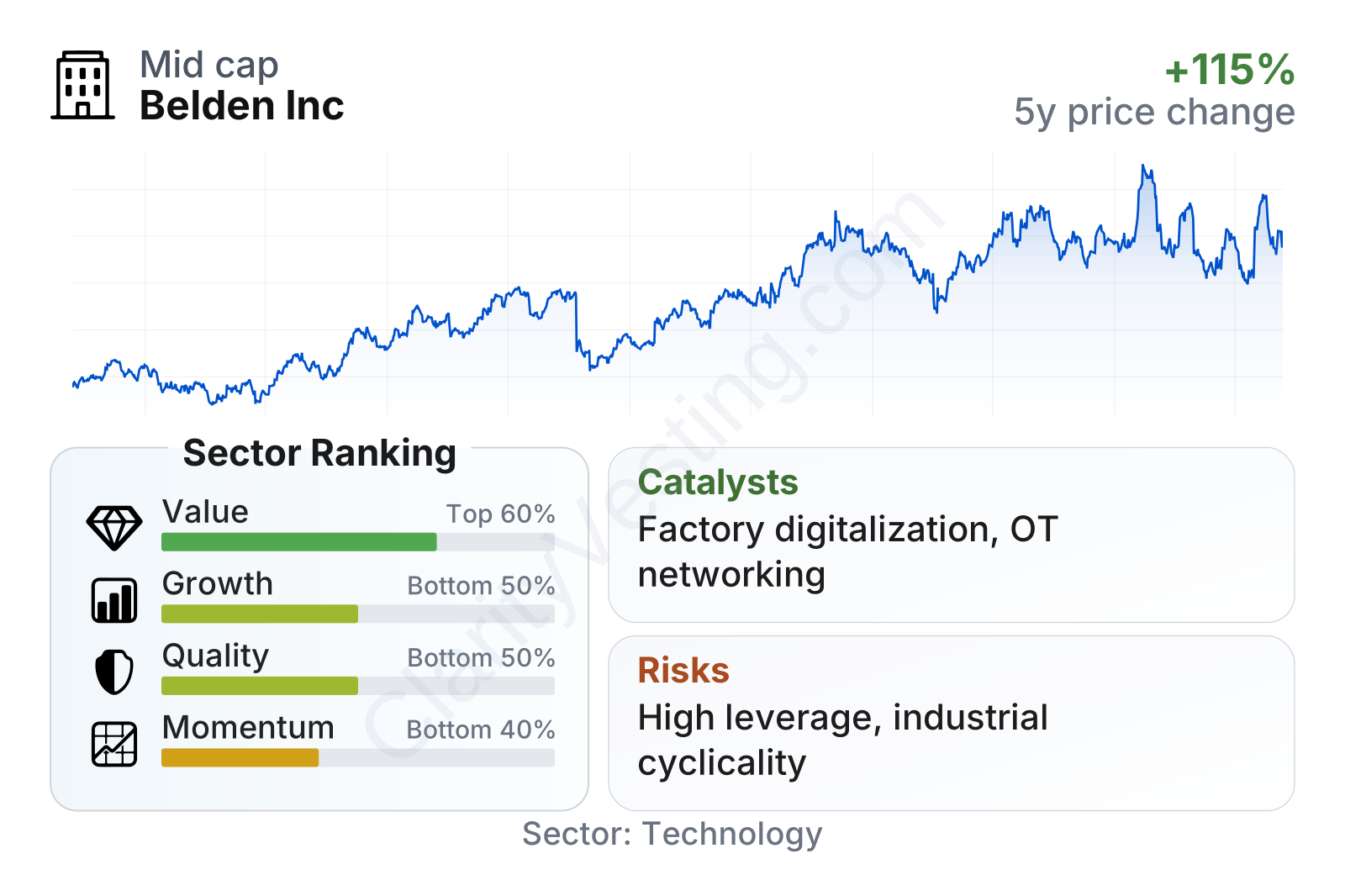
Belden is a mid-sized technology and communications equipment company. On valuation, the stock stands below the sector median on earnings multiples, while cash generation metrics look broadly competitive. Profitability is better than many peers, but the overall ranking is held back by leverage and only moderate growth compared with the wider technology sector. Share-price performance has been more mixed recently after a strong multi-year run, which helps explain why momentum scores are not especially strong.
Growth
Belden operates in parts of the market that still have long-term expansion drivers. Industrial automation, digitalization of factories, machine networking, cybersecurity for operational technology, data-center connectivity, and fiber-rich network upgrades are all supported by structural trends that go beyond one quarter or one year. Many manufacturers and infrastructure operators are still modernizing older systems, which creates ongoing demand for reliable industrial networking hardware and software.
The company’s strategy appears consistent with those trends. Management has spent years moving the portfolio toward industrial automation, mission-critical networking, and software-linked solutions. That matters because these categories can carry better margins, tighter customer relationships, and more recurring follow-on demand than standard cabling products alone. Belden has also used acquisitions to add software, cloud-based network management, and industrial cybersecurity capabilities, strengthening its position in connected industrial environments.
Revenue growth has been cyclical rather than smooth. After a period of contraction, growth recovered into positive territory and recently returned to low-double-digit year-over-year levels. That rebound is encouraging, but it also shows Belden is exposed to customer spending cycles, especially in industrial and infrastructure projects.
Cash generation has also remained positive through different demand environments, although it has not followed a straight upward path. Free cash flow has recovered from weaker periods and remains meaningful for a company of this size, which supports debt service, acquisitions, and capital returns. For a long-term business assessment, that resilience is more important than any single quarter.
A notable catalyst is Belden’s exposure to factory digitization and operational technology networks, where downtime can be extremely costly and customers often prioritize proven performance over the lowest price. Another is the continuing buildout of data-heavy infrastructure, including fiber, data-center connectivity, and more complex enterprise networking needs. Recent company communications have also highlighted portfolio refinement and acquisition activity designed to increase the share of automation and networking revenue, which could support a stronger business mix over time.
Risks
This article is for informational purposes only and does not constitute financial advice. Some content is AI-generated. See Disclaimer