Stock Analysis · Atmus Filtration Technologies Inc (ATMU)
Overview
Atmus Filtration Technologies is a filtration company best known for products that help engines and equipment run cleanly and reliably. It was separated from Cummins in 2023 and sells under brands such as Fleetguard. Its products are used in trucks, buses, off-highway equipment, power generation, and other industrial applications. In simple terms, the company makes filters and related components that remove contaminants from air, fuel, oil, hydraulic systems, and crankcase ventilation systems.
The business is largely tied to replacement demand rather than only new vehicle production. That matters for long-term analysis because filters are consumable parts: they need to be changed regularly during the life of a vehicle or machine. This gives Atmus a recurring revenue base, although the company is still exposed to freight activity, equipment utilization, and broader industrial cycles.
Based on company filings, revenue is organized primarily by geography rather than by detailed product line in headline reporting. A practical view of the main revenue sources is:
- North America: approximately 39% of revenue in 2025. This is the company’s largest region and includes heavy-duty trucks, aftermarket distribution, and OEM sales.
- Asia Pacific: approximately 28% of revenue in 2025. This includes China, India, and other regional markets, with exposure to both on-highway and industrial equipment demand.
- Europe: approximately 17% of revenue in 2025. The region serves truck and industrial platforms as well as replacement parts channels.
- South America: approximately 9% of revenue in 2025. This market includes commercial vehicles and off-highway applications.
- Middle East and Africa: approximately 7% of revenue in 2025. Smaller in size, but relevant in commercial vehicle and industrial end markets.
Another useful way to think about the business is by channel. Atmus states that a large share of sales comes from the aftermarket, with the rest tied to original equipment manufacturers. The aftermarket side is generally more stable and higher quality because it depends on installed vehicles and equipment needing regular maintenance, not just new unit sales.
The longer-term financial flow also points to a business that has been improving operating efficiency. Revenue has grown steadily over the last several years, while gross profit and operating income have risen faster than sales, indicating better margins even as selling and administrative costs increased.
Key Figures
| Metric | Value | Sector ⓘ |
|---|---|---|
| Date | Sep 12, 2026 | |
| Context | ||
| Sector | Consumer Cyclical | |
| Industry | Auto Parts | |
| Market Cap ⓘ | $3.71B | |
| Beta ⓘ | 1.17 | |
Value (Cheapness) | ||
| P/E Ratio ⓘ | 17.40 | 17.10 |
| FCF Yield ⓘ | 5.14% | 8.53% |
| EBIT / EV ⓘ | 7.13% | 6.46% |
| PEG ⓘ | N/A | |
Growth (Business expansion) | ||
| Revenue Growth ⓘ | 16.40% | 5.75% |
| RPS Growth (5Y CAGR) ⓘ | 5.39% | 9.14% |
| EPS Growth (5Y CAGR) ⓘ | -15.21% | -18.21% |
| Margin Growth (5Y Trend) ⓘ | 4.21% | -0.23% |
| FCF Growth (5Y CAGR) ⓘ | -4.18% | 4.91% |
Quality (Business durability) | ||
| ROIC (Latest) ⓘ | 21.17% | 12.61% |
| ROIC (5Y Median) ⓘ | 27.52% | 10.72% |
| Net Debt / EBIT (Latest) ⓘ | 2.30 | 2.10 |
| Net Debt / EBIT (5Y Median) ⓘ | 1.11 | 2.32 |
| Operating Margin (Latest) ⓘ | 16.90% | 9.25% |
| Operating Margin (5Y Median) ⓘ | 14.36% | 9.64% |
| Debt to Equity (Latest) ⓘ | 219.50% | 75.78% |
| Profit Margin (Latest) ⓘ | 11.32% | 5.33% |
| Free Cash Flow (Latest) ⓘ | $190.40M | |
Momentum (Price trend) | ||
| 3Y Return ⓘ | +96.99% | +14.53% |
| 12M Return (excl. last month) ⓘ | +13.78% | +3.08% |
| 6M Return ⓘ | -20.12% | +0.55% |
| Price vs. 200-Day MA ⓘ | -16.48% | -0.54% |
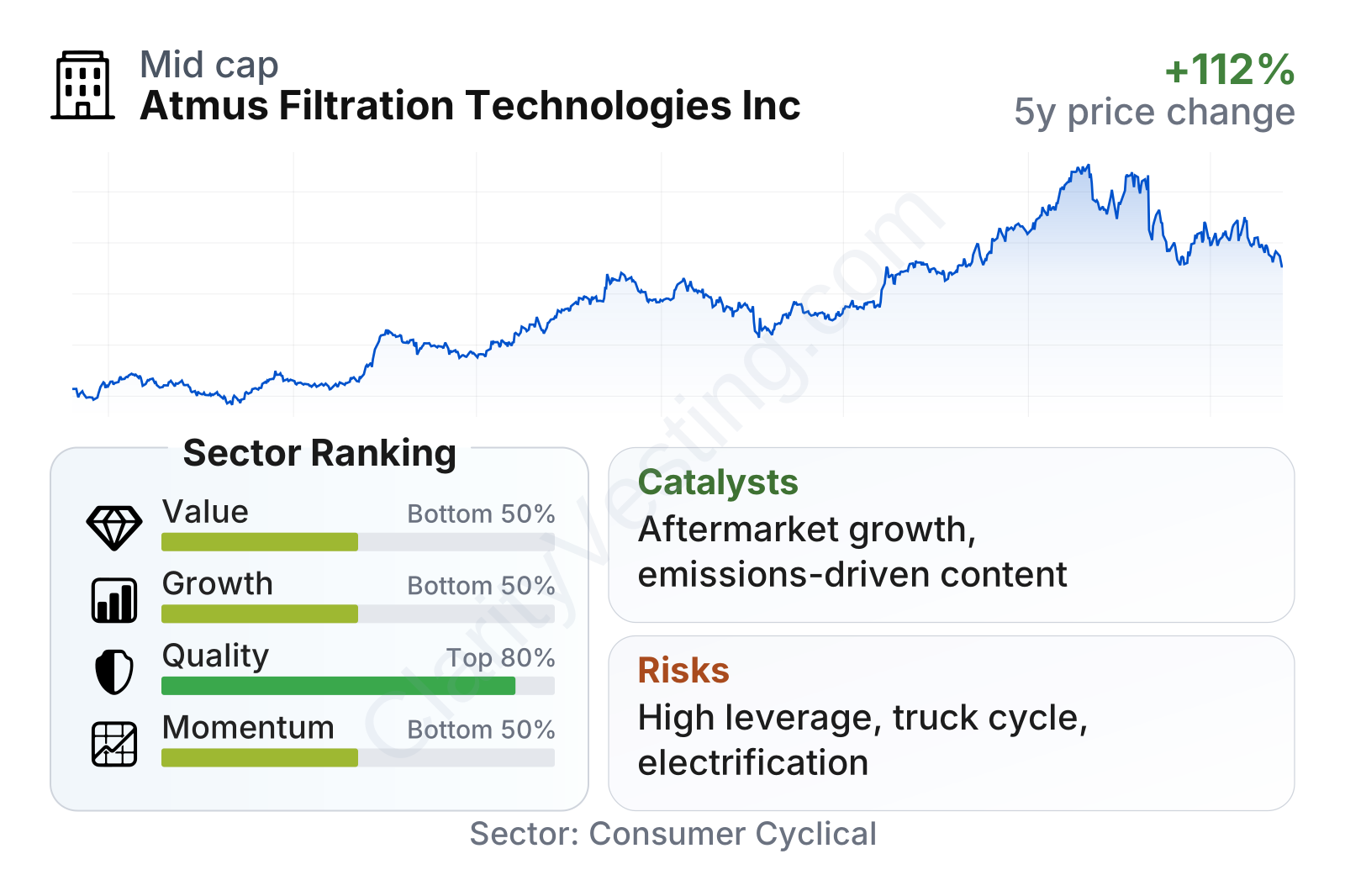
Atmus is a mid-sized auto parts company with a stock that has been more volatile than the broader market, as suggested by a beta modestly above 1. The factor breakdown shows a mixed picture: quality is clearly strong relative to peers, helped by high returns on invested capital and margins above sector norms, while value and growth rank lower because the market already gives some credit for that quality and because long-run cash flow growth has been less consistent than recent sales growth.
The stock’s multi-year performance has been strong, but the more recent pullback shows that sentiment can change quickly when cyclical names rerate. That combination usually means the market views Atmus as a good business, but not one that is immune to industrial and transportation slowdowns.
Growth
Filtration is not a fashionable high-growth niche, but it is a durable one. Heavy-duty and industrial equipment still need filters regardless of whether the engine is diesel, natural gas, or hybrid. Even with long-term electrification trends, large parts of the global truck, agriculture, construction, mining, and power generation fleets are expected to remain dependent on internal combustion platforms for many years. That gives Atmus exposure to a sector with slower but persistent demand.
The company’s strategy for growth is sensible because it is built around areas where filtration matters most: aftermarket expansion, new product development, international markets, and broader content per vehicle or machine. Atmus has also emphasized first-fit and replacement relationships, which can support recurring sales over time. The installed base is especially important because every vehicle or machine sold can create years of future replacement demand.
Recent revenue momentum has improved noticeably. Year-over-year growth was modest through much of 2024, briefly turned negative in early 2025, and then accelerated into high-single-digit and mid-teen territory by late 2025 and mid-2026. That pattern suggests the business has moved from a softer patch into a stronger operating phase.
Cash generation has also improved from earlier levels. Trailing free cash flow moved up meaningfully by 2026, which supports the view that recent growth has not come only from accounting profits. For an industrial supplier, that is an important sign because cash can be used for debt reduction, dividends, and reinvestment.
A meaningful catalyst is tighter emissions and efficiency requirements in commercial vehicles and industrial equipment. These standards often increase filtration complexity and can raise the value of specialized components. Another catalyst is geographic expansion, especially in emerging markets where truck and equipment fleets continue to grow and then require ongoing maintenance. In 2026, the company also continued to highlight operational execution, product innovation, and aftermarket penetration in its public communications, all of which support the same long-duration growth framework rather than a one-time event.
Risks
This article is for informational purposes only and does not constitute financial advice. Some content is AI-generated. See Disclaimer


