Stock Analysis · Anterix Inc (ATEX)
Overview
Anterix Inc is a specialized wireless spectrum company focused on the U.S. utility sector. In simple terms, it controls licensed airwaves in the 900 MHz band and works with electric, gas, and water utilities that want to build private broadband networks for grid operations. These networks can support tasks such as monitoring equipment, improving outage response, connecting field workers, and strengthening cybersecurity compared with older communications systems.
The business is unusual because Anterix is not a traditional telecom carrier selling phone plans to consumers. Its main asset is spectrum, and its strategy is to monetize that asset through long-term agreements with utilities and through related services that help customers deploy private networks. The investment case depends heavily on whether utilities continue to adopt dedicated broadband systems for modern grid infrastructure.
Based on recent company filings, revenue is concentrated in a small number of categories and can be lumpy from quarter to quarter because contract timing matters a lot. The main sources of revenue are:
- Spectrum agreements and licenses: the largest source, likely representing a clear majority of revenue in recent periods. This includes spectrum usage rights granted to utility customers, often tied to long-term arrangements.
- Professional services and other revenue: a smaller but growing contribution, linked to planning, support, and activities surrounding private broadband deployment.
- Ancillary or miscellaneous items: a limited contribution, varying by period and often not meaningful enough to break out separately.
Anterix remains a relatively small public company by market value, which can create both upside from contract wins and volatility when expectations shift. The core economic reality is that a few large utility deals can make a big difference in annual results.
The operating picture still shows a business in build-out mode: revenue has risen sharply from very low levels over the last several years, while overhead has remained substantial. That mix helps explain why headline profitability can swing sharply even when the underlying commercial rollout is still early.
Key Figures
| Metric | Value | Sector ⓘ |
|---|---|---|
| Date | Sep 12, 2026 | |
| Context | ||
| Sector | Communication Services | |
| Industry | Telecom Services | |
| Market Cap ⓘ | $1.61B | |
| Beta ⓘ | 0.84 | |
Value (Cheapness) | ||
| P/E Ratio ⓘ | 23.68 | 18.61 |
| FCF Yield ⓘ | 0.91% | 13.68% |
| EBIT / EV ⓘ | 0.10% | 4.54% |
| PEG ⓘ | N/A | |
Growth (Business expansion) | ||
| Revenue Growth ⓘ | 38.10% | 5.40% |
| RPS Growth (5Y CAGR) ⓘ | 55.20% | 4.62% |
| EPS Growth (5Y CAGR) ⓘ | -18.25% | -18.01% |
| Margin Growth (5Y Trend) ⓘ | N/A | 1.10% |
| FCF Growth (5Y CAGR) ⓘ | N/A | 5.88% |
Quality (Business durability) | ||
| ROIC (Latest) ⓘ | 1.02% | 8.38% |
| ROIC (5Y Median) ⓘ | -23.37% | 8.32% |
| Net Debt / EBIT (Latest) ⓘ | -73.49 | 1.99 |
| Net Debt / EBIT (5Y Median) ⓘ | N/A | 2.94 |
| Operating Margin (Latest) ⓘ | 21.63% | 14.89% |
| Operating Margin (5Y Median) ⓘ | -1251.87% | 12.96% |
| Debt to Equity (Latest) ⓘ | 1.43% | 59.59% |
| Profit Margin (Latest) ⓘ | 933.04% | 8.77% |
| Free Cash Flow (Latest) ⓘ | $14.60M | |
Momentum (Price trend) | ||
| 3Y Return ⓘ | +152.16% | +46.64% |
| 12M Return (excl. last month) ⓘ | +296.43% | +2.16% |
| 6M Return ⓘ | +115.64% | +5.05% |
| Price vs. 200-Day MA ⓘ | +49.73% | +2.88% |
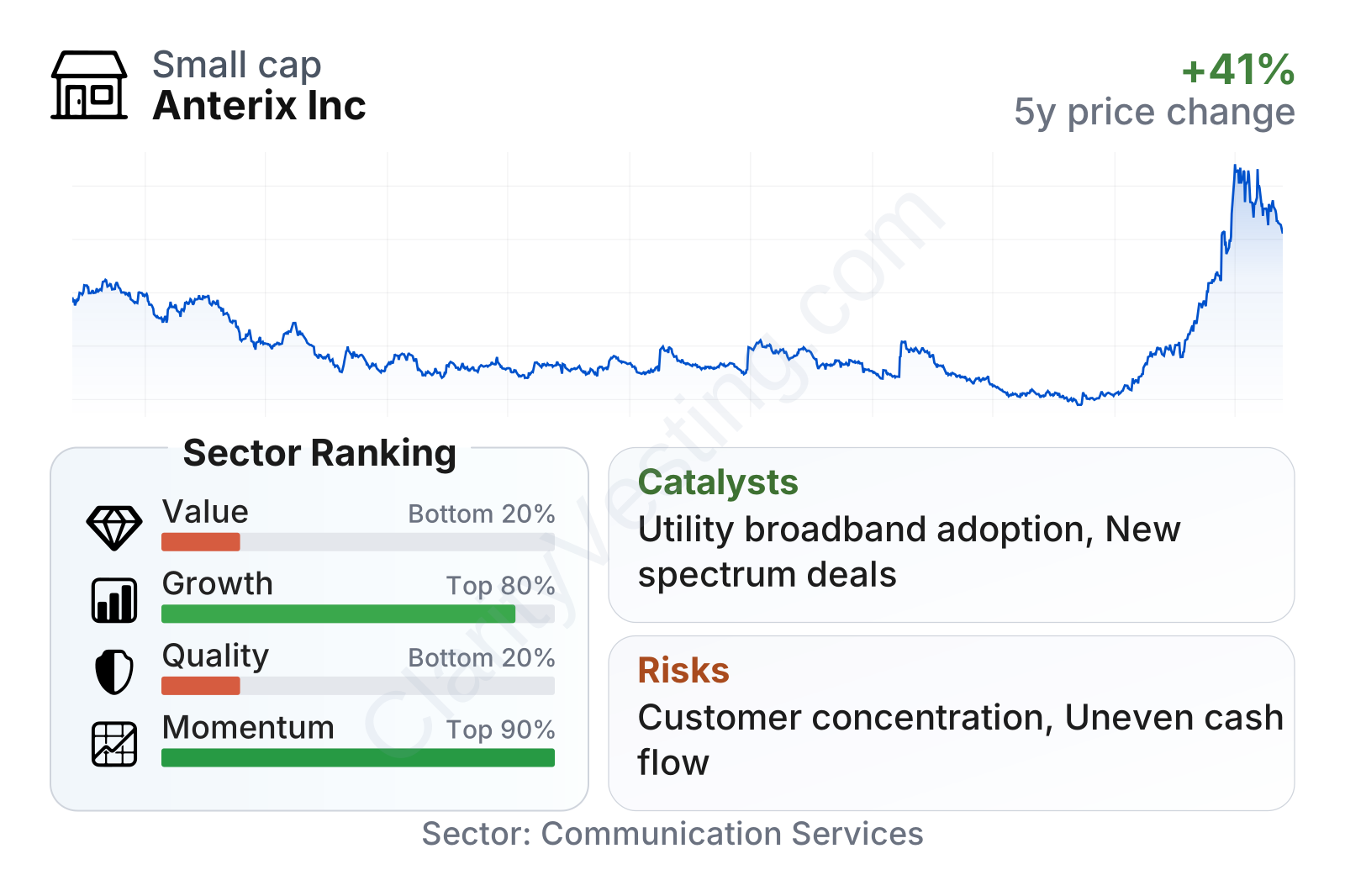
The overall profile is mixed. Growth and market momentum rank strongly versus the broader communication services group, but value and quality measures are weak. Revenue expansion has been far above the sector median, while returns on invested capital remain negative and cash flow generation is still modest relative to the company’s valuation. Balance-sheet leverage is a clear strength, with debt to equity near 1% versus roughly 48% for the sector median.
The share price history also highlights how event-driven this stock can be. After a prolonged decline from 2021 into 2025, the stock rebounded sharply in 2026, suggesting that the market has recently become much more optimistic about contract momentum and the long-term monetization of Anterix’s spectrum portfolio.
Growth
Anterix operates in a sector with credible long-term tailwinds. U.S. utilities are under pressure to modernize the electric grid, integrate distributed energy resources, harden infrastructure against extreme weather, and improve cybersecurity. Private wireless broadband fits into that trend because utilities want more control, reliability, and security than they often get from legacy narrowband systems or shared public networks.
The company’s strategy makes sense on paper. By assembling licensed 900 MHz spectrum across the country and focusing on utility-grade private networks, Anterix has positioned itself in a niche where technical requirements, regulatory coordination, and long sales cycles create barriers to entry. If utilities increasingly treat communications as core infrastructure, Anterix’s assets could become more valuable over time.
Revenue growth has been very strong, with recent year-over-year increases around 38% and several earlier periods far above that level. The important caveat is that growth starts from a small base and does not always move in a straight line. For this company, the key question is not whether one quarter is high or low, but whether the number of signed utility relationships keeps expanding and whether those agreements convert into recurring economics over time.
Cash generation has improved from deeply negative levels seen earlier in the company’s development, but it is still inconsistent. Free cash flow has moved from large outflows to positive territory, then back down, and more recently recovered again. That pattern is typical of a company that is commercializing a specialized infrastructure asset rather than operating a mature subscription model.
A notable catalyst is the broader push toward utility private LTE and eventually more advanced grid communications. Anterix has also emphasized strategic relationships with ecosystem partners that help utilities deploy complete solutions, not just spectrum rights. Recent company communications have continued to center on utility contract progress, spectrum monetization, and the long runway for critical-infrastructure networking in the United States. If larger utilities accelerate implementation, Anterix could benefit disproportionately because each agreement can be meaningful relative to its current revenue base.
Risks
This article is for informational purposes only and does not constitute financial advice. Some content is AI-generated. See Disclaimer


