Stock Analysis · Ast Spacemobile Inc (ASTS)
Overview
AST SpaceMobile is building a space-based cellular broadband network designed to connect ordinary smartphones directly to satellites. The idea is different from traditional satellite internet systems that usually require a special dish or dedicated terminal. AST’s goal is to work through mobile network operators so that people can use existing phones in places where ground-based coverage is weak or unavailable, including rural areas, remote regions, and emergency situations.
The business model is still in an early commercialization phase, so revenue remains small compared with the company’s market value and spending levels. Based on recent company disclosures, current revenue has mainly come from non-service activities tied to developing the network and working with partners, while the long-term plan is to earn recurring revenue from satellite connectivity services sold with telecom operators.
The main revenue sources appear to be:
- Equipment and gateway-related revenue: approximately 50% to 70% recently, depending on the quarter. This includes ground infrastructure and related items needed to support operator integration.
- Engineering services and other contract revenue: approximately 20% to 40%. This generally reflects development work, testing support, and collaboration with telecom partners.
- Early service-related and other revenue: generally under 20% so far. This is the category with the biggest long-term potential if the satellite network moves into commercial operation at scale.
That mix matters because today’s revenue is not yet a clean reflection of the future business. The company is spending heavily to build infrastructure first, with the expectation that service revenue can become the dominant stream later if satellite deployment, regulatory approvals, and operator rollout proceed as planned.
The cost structure also shows a business still in buildout mode. Research and development was very high through 2024, while selling, general, and administrative expense increased as commercialization efforts expanded. Revenue improved in 2025, but losses remained substantial because AST is still funding satellite production, launches, testing, and network preparation.
The broad trend is that revenue has started to rise from a very low base, but spending has remained far ahead of sales. That is typical of a pre-scale network project, yet it also means the investment case depends much more on future execution than on current operating results.
Key Figures
| Metric | Value | Sector ⓘ |
|---|---|---|
| Date | Sep 12, 2026 | |
| Context | ||
| Sector | Technology | |
| Industry | Communication Equipment | |
| Market Cap ⓘ | $23.32B | |
| Beta ⓘ | 2.73 | |
Value (Cheapness) | ||
| P/E Ratio ⓘ | N/A | 29.51 |
| FCF Yield ⓘ | -7.03% | 4.25% |
| EBIT / EV ⓘ | -3.84% | 2.85% |
| PEG ⓘ | N/A | |
Growth (Business expansion) | ||
| Revenue Growth ⓘ | 2626.60% | 15.40% |
| RPS Growth (5Y CAGR) ⓘ | 3.67% | 8.56% |
| EPS Growth (5Y CAGR) ⓘ | N/A | -11.88% |
| Margin Growth (5Y Trend) ⓘ | N/A | 0.46% |
| FCF Growth (5Y CAGR) ⓘ | N/A | 9.80% |
Quality (Business durability) | ||
| ROIC (Latest) ⓘ | -14.60% | 9.44% |
| ROIC (5Y Median) ⓘ | -82.36% | 8.30% |
| Net Debt / EBIT (Latest) ⓘ | N/A | 0.54 |
| Net Debt / EBIT (5Y Median) ⓘ | N/A | 0.44 |
| Operating Margin (Latest) ⓘ | -646.28% | 9.58% |
| Operating Margin (5Y Median) ⓘ | -739.82% | 8.25% |
| Debt to Equity (Latest) ⓘ | 158.06% | 33.33% |
| Profit Margin (Latest) ⓘ | N/A | 7.14% |
| Free Cash Flow (Latest) ⓘ | -$1.64B | |
Momentum (Price trend) | ||
| 3Y Return ⓘ | +1378.02% | +45.48% |
| 12M Return (excl. last month) ⓘ | +49.34% | +23.48% |
| 6M Return ⓘ | -31.27% | +20.93% |
| Price vs. 200-Day MA ⓘ | -26.60% | +7.43% |
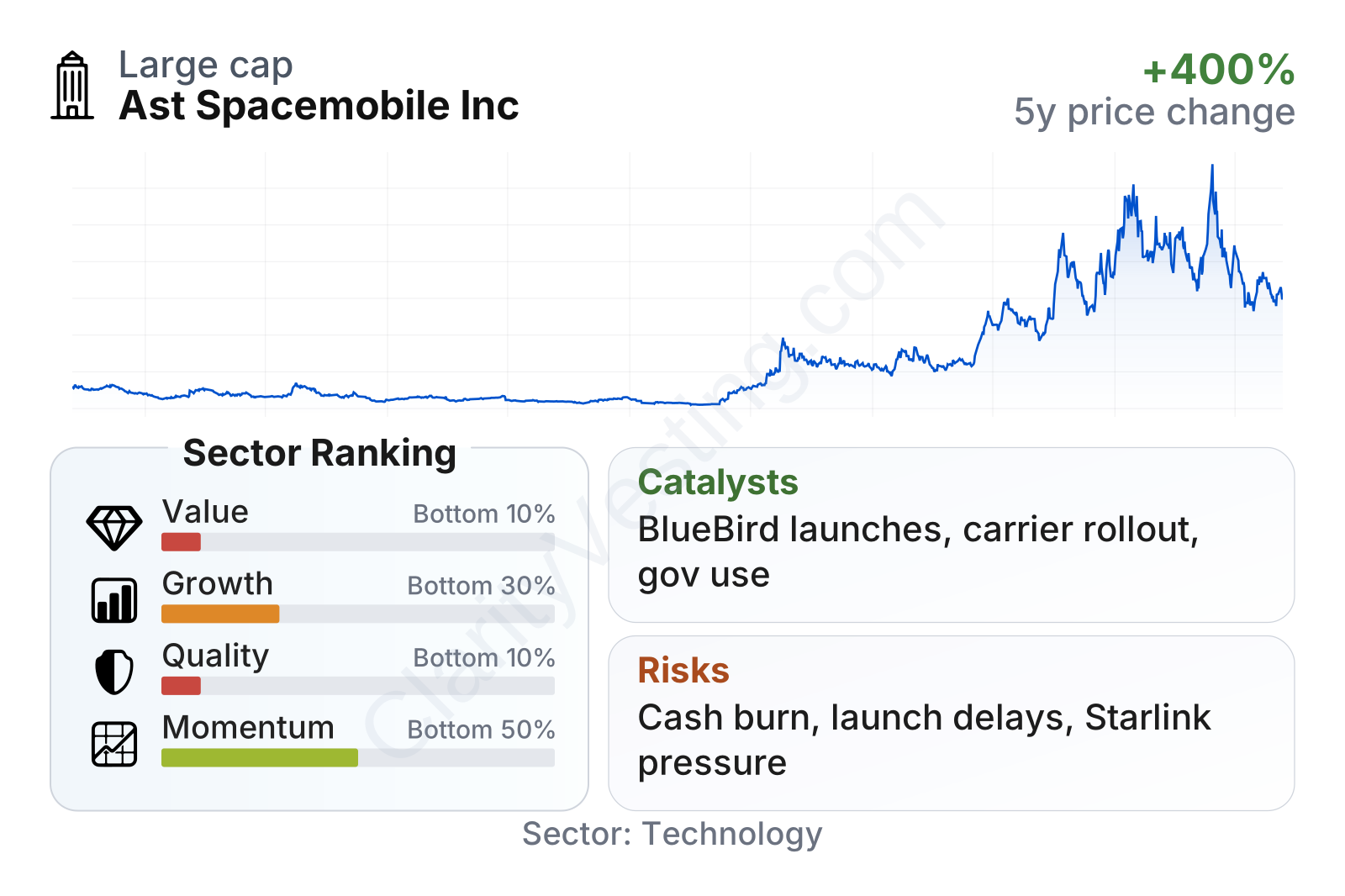
AST SpaceMobile is now a large-cap company by market value, but financially it still looks like an early-stage builder rather than a mature communications business. The table shows weak rankings on value, quality, and growth relative to the broader technology sector, which is not surprising given the company’s negative cash flow, lack of earnings, and still-limited revenue base. The one area that stands out is past share-price appreciation over a multi-year period, although recent momentum has been more mixed. The stock’s beta near 2.7 also signals unusually high volatility.
Growth
AST operates in a sector with genuine long-term demand. Direct-to-device satellite connectivity has become one of the most closely watched areas in telecom because it addresses a real problem: mobile dead zones still exist across large parts of the world, and building towers everywhere is often uneconomic. If a satellite network can fill those gaps using ordinary phones, the addressable market could be very large. That opportunity is strengthened by the fact that AST is not trying to replace mobile carriers; it is trying to sell capacity through them.
The strategy makes industrial sense. Telecom operators already have billing relationships, spectrum rights, and customer bases. By partnering with carriers rather than competing directly against them, AST can potentially scale faster if the technology works reliably. The company has repeatedly highlighted agreements and strategic relationships with major operators in different regions, which is important because distribution in this market is likely to depend more on partnerships than on direct consumer marketing.
Revenue growth has been extremely uneven, but the more recent pattern shows sharp acceleration from a very low base. That kind of jump can look impressive on paper, yet it should be read carefully: the company is still moving from development-stage revenue toward initial commercialization, so percentage growth is less informative than the question of whether repeatable service revenue begins to emerge.
The main constraint on growth is cash burn. Free cash flow has moved deeply further into negative territory as the company funds satellite manufacturing and deployment. In other words, the opportunity may be large, but getting to scale is expensive. For AST, future growth is tied not just to demand, but to whether it can keep financing the buildout without major disruption.
Recent company updates have pointed to meaningful catalysts. These include progress toward launching additional BlueBird satellites, continued testing of direct-to-smartphone broadband, and deeper commercial preparation with mobile network operators. Another important opportunity is government and public-safety use cases, where resilient connectivity can carry strategic value beyond ordinary consumer coverage. If AST demonstrates reliable voice, text, and broadband performance on standard phones across multiple operator partners, the commercial outlook could expand materially.
Risks
This article is for informational purposes only and does not constitute financial advice. Some content is AI-generated. See Disclaimer


