Stock Analysis · Asana Inc (ASAN)
Overview
Asana is a cloud software company focused on work management. Its platform helps teams plan projects, assign tasks, track deadlines, share updates, and connect work across departments. In simple terms, it sells software designed to make collaboration more organized and visible, especially for knowledge workers in functions such as marketing, product development, operations, IT, and corporate planning.
The business model is subscription-based software, which means customers typically pay recurring fees to use the platform over time. That usually makes revenue more predictable than in one-time software sales businesses.
Asana reports revenue primarily as a single subscription and support stream rather than many separate business lines, so precise public revenue splits are limited. Based on company disclosures, the main sources are:
- Subscription revenue: approximately 95%+ of total revenue. This includes paid access to Asana’s work management platform across pricing tiers, from small teams to large enterprise deployments.
- Professional services and other revenue: low single-digit percentage of total revenue. This generally includes onboarding, training, and related customer support services tied to implementation and adoption.
Geographically, Asana generates most of its revenue from the United States, with the rest coming from international markets. The company has also been pushing further into larger organizations, where contract sizes are typically higher and retention can be stronger if adoption expands across departments.
One notable financial pattern is that revenue has kept rising steadily over the last several years, while gross profit has remained very high, which is typical for software. At the same time, operating losses have narrowed meaningfully as spending has become more disciplined, and free cash flow has turned positive.
Key Figures
| Metric | Value | Sector ⓘ |
|---|---|---|
| Date | Sep 12, 2026 | |
| Context | ||
| Sector | Technology | |
| Industry | Software - Application | |
| Market Cap ⓘ | $2.01B | |
| Beta ⓘ | 0.95 | |
Value (Cheapness) | ||
| P/E Ratio ⓘ | N/A | 29.51 |
| FCF Yield ⓘ | 5.84% | 4.25% |
| EBIT / EV ⓘ | -7.75% | 2.85% |
| PEG ⓘ | N/A | |
Growth (Business expansion) | ||
| Revenue Growth ⓘ | 9.90% | 15.40% |
| RPS Growth (5Y CAGR) ⓘ | 11.70% | 8.56% |
| EPS Growth (5Y CAGR) ⓘ | -36.89% | -11.88% |
| Margin Growth (5Y Trend) ⓘ | N/A | 0.46% |
| FCF Growth (5Y CAGR) ⓘ | N/A | 9.80% |
Quality (Business durability) | ||
| ROIC (Latest) ⓘ | -61.79% | 9.44% |
| ROIC (5Y Median) ⓘ | -60.53% | 8.30% |
| Net Debt / EBIT (Latest) ⓘ | N/A | 0.54 |
| Net Debt / EBIT (5Y Median) ⓘ | N/A | 0.44 |
| Operating Margin (Latest) ⓘ | -17.59% | 9.58% |
| Operating Margin (5Y Median) ⓘ | -38.22% | 8.25% |
| Debt to Equity (Latest) ⓘ | 247.62% | 33.33% |
| Profit Margin (Latest) ⓘ | -18.63% | 7.14% |
| Free Cash Flow (Latest) ⓘ | $117.28M | |
Momentum (Price trend) | ||
| 3Y Return ⓘ | -54.54% | +45.48% |
| 12M Return (excl. last month) ⓘ | -30.79% | +23.48% |
| 6M Return ⓘ | +28.03% | +20.93% |
| Price vs. 200-Day MA ⓘ | +0.29% | +7.43% |
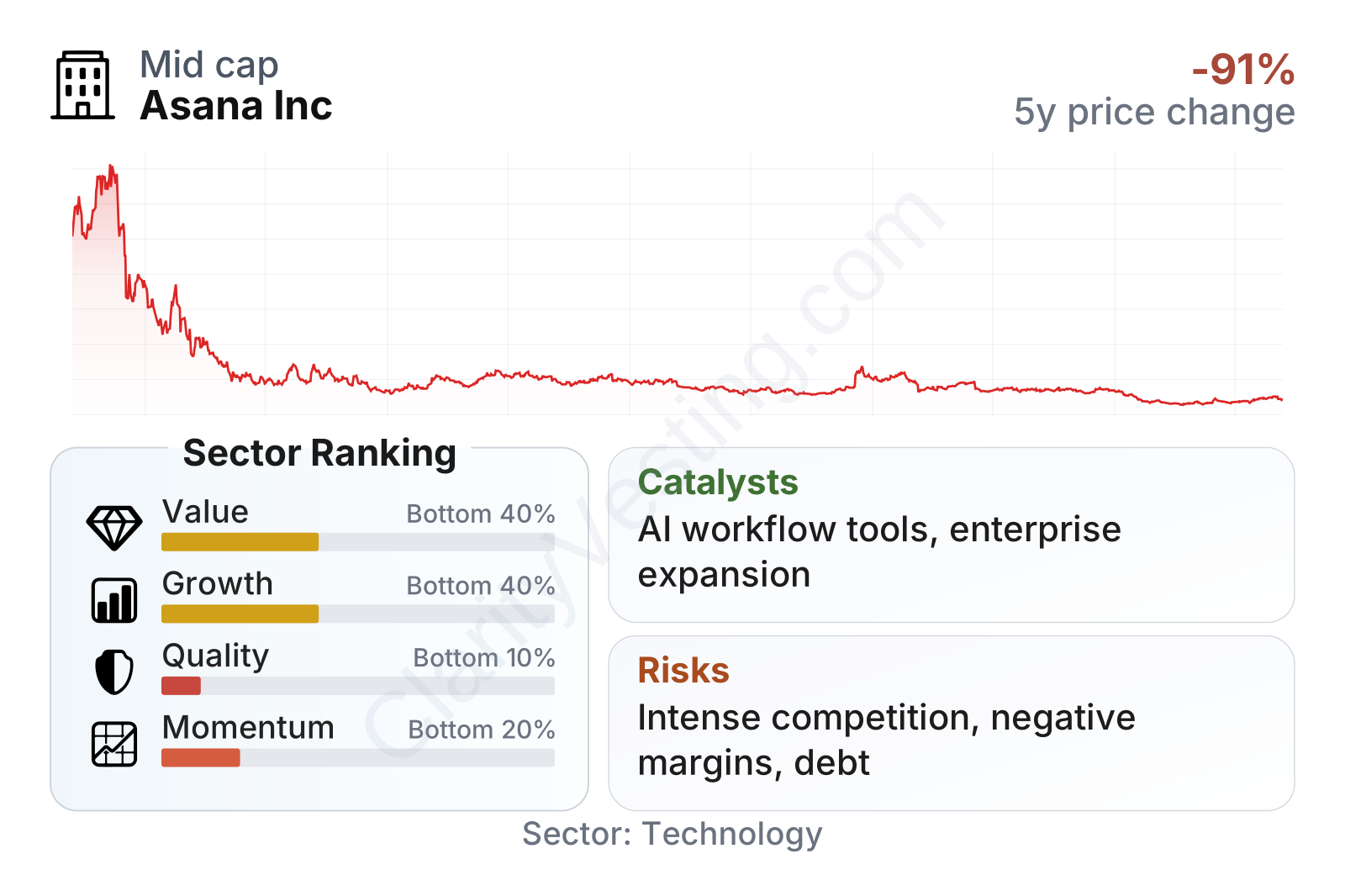
Asana is now a much smaller public company than it was at its peak, with a market value around $2 billion and a stock chart that shows a long decline from 2021 levels. Operationally, the picture is more mixed than the share price alone suggests. Free cash flow is positive and its free cash flow yield is above the sector median, but profitability and returns on capital remain well below typical software peers. The table also points to slower recent growth than the sector median, weak stock momentum, and a balance sheet profile that looks more leveraged than most companies in its industry.
Growth
Asana operates in a large and still relevant segment of enterprise software: collaborative work management. This remains a growing area because companies continue shifting work processes into digital tools, and many teams still use fragmented combinations of spreadsheets, email, chat, and documents. The long-term demand logic is clear: organizations want better visibility into who is doing what, when it is due, and how work connects to strategic goals.
Asana’s strategy for future expansion also makes sense on paper. The company has been targeting larger customers, adding more enterprise-grade capabilities, and increasingly positioning the platform as a system for coordinating complex work across teams rather than as a simple task list tool. That matters because enterprise customers tend to spend more, stay longer, and create upsell opportunities through broader seat adoption and additional features.
The main challenge is that growth has slowed sharply from the very high rates seen a few years ago. Revenue growth was above 50% earlier in its public-company life, but it has now settled closer to 9% to 10% year over year. That is still growth, but it is no longer the kind of pace that easily supports a premium software valuation by itself. For long-term analysis, this means the next phase likely depends less on rapid customer expansion and more on deeper enterprise penetration, better retention, and monetization of new capabilities.
A more encouraging sign is cash generation. Free cash flow has improved from deeply negative territory to clearly positive levels over the last two years. That shift suggests the company is gaining operating discipline and may be entering a more mature phase where it can balance growth with financial improvement. In software, that transition is often important because it shows the platform can generate cash without relying as heavily on aggressive spending.
A meaningful catalyst is the industry-wide push toward AI-assisted workplace software. Asana has been introducing AI features aimed at workflow automation, summarization, status reporting, and prioritization. If these tools improve productivity in a visible way, they could help Asana defend pricing, increase adoption inside larger accounts, and stand out in a crowded market. Another possible catalyst is continued traction with large customers, since enterprise expansion tends to have an outsized effect on recurring revenue quality.
Risks
This article is for informational purposes only and does not constitute financial advice. Some content is AI-generated. See Disclaimer


