Stock Analysis · Arhaus Inc (ARHS)
Overview
Arhaus is a U.S. home furnishings retailer focused on premium furniture and décor. The company sells sofas, dining tables, bedroom furniture, lighting, rugs, outdoor pieces, and home accents, with an emphasis on design, craftsmanship, and a higher-end customer experience. Its model combines showrooms, interior design services, e-commerce, catalogs, and in-home designer support. That makes Arhaus more than a basic furniture seller: it is positioned as a lifestyle brand in the premium part of the home furnishings market.
Revenue comes primarily from product sales to retail customers in the United States. Based on company disclosures, the business is best understood through its selling channels rather than by many separate business lines.
- Showroom sales and designer-assisted sales: approximately 70% to 80% of revenue. This includes purchases tied to Arhaus stores, design centers, and sales supported by in-store or in-home design consultants.
- E-commerce and other direct channels: approximately 20% to 30% of revenue. This includes online orders, digital demand generation, and transactions influenced by catalogs and direct marketing.
- Other revenue: a very small share, generally linked to non-merchandise items or ancillary activities rather than a separate major operating segment.
Arhaus does not rely on a highly fragmented revenue mix. That is important for long-term analysis: performance depends largely on demand for premium home furnishings, store productivity, average order values, and the company’s ability to preserve pricing and margins while expanding its brand.
The business has scaled meaningfully since 2021, with revenue rising from just under $800 million to roughly $1.4 billion by 2025. At the same time, the profit flow shows that the company’s cost base has become heavier as it expanded, especially in selling and administrative expenses. Gross profit remains substantial, but a larger share of that profit has recently been absorbed by operating costs, leaving net income well below the 2022-2023 peak.
Key Figures
| Metric | Value | Sector ⓘ |
|---|---|---|
| Date | Sep 12, 2026 | |
| Context | ||
| Sector | Consumer Cyclical | |
| Industry | Specialty Retail | |
| Market Cap ⓘ | $1.13B | |
| Beta ⓘ | 2.32 | |
Value (Cheapness) | ||
| P/E Ratio ⓘ | 15.88 | 17.10 |
| FCF Yield ⓘ | 3.63% | 8.53% |
| EBIT / EV ⓘ | 6.46% | 6.46% |
| PEG ⓘ | N/A | |
Growth (Business expansion) | ||
| Revenue Growth ⓘ | 7.40% | 5.75% |
| RPS Growth (5Y CAGR) ⓘ | 13.78% | 9.14% |
| EPS Growth (5Y CAGR) ⓘ | -29.33% | -18.21% |
| Margin Growth (5Y Trend) ⓘ | 2.43% | -0.23% |
| FCF Growth (5Y CAGR) ⓘ | -12.01% | 4.91% |
Quality (Business durability) | ||
| ROIC (Latest) ⓘ | 17.43% | 12.61% |
| ROIC (5Y Median) ⓘ | 47.02% | 10.72% |
| Net Debt / EBIT (Latest) ⓘ | 3.76 | 2.10 |
| Net Debt / EBIT (5Y Median) ⓘ | 1.31 | 2.32 |
| Operating Margin (Latest) ⓘ | 5.91% | 9.25% |
| Operating Margin (5Y Median) ⓘ | 6.75% | 9.64% |
| Debt to Equity (Latest) ⓘ | 146.82% | 75.78% |
| Profit Margin (Latest) ⓘ | 4.91% | 5.33% |
| Free Cash Flow (Latest) ⓘ | $40.86M | |
Momentum (Price trend) | ||
| 3Y Return ⓘ | -8.38% | +14.53% |
| 12M Return (excl. last month) ⓘ | -16.52% | +3.08% |
| 6M Return ⓘ | +20.39% | +0.55% |
| Price vs. 200-Day MA ⓘ | -2.77% | -0.54% |
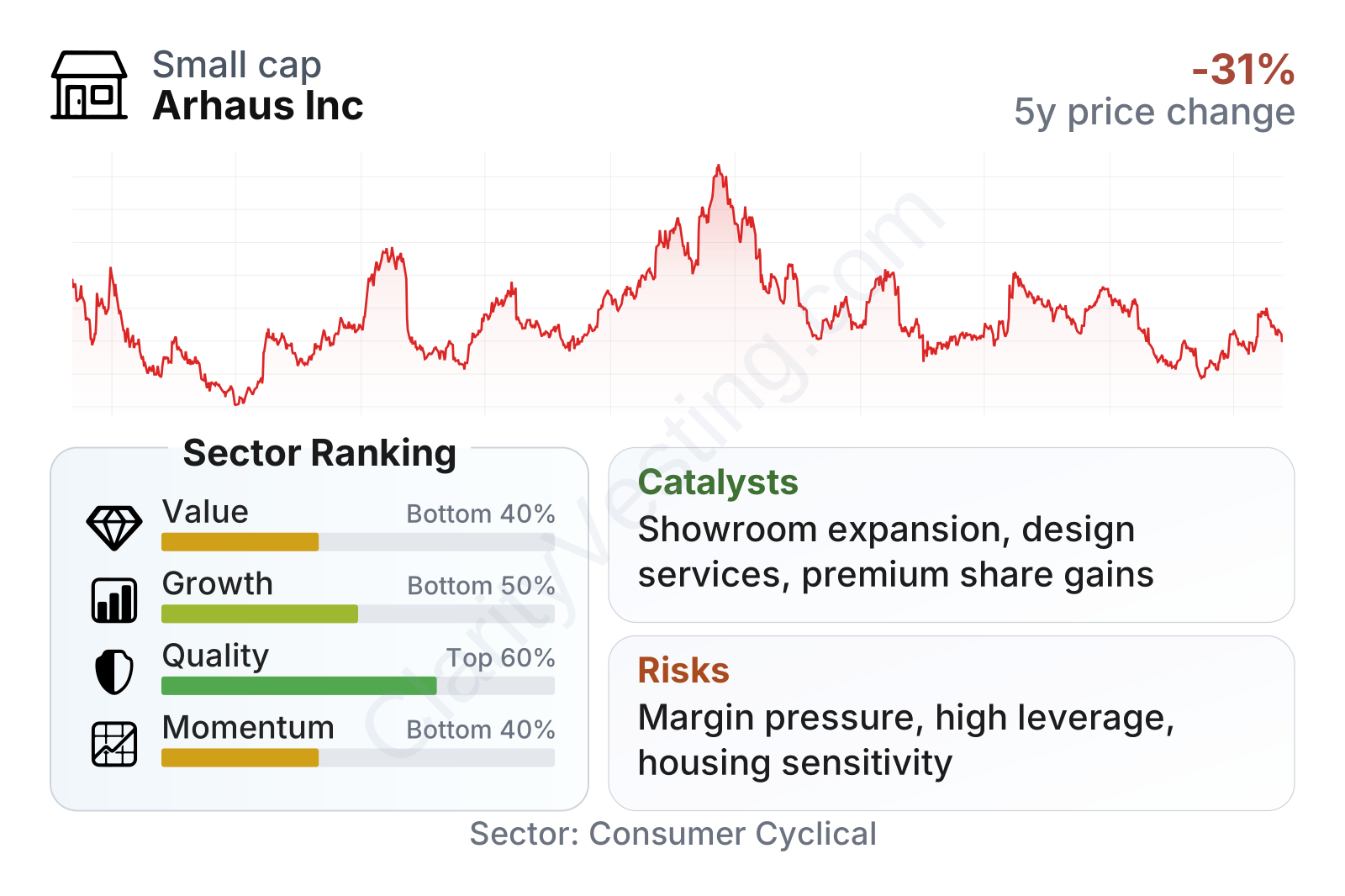
Arhaus is a mid-sized public company with a stock that has been notably volatile, reflected in a beta above 2. The factor profile is mixed. Quality is decent overall, supported by return on invested capital that is above the sector median, which suggests the business has historically earned solid returns on the capital it uses. Growth is less straightforward: revenue growth has held up better than many peers over longer periods, but earnings and free cash flow have been less consistent. Value metrics do not point to an obvious discount versus the broader consumer discretionary retail group, especially with free cash flow yield below the sector median. Momentum has also been uneven, which fits the sharp swings visible in the share price history.
Growth
The company operates in the home furnishings market, which is a large category but not a structurally fast-growing one every year. Demand is cyclical and often tied to housing activity, consumer confidence, remodeling, and discretionary spending. Within that market, premium and design-led furniture can still grow through market share gains, brand development, and store expansion even when the broader category is uneven. That is the main long-term growth angle for Arhaus: it does not need the entire sector to boom if it can keep taking share in the premium segment.
Its strategy is sensible on paper. Arhaus continues to expand its showroom footprint, invest in design services, and build a more integrated omnichannel experience. This matters because premium furniture is often an assisted purchase rather than a simple click-and-ship transaction. A customer may browse online, visit a showroom, work with a designer, and then place a larger custom order. That process can support higher average tickets and stronger customer loyalty than mass-market furniture retail.
Revenue growth has been strong over the multi-year period, though the path has not been smooth. After the post-pandemic boom and a softer 2024 period, the company returned to growth in 2025. The most recent year-over-year jump shown for mid-2026 is unusually high and should be read carefully because furniture retail can have timing effects from delivery schedules, order comparisons, and base effects. Even so, the broader picture is that Arhaus has still managed to grow sales faster than the sector median over both the latest year and the last five years on a per-share basis.
Cash generation is where the growth case becomes more demanding. Free cash flow has remained positive recently, but it is well below earlier peaks and has fluctuated sharply over the last several years. For a retailer expanding stores and maintaining premium customer experience, that is not automatically a red flag, but it does mean growth is not translating into steadily rising cash at this stage. Long-term progress likely depends on whether new showrooms mature well enough to lift margins and cash conversion rather than just adding revenue.
Recent company communications have continued to emphasize new showroom openings, brand reach, and design engagement. Those are the clearest catalysts: more productive stores, better omnichannel conversion, and normalization in higher-end home demand. If housing-related activity improves and affluent consumers remain resilient, Arhaus has room to grow from its current scale because it is still far smaller than the largest furniture and home retail chains.
Risks
This article is for informational purposes only and does not constitute financial advice. Some content is AI-generated. See Disclaimer


