Stock Analysis · Aptiv PLC (APTV)
Overview
Aptiv PLC is an automotive technology supplier. In simple terms, it sells many of the electrical and electronic systems that help modern vehicles run, connect, and increasingly automate more driving functions. Its products are used by major global carmakers and are found in traditional vehicles, hybrids, and battery-electric models. The company has gradually moved beyond classic auto-parts exposure toward higher-value content such as advanced wiring architectures, onboard computing, software-enabled safety systems, and connectivity solutions.
Based on its latest annual reporting structure, Aptiv’s revenue mainly comes from two operating segments.
- Signal and Power Solutions — about 70% of revenue: this is Aptiv’s largest business. It includes vehicle electrical architecture, high-voltage and low-voltage wiring systems, connectors, cable management, and other components that distribute power and data across a vehicle. This segment is especially relevant as vehicles add more electronics and electric powertrain content.
- Advanced Safety and User Experience — about 30% of revenue: this segment includes advanced driver-assistance systems, in-cabin electronics, infotainment-related technology, software platforms, displays, sensing, compute capabilities, and connectivity tools that support safer and more digital vehicles.
The business mix matters because Aptiv is tied not only to how many cars are built, but also to how much technology each car contains. That creates a different profile from a simpler commodity parts supplier. Over recent years, revenue has expanded meaningfully from 2021 levels, while gross profit also improved, showing that the company has added scale. At the same time, earnings have been more volatile than sales, which is an important theme for long-term analysis.
Key Figures
| Metric | Value | Sector ⓘ |
|---|---|---|
| Date | Sep 12, 2026 | |
| Context | ||
| Sector | Consumer Cyclical | |
| Industry | Auto Parts | |
| Market Cap ⓘ | $9.64B | |
| Beta ⓘ | 1.33 | |
Value (Cheapness) | ||
| P/E Ratio ⓘ | 20.61 | 17.10 |
| FCF Yield ⓘ | 7.92% | 8.53% |
| EBIT / EV ⓘ | 7.30% | 6.46% |
| PEG ⓘ | 0.95 | |
Growth (Business expansion) | ||
| Revenue Growth ⓘ | 2.30% | 5.75% |
| RPS Growth (5Y CAGR) ⓘ | 12.55% | 9.14% |
| EPS Growth (5Y CAGR) ⓘ | -0.51% | -18.21% |
| Margin Growth (5Y Trend) ⓘ | -0.70% | -0.23% |
| FCF Growth (5Y CAGR) ⓘ | 25.77% | 4.91% |
Quality (Business durability) | ||
| ROIC (Latest) ⓘ | 4.15% | 12.61% |
| ROIC (5Y Median) ⓘ | 7.24% | 10.72% |
| Net Debt / EBIT (Latest) ⓘ | 4.68 | 2.10 |
| Net Debt / EBIT (5Y Median) ⓘ | 3.30 | 2.32 |
| Operating Margin (Latest) ⓘ | 5.62% | 9.25% |
| Operating Margin (5Y Median) ⓘ | 6.91% | 9.64% |
| Debt to Equity (Latest) ⓘ | 64.94% | 75.78% |
| Profit Margin (Latest) ⓘ | 1.07% | 5.33% |
| Free Cash Flow (Latest) ⓘ | $763.00M | |
Momentum (Price trend) | ||
| 3Y Return ⓘ | -55.64% | +14.53% |
| 12M Return (excl. last month) ⓘ | -32.38% | +3.08% |
| 6M Return ⓘ | -35.01% | +0.55% |
| Price vs. 200-Day MA ⓘ | -30.81% | -0.54% |
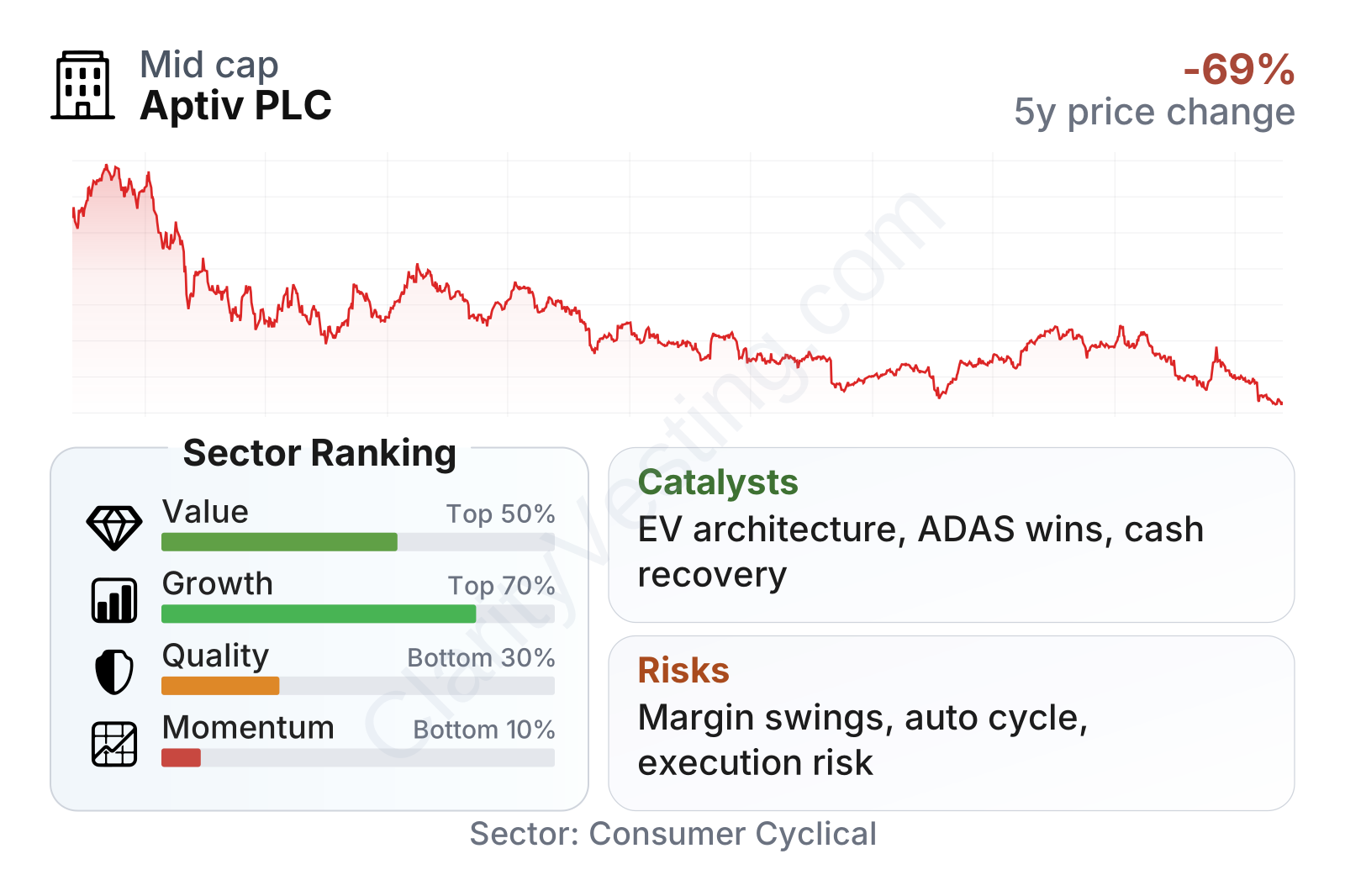
Aptiv is a mid-to-large auto technology company with a stock that has been much more volatile than the broader market, as reflected in a beta above 1. The overall factor picture is mixed. Value looks around the middle of the sector, growth metrics are decent but not standout in the latest year, quality trails many peers because returns on capital and margins are relatively low, and momentum is weak after a long period of share-price underperformance. That combination usually points to a company the market still sees as strategically relevant, but operationally inconsistent.
The share price history reinforces that point. The stock is far below its 2021 peak and has remained under pressure despite periods of business growth. In other words, the market has become less willing to pay a premium for Aptiv while waiting for more dependable profitability and cleaner execution.
Growth
Aptiv operates in an area with real long-term growth drivers. Vehicles are becoming more electronic, more software-defined, and more power-intensive. Whether the end market is internal combustion, hybrid, or fully electric, automakers need more data connectivity, more sensors, more compute power, and more sophisticated electrical architecture. Aptiv is positioned where these trends meet: the company provides both the physical backbone of the car’s electrical system and some of the higher-level safety and digital features layered on top.
The strategy broadly makes sense for future growth. Carmakers are trying to simplify vehicle architectures, cut weight, improve power efficiency, and support more advanced software functions. Aptiv’s high-voltage systems, zonal architecture approach, connectors, and ADAS-related technologies align with those needs. The company has also highlighted a large booked business backlog in recent years, which suggests customers continue to award future programs even during a difficult production environment.
Revenue growth has not been linear. Aptiv posted very strong year-over-year gains during the post-supply-chain recovery period, then growth cooled and became more uneven. The latest annualized growth rate is modest relative to many sector peers, and one recent quarterly reading was sharply negative, which likely reflects portfolio changes and a tougher production backdrop rather than a simple collapse in demand. For a long-term view, the more useful signal is that five-year revenue per share growth remains solid and comfortably ahead of the sector median.
Cash generation has been one of the brighter points. Free cash flow climbed sharply from the low levels seen in 2022 and reached a much stronger level by 2025 before easing back over the last twelve months. Even after that pullback, the company is still producing meaningful cash. That matters because auto suppliers often face thin margins, so sustainable cash flow can provide flexibility for debt reduction, investment, and restructuring.
Recent company updates also point to a notable strategic opening: Aptiv completed the separation of its Electrical Distribution Systems business into PHINIA in 2023, leaving a more focused technology-oriented portfolio, and it has continued emphasizing higher-content programs tied to electrification and advanced vehicle architecture. In 2025 and 2026, management communications also centered on cost actions, portfolio discipline, and program execution, which could become important if global vehicle production remains sluggish but technology content per vehicle keeps rising.
Risks
This article is for informational purposes only and does not constitute financial advice. Some content is AI-generated. See Disclaimer


