Stock Analysis · Alpha and Omega Semiconductor Ltd (AOSL)
Overview
Alpha and Omega Semiconductor Ltd designs, develops, and supplies power semiconductors. In simple terms, its chips help control and convert electricity inside electronic devices. These components are used in products such as personal computers, data center power supplies, consumer electronics, industrial equipment, electric vehicles, e-bikes, home appliances, and renewable energy systems.
The company’s portfolio is centered on power devices rather than advanced AI processors or leading-edge logic chips. Its products include MOSFETs, IGBTs, IPMs, TVS devices, wide-bandgap products based on silicon carbide, and power ICs. That positioning matters because power semiconductors are tied to long-term electrification trends: more electronics, more efficient energy use, and more complex power management across vehicles, servers, and industrial systems.
Based on recent company disclosures, revenue is primarily generated from product sales across end markets rather than from services or licensing. AOSL discusses its business mainly by application and product family, and the broad mix can be summarized as follows:
- Computing and consumer power management: the largest revenue source, incorporating power chips used in notebooks, desktops, graphics cards, adapters, TVs, gaming devices, and other consumer electronics.
- Industrial and enterprise applications: a meaningful portion of revenue, including data center power supplies, telecom infrastructure, motor drives, tools, battery management, and factory equipment.
- Automotive and mobility: a growing area, covering electric vehicles, e-scooters, e-bikes, charging-related applications, and vehicle power systems.
- Discrete devices and power IC solutions: the main product-level revenue base, with discrete MOSFETs and related power components still representing the core of the business, while integrated solutions and newer silicon carbide products are positioned as growth drivers.
AOSL is a relatively small semiconductor company by industry standards, which creates a different profile from much larger peers. It can focus on niche opportunities in power management, but it also has less scale, less pricing power, and fewer resources than the biggest chipmakers.
The business flow also shows a clear pressure point: revenue has been relatively stable in recent years, but gross profit has compressed while research and development spending has continued to rise. That suggests management is still investing for future products even as current profitability remains under strain.
Key Figures
| Metric | Value | Sector ⓘ |
|---|---|---|
| Date | Sep 12, 2026 | |
| Context | ||
| Sector | Technology | |
| Industry | Semiconductors | |
| Market Cap ⓘ | $920.93M | |
| Beta ⓘ | 2.60 | |
Value (Cheapness) | ||
| P/E Ratio ⓘ | N/A | 29.51 |
| FCF Yield ⓘ | -1.81% | 4.25% |
| EBIT / EV ⓘ | -4.50% | 2.85% |
| PEG ⓘ | -8.49 | |
Growth (Business expansion) | ||
| Revenue Growth ⓘ | -3.50% | 15.40% |
| RPS Growth (5Y CAGR) ⓘ | -4.93% | 8.56% |
| EPS Growth (5Y CAGR) ⓘ | N/A | -11.88% |
| Margin Growth (5Y Trend) ⓘ | -68.99% | 0.46% |
| FCF Growth (5Y CAGR) ⓘ | N/A | 9.80% |
Quality (Business durability) | ||
| ROIC (Latest) ⓘ | -3.53% | 9.44% |
| ROIC (5Y Median) ⓘ | 0.11% | 8.30% |
| Net Debt / EBIT (Latest) ⓘ | N/A | 0.54 |
| Net Debt / EBIT (5Y Median) ⓘ | -5.17 | 0.44 |
| Operating Margin (Latest) ⓘ | -5.16% | 9.58% |
| Operating Margin (5Y Median) ⓘ | 0.20% | 8.25% |
| Debt to Equity (Latest) ⓘ | 3.51% | 33.33% |
| Profit Margin (Latest) ⓘ | -6.23% | 7.14% |
| Free Cash Flow (Latest) ⓘ | -$16.67M | |
Momentum (Price trend) | ||
| 3Y Return ⓘ | -4.83% | +45.48% |
| 12M Return (excl. last month) ⓘ | +30.25% | +23.48% |
| 6M Return ⓘ | +48.86% | +20.93% |
| Price vs. 200-Day MA ⓘ | +5.07% | +7.43% |
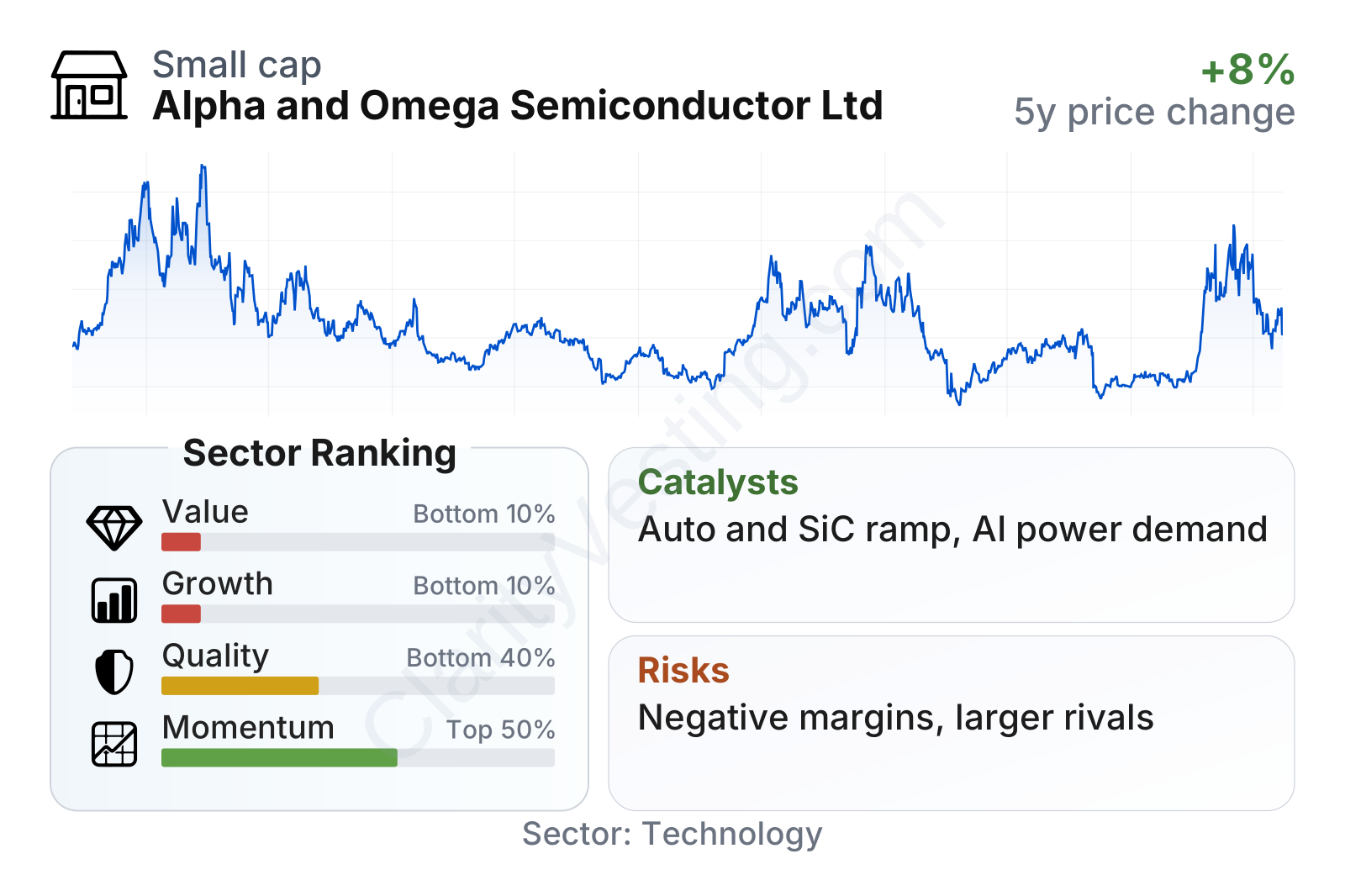
AOSL currently sits in the lower end of the semiconductor sector on value, growth, and quality measures, while momentum has improved after a strong rebound in recent months. The company remains small-cap in size and its beta is high, which means the stock has historically moved more sharply than the broader market. Financially, the weak areas are clear: negative free cash flow, negative operating returns, and slower growth than the sector median. The main offset is a very light debt load, which gives the company more flexibility than many loss-making businesses.
Growth
The company operates in an attractive long-term segment of semiconductors. Power chips are essential in electrification, energy efficiency, electric transport, charging, renewable energy, and modern computing hardware. Those are durable themes, and they should continue to support demand for better power conversion and thermal performance over time.
AOSL’s strategy is coherent with that backdrop. It has been expanding beyond traditional consumer and computing applications toward automotive, industrial, and higher-value power solutions. In particular, silicon carbide is an important area to watch because it is used in applications that need higher efficiency and can tolerate higher temperatures, especially in electric vehicles, charging, and industrial power systems. If AOSL can scale that portfolio successfully, it would improve both its market relevance and its product mix.
That said, the recent growth record has been uneven. The company moved from strong post-pandemic expansion to a sharp downturn, then into a partial recovery, and more recently back to slightly negative year-over-year revenue. This pattern suggests AOSL is still exposed to cyclical customer ordering, inventory corrections, and weak visibility in some end markets. Compared with the broader semiconductor sector, its recent top-line trend has been notably weaker.
Cash generation also shows the challenge. Free cash flow has swung between positive and negative territory, with the latest trailing period back in the red. That does not cancel the long-term opportunity, but it does show that growth is not yet translating into consistent cash production.
Recent company communications have highlighted product design wins and a stronger push into automotive and industrial applications. Those developments matter more than short-term shipment volatility because design wins can lead to multiyear revenue streams if customer programs move into volume production. A second potential catalyst is the broad buildout of AI-related infrastructure: while AOSL does not make AI processors, power semiconductors are needed in servers, power supplies, and supporting systems where energy conversion becomes more demanding as compute intensity rises.
Risks
This article is for informational purposes only and does not constitute financial advice. Some content is AI-generated. See Disclaimer