Stock Analysis · ANTA Sports Products Ltd (ANPDY)
Overview
ANTA Sports Products is a Chinese sporting goods company that designs, markets, and sells athletic footwear, apparel, and accessories. It operates a multi-brand portfolio that spans mass-market sportswear, premium performance products, and outdoor lifestyle categories. The group’s brand lineup includes ANTA, FILA in Greater China, DESCENTE in China, KOLON SPORT in China, and Amer Sports, which adds international brands such as Salomon, Arc’teryx, and Wilson through ANTA’s ownership stake structure.
For long-term analysis, the key point is that ANTA is not a single-brand business. It combines a broad domestic sportswear platform with premium and outdoor brands, which gives it exposure to different customer groups and price points. That diversification can reduce dependence on one label or one trend, although China remains the company’s core market.
The largest revenue sources are organized by brand and business segment. Based on the company’s annual reporting and recent public disclosures, the mix is approximately as follows:
- ANTA brand: about 46% of revenue. This is the core domestic sportswear business, covering athletic shoes, clothing, and accessories sold through wholesale, direct retail, and e-commerce.
- FILA: about 38% of revenue. This segment includes FILA, FILA FUSION, and FILA KIDS in Greater China, positioned more toward premium sports-fashion.
- All other brands and businesses: about 16% of revenue. This includes DESCENTE, KOLON SPORT, and other emerging activities, with a stronger link to outdoor, professional sports, and premium niches.
The broad trend in the business mix has been a gradual expansion beyond the original ANTA label, with newer brands helping the group move into higher-value categories such as outdoor performance and premium sportswear. Revenue and gross profit have both trended upward over the last several years, although profit did not rise in a straight line every year.
The operating picture shows a company that has expanded sales steadily while keeping a solid gross profit structure. Operating income and net income improved strongly from 2023 to 2024, but 2025 appears less smooth, with revenue still advancing while earnings came under pressure. That suggests growth is continuing, but cost control and brand investment have become more important to watch.
Key Figures
| Metric | Value | Sector ⓘ |
|---|---|---|
| Date | Oct 17, 2026 | |
| Context | ||
| Sector | Consumer Cyclical | |
| Industry | Leisure | |
| Market Cap ⓘ | $26.57B | |
| Beta ⓘ | 0.64 | |
Value (Cheapness) | ||
| P/E Ratio ⓘ | 11.86 | 16.89 |
| P/B Ratio ⓘ | 0.43 | 1.61 |
| FCF Yield ⓘ | 133.84% | 8.99% |
| Dividend Yield ⓘ | 3.65% | 2.73% |
| EBIT / EV ⓘ | N/A | 6.69% |
| PEG ⓘ | 1.47 | |
Growth (Business expansion) | ||
| Revenue Growth ⓘ | 12.90% | 5.60% |
| RPS Growth (5Y CAGR) ⓘ | 10.89% | 8.91% |
| EPS Growth (5Y CAGR) ⓘ | 43.63% | -17.41% |
| BVPS Growth (5Y CAGR) ⓘ | 17.43% | 5.62% |
| Margin Growth (5Y Trend) ⓘ | -3.62% | -0.17% |
| FCF Growth (5Y CAGR) ⓘ | 14.56% | 4.91% |
| DPS Growth (5Y CAGR) ⓘ | 26.24% | 9.86% |
Quality (Business durability) | ||
| ROIC (Latest) ⓘ | 34.96% | 12.38% |
| ROA (Latest) ⓘ | 25.43% | 5.49% |
| ROIC (5Y Median) ⓘ | 20.27% | 10.75% |
| ROA (5Y Median) ⓘ | 12.68% | 5.44% |
| Net Debt / EBIT (Latest) ⓘ | 0.38 | 2.17 |
| Net Debt / EBIT (5Y Median) ⓘ | 0.46 | 2.30 |
| Net Debt / EBITDA (Latest) ⓘ | 0.29 | 1.50 |
| Net Debt / Assets ⓘ | 12.23% | 21.57% |
| EBITDA / Interest ⓘ | 36.01 | 9.13 |
| Operating Margin (Latest) ⓘ | 25.80% | 9.10% |
| Operating Margin (5Y Median) ⓘ | 23.68% | 9.56% |
| Debt to Equity (Latest) ⓘ | 47.13% | 75.99% |
| Profit Margin (Latest) ⓘ | 18.83% | 5.31% |
| Free Cash Flow (Latest) ⓘ | $35.56B | |
Momentum (Price trend) | ||
| 3Y Return ⓘ | -12.27% | +15.94% |
| 12M Return (excl. last month) ⓘ | -20.07% | -2.82% |
| 6M Return ⓘ | -9.66% | -1.58% |
| Price vs. 200-Day MA ⓘ | -4.28% | -3.31% |
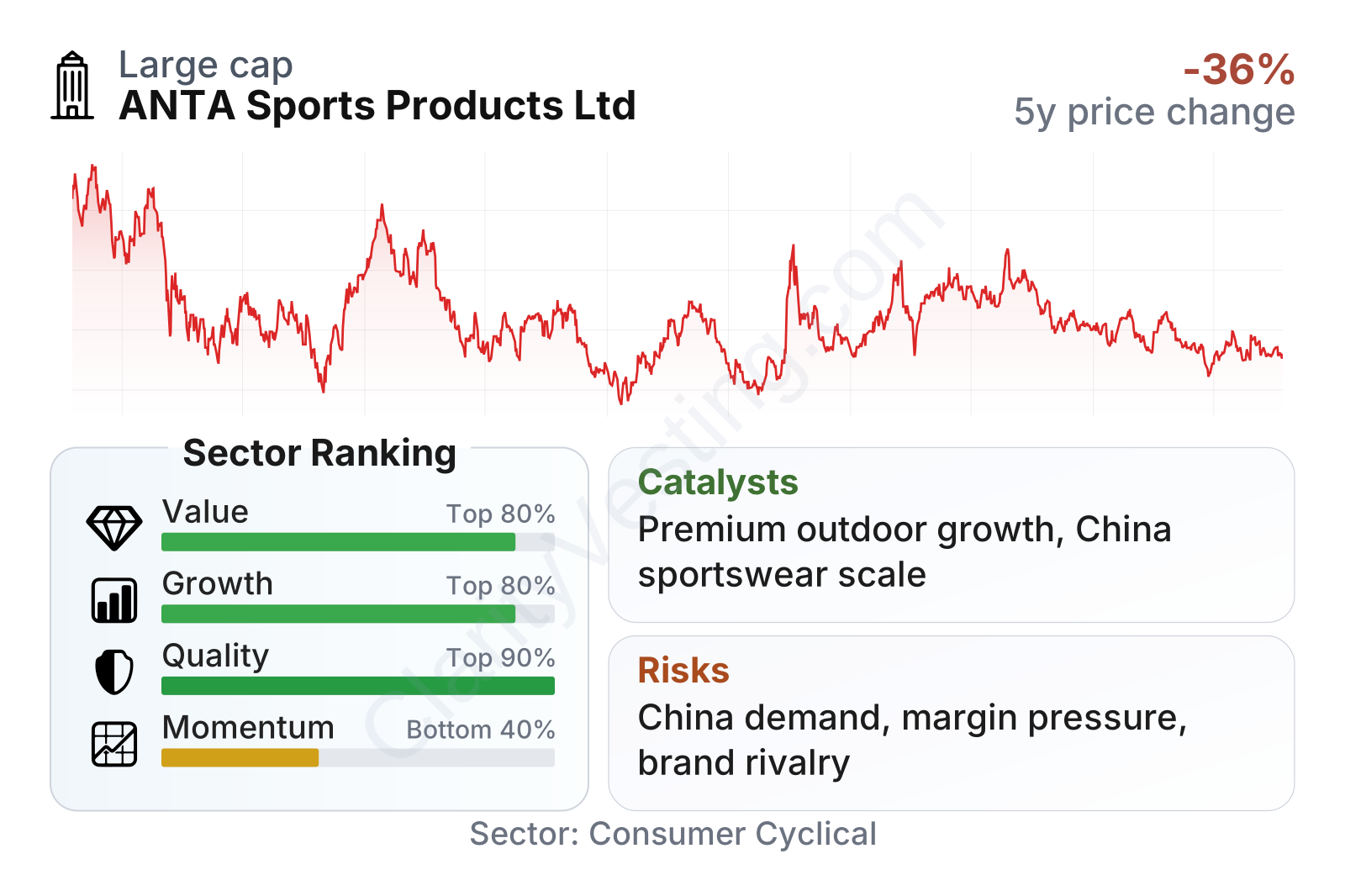
At a high level, ANTA stands out for strong profitability, efficient use of capital, and relatively modest leverage compared with much of the consumer discretionary sector. Revenue growth has been ahead of the sector median, and longer-term earnings and free cash flow growth have also been strong. The weaker area is stock momentum: the business metrics look stronger than recent share price performance, which helps explain why valuation multiples remain below many sector peers.
Growth
ANTA operates in a sector with favorable long-term drivers. Sportswear demand in China has benefited from higher health awareness, broader sports participation, and rising interest in running, basketball, winter sports, hiking, and outdoor activities. Premiumization is another tailwind: consumers increasingly spend on branded products that combine performance, fashion, and lifestyle appeal. That matters for ANTA because it participates in both the mass and premium ends of the market.
The company’s strategy broadly makes sense for future expansion. The ANTA brand targets scale in mainstream sportswear, FILA adds higher-margin premium positioning, and the newer outdoor and performance brands give the group exposure to faster-growing categories. This brand ladder is important because it allows ANTA to serve different customer budgets without relying on one concept alone.
Another positive feature is channel development. The group has invested in direct-to-consumer capabilities, store upgrades, and digital retail tools. That can support better customer data, stronger brand control, and improved inventory management over time. For a company with multiple labels, stronger retail execution can be just as important as product design.
Cash generation has also been moving in the right direction. Free cash flow has risen sharply, which supports store investment, product development, dividends, and strategic brand building without creating heavy balance-sheet strain. That is especially relevant in consumer businesses, where weaker operators often need borrowing to support expansion.
A major catalyst is the company’s positioning in premium outdoor and performance categories. Brands tied to technical apparel, footwear, and specialty sports can expand faster than the broader apparel market if consumer preferences continue shifting toward outdoor lifestyles and high-function products. ANTA’s portfolio gives it a way to participate in that trend from several angles rather than depending on a single flagship brand.
Recent public updates have also highlighted continued brand-building efforts, product innovation, and large-scale sports marketing initiatives around major sporting events and running participation trends. Those developments do not guarantee growth, but they do align with where consumer demand has been strongest in athletic wear.
Risks
This article is for informational purposes only and does not constitute financial advice. Some content is AI-generated. See Disclaimer