Stock Analysis · Ardagh Metal Packaging SA (AMBP)
Overview
Ardagh Metal Packaging SA is a global producer of infinitely recyclable metal beverage cans and can ends. In simple terms, it makes the aluminum containers used for beer, soft drinks, energy drinks, sparkling water, ready-to-drink cocktails, and other beverages. The company operates manufacturing plants across North America, Europe, and Brazil, and sells mainly to large beverage brands.
Its business model is straightforward: beverage companies sign supply agreements, Ardagh produces cans at large scale, and revenue rises mainly with shipment volumes, customer mix, and the pass-through of raw material costs such as aluminum.
Based on company disclosures, revenue is primarily generated from beverage can packaging, with geographic exposure being the most practical way to understand the mix.
- North America: approximately 70% of revenue. This includes beverage cans and ends sold mainly in the United States and Canada, where can demand is tied to beer, carbonated soft drinks, energy drinks, and newer convenience beverage categories.
- Europe: approximately 20% of revenue. This business serves a broad mix of beverage producers, including multinational brands and regional customers.
- Brazil: approximately 10% of revenue. Brazil is an important can market because aluminum beverage cans already have high consumer acceptance and strong recycling infrastructure.
The broad financial picture is that revenue has expanded from about $4.1 billion in 2021 to about $5.5 billion in 2025, but the company’s earnings have been much less stable. Cost of goods sold absorbs most of sales, and interest expense remains a major drag on bottom-line profit. That helps explain why a large industrial business can generate solid sales and improving cash flow while still showing thin net income.
A notable pattern over the last several years is that operating income recovered from a loss in 2021 to a positive level afterward, while net income remained pressured by financing costs. In other words, the plants and contracts are generating operating profit, but debt and interest still take a meaningful share of what the business produces.
Key Figures
| Metric | Value | Sector ⓘ |
|---|---|---|
| Date | Sep 12, 2026 | |
| Context | ||
| Sector | Consumer Cyclical | |
| Industry | Packaging & Containers | |
| Market Cap ⓘ | $2.87B | |
| Beta ⓘ | 0.53 | |
Value (Cheapness) | ||
| P/E Ratio ⓘ | 96.20 | 17.10 |
| FCF Yield ⓘ | 10.33% | 8.53% |
| EBIT / EV ⓘ | 3.78% | 6.46% |
| PEG ⓘ | N/A | |
Growth (Business expansion) | ||
| Revenue Growth ⓘ | 17.70% | 5.75% |
| RPS Growth (5Y CAGR) ⓘ | 5.14% | 9.14% |
| EPS Growth (5Y CAGR) ⓘ | -8.71% | -18.21% |
| Margin Growth (5Y Trend) ⓘ | 5.40% | -0.23% |
| FCF Growth (5Y CAGR) ⓘ | N/A | 4.91% |
Quality (Business durability) | ||
| ROIC (Latest) ⓘ | 4.94% | 12.61% |
| ROIC (5Y Median) ⓘ | 1.89% | 10.72% |
| Net Debt / EBIT (Latest) ⓘ | 15.62 | 2.10 |
| Net Debt / EBIT (5Y Median) ⓘ | 18.31 | 2.32 |
| Operating Margin (Latest) ⓘ | 4.44% | 9.25% |
| Operating Margin (5Y Median) ⓘ | 3.67% | 9.64% |
| Debt to Equity (Latest) ⓘ | -573.09% | 75.78% |
| Profit Margin (Latest) ⓘ | 0.68% | 5.33% |
| Free Cash Flow (Latest) ⓘ | $297.00M | |
Momentum (Price trend) | ||
| 3Y Return ⓘ | +94.52% | +14.53% |
| 12M Return (excl. last month) ⓘ | +37.62% | +3.08% |
| 6M Return ⓘ | +23.26% | +0.55% |
| Price vs. 200-Day MA ⓘ | +15.08% | -0.54% |
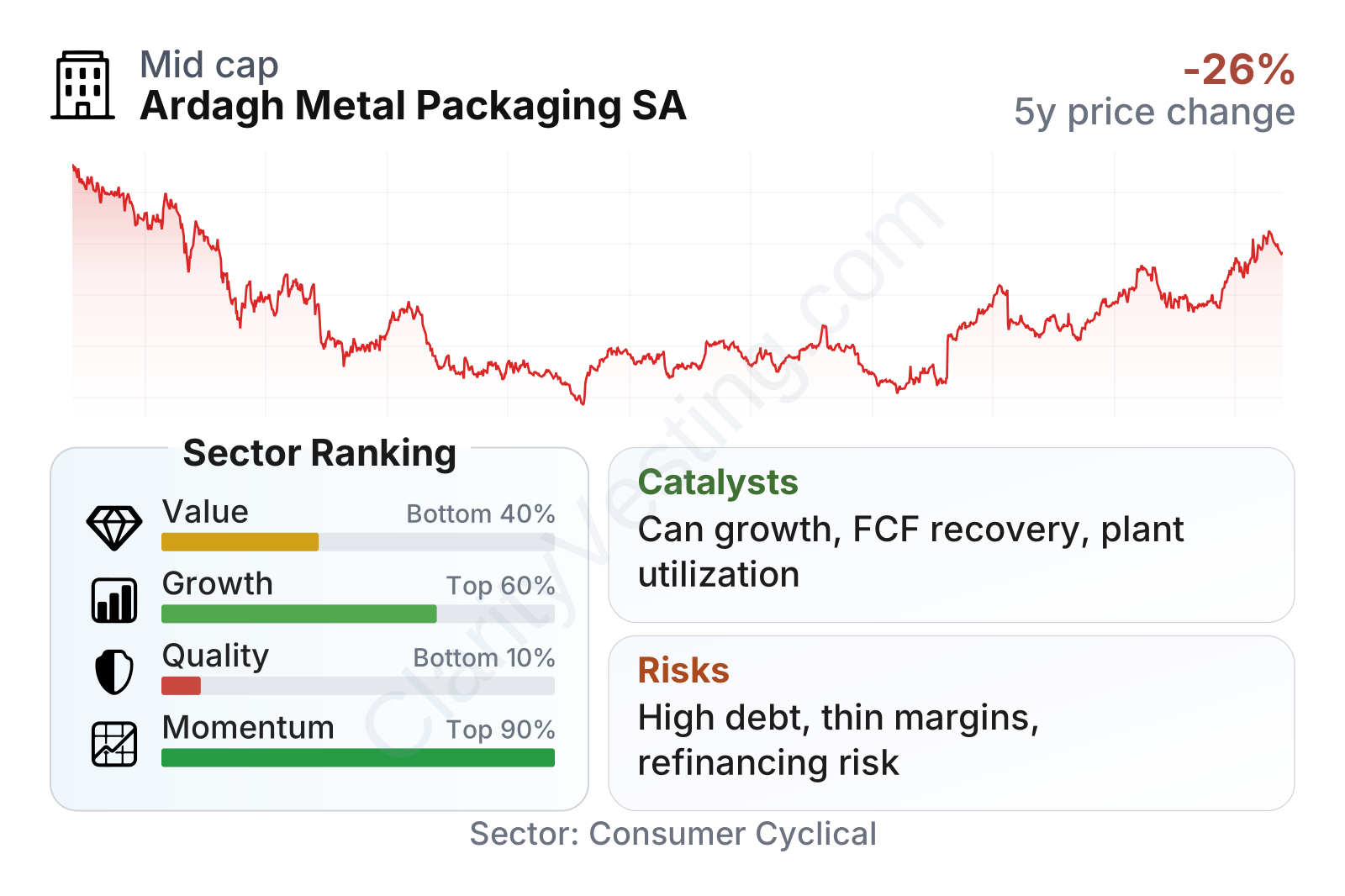
Ardagh Metal Packaging is a mid-sized public company with a stock that has been volatile since listing, including a sharp decline through 2022 and 2023 followed by a partial recovery. The latest factor profile shows a mixed picture: growth is better than much of the sector, momentum has been strong, but quality ranks near the bottom because returns on capital and margins remain weak while leverage is very high. On valuation measures, the picture is also uneven: free cash flow yield looks supportive, but earnings-based valuation appears stretched because net profit is still very small.
Growth
The beverage can market has favorable long-term characteristics. Cans are lightweight, stack efficiently, chill quickly, and are widely accepted in recycling systems. They also benefit from consumer and regulatory pressure for more circular packaging. That does not mean the industry grows rapidly every year, but it does provide a durable demand base, especially in categories such as energy drinks, sparkling water, premium beer, and ready-to-drink beverages.
Ardagh’s strategy broadly fits that backdrop. The company is focused on metal beverage packaging rather than a broad packaging conglomerate model, which gives it exposure to categories where convenience and recyclability matter. It has also spent the last several years building out capacity, especially in North America, to align itself with long-term customer contracts.
Revenue growth has clearly reaccelerated. After a softer period in 2023 and low-single-digit growth in much of 2024, year-over-year revenue growth moved back into the mid-to-high teens by 2025 and stayed elevated into 2026. That is materially stronger than the sector median and suggests the company is currently benefiting from a combination of better volumes, improved mix, and price pass-through.
Cash generation also looks better than it did a few years ago. Free cash flow was deeply negative in 2022 and 2023, then turned positive in 2024 and remained positive afterward, even if the level has fluctuated. For a capital-intensive manufacturer, that shift matters because it creates more room to support operations, fund maintenance spending, and potentially reduce financial pressure over time.
One meaningful catalyst is the continuing shift by beverage brands toward cans in categories that historically relied more on plastic or glass. Another is the company’s installed network of modern production lines, which can support incremental volume as customer demand rises. A further positive sign is that recent revenue growth has been faster than the broader sector, indicating that Ardagh is at least participating in, and possibly capturing, favorable market demand.
Recent company communications have also emphasized ongoing customer relationships, production efficiency, and capital discipline. For a business like this, the most important opportunity is not a breakthrough technology event but the steady conversion of plant utilization into stronger margins and cash flow.
Risks
This article is for informational purposes only and does not constitute financial advice. Some content is AI-generated. See Disclaimer


