Stock Analysis · American Eagle Outfitters Inc (AEO)
Overview
American Eagle Outfitters Inc. is a U.S.-based apparel retailer focused mainly on casual clothing, intimates, activewear, and related accessories. The group operates through two main brands: American Eagle, which targets teens and young adults with denim-led fashion basics and lifestyle apparel, and Aerie, which sells intimates, activewear, and loungewear. The company reaches customers through stores, digital channels, and fulfillment capabilities that combine online ordering with store-based pickup and shipping.
Its revenue model is straightforward: it designs, sources, markets, and sells branded merchandise directly to consumers. Based on recent annual disclosures, revenue is concentrated in a small number of operating segments and channels.
- American Eagle brand: approximately 75% to 80% of revenue. This includes jeans, tops, bottoms, outerwear, accessories, and men’s and women’s apparel sold in stores and online.
- Aerie brand: approximately 20% to 25% of revenue. This includes bras, underwear, leggings, activewear, sleepwear, and adjacent categories under the Aerie and OFFLINE labels.
- Other revenue: typically a low-single-digit share from smaller activities such as certain wholesale, licensing, and related items when disclosed.
- Geography: the business remains overwhelmingly tied to the United States, with international activity representing a much smaller contribution through stores, partners, and digital reach.
The broader financial picture shows a business that has rebuilt sales since the post-pandemic disruption, but profitability has not moved in a straight line. Revenue has climbed back above earlier peaks, while costs, especially merchandise and operating expenses, have kept earnings more volatile than sales.
Over the last several fiscal years, revenue has moved from roughly $5.0 billion to nearly $5.5 billion. Gross profit recovered after the 2023 slowdown, but operating expenses also rose meaningfully, which helps explain why net income has fluctuated more sharply than sales.
Key Figures
| Metric | Value | Sector ⓘ |
|---|---|---|
| Date | Sep 14, 2026 | |
| Context | ||
| Sector | Consumer Cyclical | |
| Industry | Apparel Retail | |
| Market Cap ⓘ | $2.52B | |
| Beta ⓘ | 1.31 | |
Value (Cheapness) | ||
| P/E Ratio ⓘ | 7.74 | 17.10 |
| FCF Yield ⓘ | 6.69% | 8.53% |
| EBIT / EV ⓘ | 11.29% | 6.46% |
| PEG ⓘ | 3.34 | |
Growth (Business expansion) | ||
| Revenue Growth ⓘ | 7.50% | 5.75% |
| RPS Growth (5Y CAGR) ⓘ | 6.50% | 9.14% |
| EPS Growth (5Y CAGR) ⓘ | 12.30% | -18.19% |
| Margin Growth (5Y Trend) ⓘ | -7.22% | -0.23% |
| FCF Growth (5Y CAGR) ⓘ | 29.34% | 4.91% |
Quality (Business durability) | ||
| ROIC (Latest) ⓘ | 20.63% | 12.61% |
| ROIC (5Y Median) ⓘ | 10.90% | 10.72% |
| Net Debt / EBIT (Latest) ⓘ | 3.66 | 2.11 |
| Net Debt / EBIT (5Y Median) ⓘ | 3.45 | 2.32 |
| Operating Margin (Latest) ⓘ | 8.49% | 9.25% |
| Operating Margin (5Y Median) ⓘ | 4.61% | 9.64% |
| Debt to Equity (Latest) ⓘ | 108.90% | 75.99% |
| Profit Margin (Latest) ⓘ | 5.86% | 5.34% |
| Free Cash Flow (Latest) ⓘ | $168.48M | |
Momentum (Price trend) | ||
| 3Y Return ⓘ | +4.92% | +14.39% |
| 12M Return (excl. last month) ⓘ | +33.06% | +3.08% |
| 6M Return ⓘ | -13.23% | +0.55% |
| Price vs. 200-Day MA ⓘ | -23.03% | -0.54% |
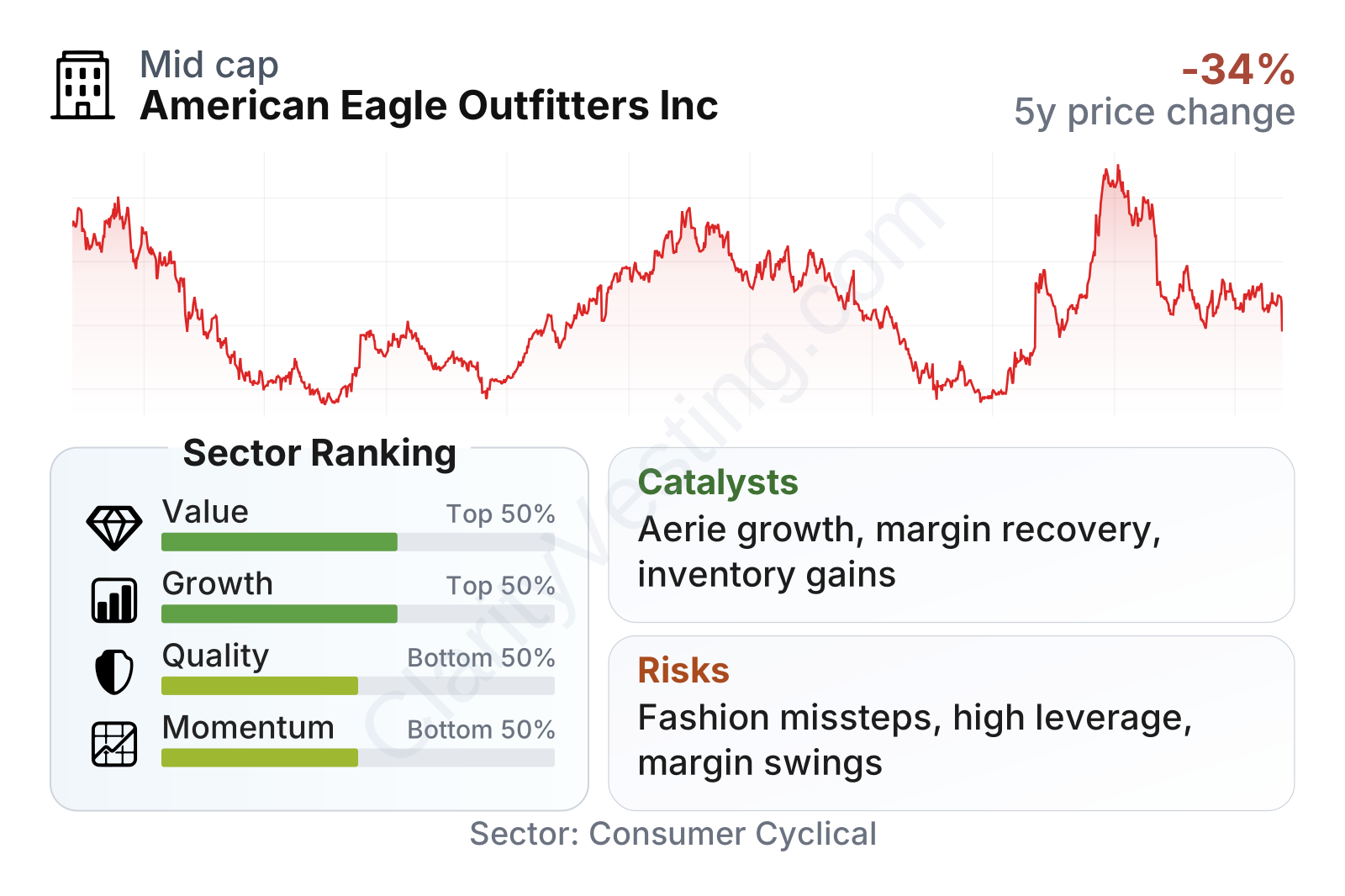
American Eagle Outfitters is a mid-sized public retailer with a stock that has been notably volatile over the last several years. The share price fell heavily in 2022, recovered strongly into late 2025, and then pulled back again, which reflects how sensitive the market remains to apparel demand, margins, and inventory execution.
The overall metrics profile is mixed. On valuation, the company screens below much of the sector on earnings multiples, with a P/E ratio well under the industry median. Growth indicators are decent rather than exceptional: recent revenue growth is ahead of the sector median, and five-year earnings and free cash flow growth are solid, but margin trends have been less favorable. Quality is more uneven. Return on invested capital is healthy, yet leverage is higher than many peers and operating margins remain somewhat below the sector median. Momentum is currently weaker, suggesting the market has become more cautious even after a stronger stretch over the prior year.
Growth
Apparel retail is not a structurally high-growth sector in the same way as software or semiconductors. It is mature, competitive, and heavily influenced by consumer spending cycles. That said, some niches within apparel can still grow faster than the broader market, especially women’s activewear, intimates, casual basics, and brands with strong digital engagement. That is where AEO’s strategy makes the most sense: American Eagle anchors the business with denim and casualwear, while Aerie provides exposure to categories that have shown stronger long-term demand and better brand loyalty.
A key part of the company’s growth case is brand mix. Aerie has been one of the most important strategic assets in recent years because it expands the company beyond traditional mall apparel and into categories where repeat purchases can be higher. Management has also emphasized digital capabilities, store optimization, and better inventory discipline, all of which matter in a retail model where small execution improvements can have an outsized effect on profit.
Recent top-line momentum has improved again after a soft patch. Year-over-year revenue growth turned negative during parts of 2025, but the latest pattern shows a return to positive mid-single-digit to high-single-digit growth. That suggests demand has stabilized and that the company is still relevant with its target customer, even in a pressured discretionary spending environment.
Cash generation has been more volatile than revenue. Free cash flow rose sharply into 2024, then cooled materially afterward. This is important because retailers often need cash flexibility for inventory, leases, logistics, and shareholder returns. The long-term trend still looks better than many peers on a five-year basis, but the most recent decline shows that operational recovery is not yet fully consistent.
One significant recent opportunity is execution around product and channel mix. If the company keeps driving better full-price selling, improves inventory flow, and continues to expand Aerie and activewear-related demand, earnings can improve faster than revenue. Another catalyst is a more normalized consumer environment: apparel retailers tend to benefit when freight, promotions, and markdown pressure ease at the same time.
Risks
This article is for informational purposes only and does not constitute financial advice. Some content is AI-generated. See Disclaimer


