Stock Analysis · ADTRAN Inc (ADTN)
Overview
ADTRAN Inc designs and sells networking equipment and software used by telecom carriers, internet service providers, utilities, enterprises, and public-sector customers. In simple terms, the company helps broadband networks move data from the core network to homes, businesses, cell sites, and cloud-connected locations. Its portfolio includes fiber access systems, subscriber equipment, software for network management, optical transport products, Wi-Fi and campus networking gear, and services tied to deployment and support.
Since the combination with ADVA, ADTRAN operates as a broader communications infrastructure supplier with meaningful exposure to fiber broadband and optical networking. That gives it a presence in two major areas of network spending: access networks, which connect end users, and optical transport, which carries large amounts of traffic across regional and long-haul networks.
The company’s revenue is mainly reported by product family rather than by a large number of small lines. Based on recent annual reporting, the business mix is approximately as follows:
- Network Solutions — about 85% to 90%: fiber access platforms, optical networking systems, software-defined access tools, subscriber devices, Wi-Fi systems, and related infrastructure products.
- Services & Support — about 10% to 15%: maintenance, professional services, deployment assistance, and other recurring support activities.
Within products, revenue is heavily linked to broadband access and optical transport equipment, with customers ranging from large telecom operators to regional service providers. Geographically, the company has a meaningful international footprint after the ADVA transaction, with North America and Europe standing out as important markets.
The long-term business logic is straightforward: demand for faster internet connections, more fiber deployment, and greater data traffic creates a need for the types of systems ADTRAN sells. The challenge is that this market can be cyclical, tied to customer capital spending and inventory swings.
The operating picture shows a sharp rise in revenue after the ADVA combination, followed by a difficult period in 2024 and then a visible recovery in 2025. Gross profit improved again as sales rebounded, and operating losses narrowed substantially, but profitability has not yet returned to a consistently solid level.
Key Figures
| Metric | Value | Sector ⓘ |
|---|---|---|
| Date | Sep 12, 2026 | |
| Context | ||
| Sector | Technology | |
| Industry | Communication Equipment | |
| Market Cap ⓘ | $610.70M | |
| Beta ⓘ | 1.49 | |
Value (Cheapness) | ||
| P/E Ratio ⓘ | N/A | 29.51 |
| FCF Yield ⓘ | 9.32% | 4.25% |
| EBIT / EV ⓘ | 0.63% | 2.85% |
| PEG ⓘ | 1.86 | |
Growth (Business expansion) | ||
| Revenue Growth ⓘ | 6.10% | 15.40% |
| RPS Growth (5Y CAGR) ⓘ | 4.07% | 8.56% |
| EPS Growth (5Y CAGR) ⓘ | -39.02% | -11.88% |
| Margin Growth (5Y Trend) ⓘ | N/A | 0.46% |
| FCF Growth (5Y CAGR) ⓘ | N/A | 9.80% |
Quality (Business durability) | ||
| ROIC (Latest) ⓘ | -5.48% | 9.44% |
| ROIC (5Y Median) ⓘ | -7.16% | 8.30% |
| Net Debt / EBIT (Latest) ⓘ | 15.40 | 0.54 |
| Net Debt / EBIT (5Y Median) ⓘ | N/A | 0.44 |
| Operating Margin (Latest) ⓘ | 0.90% | 9.58% |
| Operating Margin (5Y Median) ⓘ | -6.58% | 8.25% |
| Debt to Equity (Latest) ⓘ | 187.39% | 33.33% |
| Profit Margin (Latest) ⓘ | -2.29% | 7.14% |
| Free Cash Flow (Latest) ⓘ | $56.92M | |
Momentum (Price trend) | ||
| 3Y Return ⓘ | +3.67% | +45.48% |
| 12M Return (excl. last month) ⓘ | +29.81% | +23.48% |
| 6M Return ⓘ | -20.86% | +20.93% |
| Price vs. 200-Day MA ⓘ | -35.00% | +7.43% |
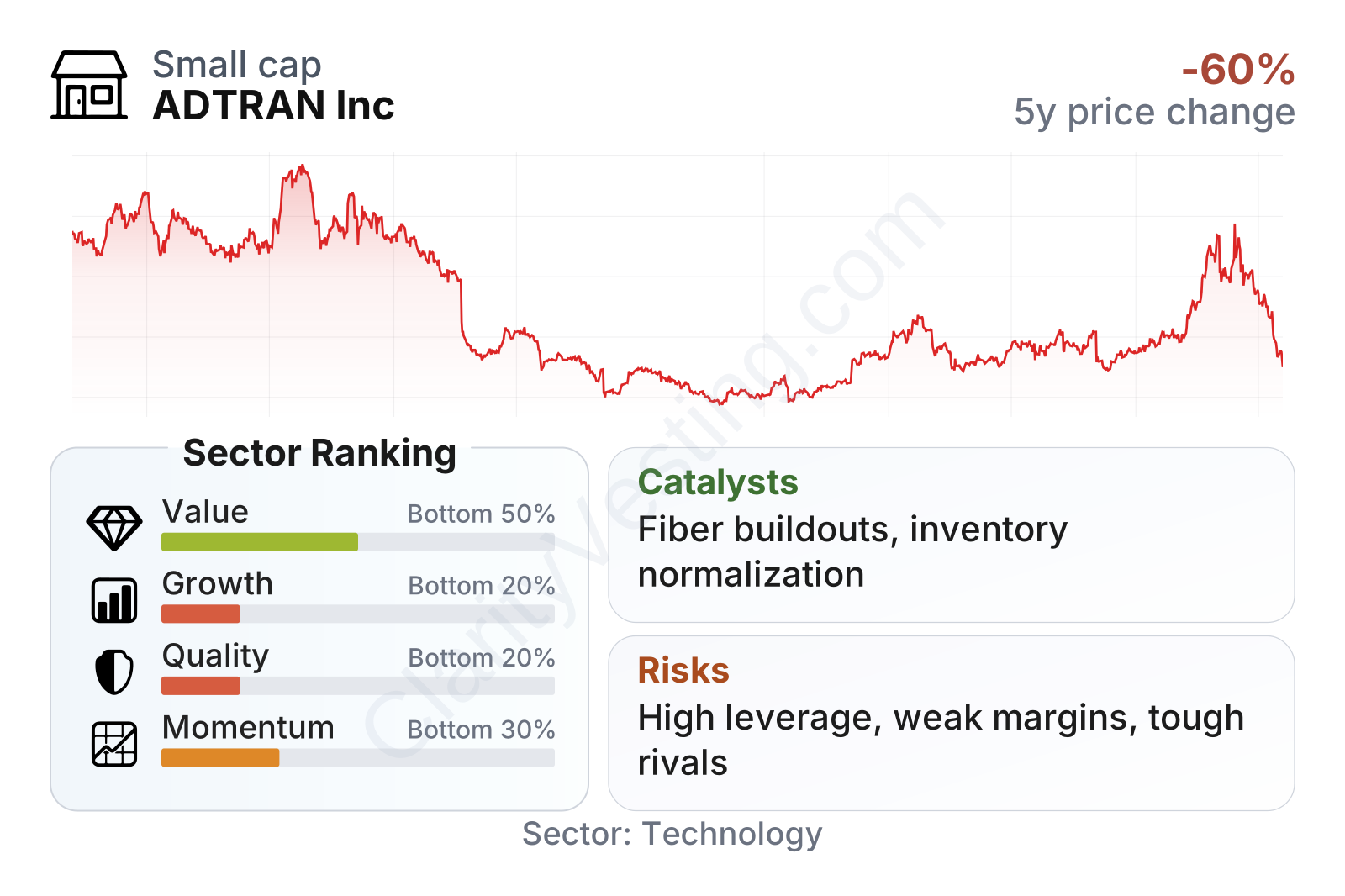
ADTRAN is a small-cap communications equipment company with above-average share price volatility. The overall profile is mixed: cash generation has improved, and free cash flow yield looks strong, but growth and quality metrics remain weak relative to most technology peers. Revenue is growing again, yet still below the sector’s median pace, while margins and returns on capital remain far behind healthier competitors.
The share price history reflects that uneven path. The stock fell sharply from 2022 into 2024 as profitability deteriorated and network spending softened, then recovered meaningfully into 2026. Even after that rebound, the longer-term record still shows a business trying to rebuild confidence rather than one with a long stretch of steady execution.
Growth
ADTRAN operates in a sector with durable long-term demand. Fiber deployment, rural broadband expansion, higher data consumption, cloud connectivity, and 5G backhaul all support continued spending on broadband access and optical transport networks. These are not short-lived themes. They are part of a multi-year modernization cycle as operators replace older copper-based networks and expand fiber capacity.
Its strategy also makes industrial sense. By combining access products, optical transport, software, and customer premises equipment, ADTRAN can sell more complete solutions rather than isolated boxes. That can matter for telecom operators that want fewer vendors, simpler deployment, and integrated network management.
Recent revenue trends suggest the company has moved past its worst contraction. After a deep decline through much of 2024, year-over-year growth turned positive again and stayed positive through 2025 and into 2026, although the pace has moderated lately to low-single-digit to mid-single-digit growth. That points to recovery, but not yet to a high-growth phase.
Cash generation has improved more clearly than accounting profit. Free cash flow moved from negative territory to a positive level in the tens of millions of dollars over the last year. For a company still reporting weak margins, that matters because it suggests working capital and operating discipline have improved. If revenue continues to recover and gross margin holds up, cash flow could remain one of the stronger elements of the current turnaround.
Recent company communications have also emphasized broadband access demand, software-enabled network management, and the opportunity tied to government-backed broadband buildouts in the United States and other regions. Public funding programs do not automatically translate into immediate orders, but they can support a longer equipment cycle for fiber access vendors such as ADTRAN. A second catalyst is the normalization of customer inventories: if operators resume more regular purchasing after a digestion period, ADTRAN can benefit without needing extraordinary market share gains.
Risks
This article is for informational purposes only and does not constitute financial advice. Some content is AI-generated. See Disclaimer


