Stock Analysis · ADEIA CORP (ADEA)
Overview
Adeia Corp is an intellectual property licensing company focused on media, entertainment, and semiconductor technologies. Instead of selling consumer products, it develops, acquires, and licenses patents and related inventions to companies that use those technologies in devices, platforms, and services. Its business model is built around long-term licensing agreements, renewals, and occasional new deals or settlements.
The company operates through two main licensing areas. Public filings indicate that revenue is primarily generated from:
- Media intellectual property licensing: approximately 55% to 65% of revenue in recent periods. This includes technologies used in video distribution, entertainment platforms, connected TV functions, discovery, streaming-related experiences, and pay-TV infrastructure.
- Semiconductor intellectual property licensing: approximately 35% to 45% of revenue in recent periods. This covers inventions used in chip design, memory, logic, packaging, and other semiconductor-related applications.
- Other revenue: usually a small residual amount, including items such as contractual adjustments or non-core activity when applicable.
Adeia’s economics are unusual compared with most software companies. Once patents are developed or acquired, each additional licensing dollar can carry high incremental profitability. That helps explain why the company can produce strong operating margins even without fast top-line expansion. The tradeoff is that revenue can be uneven because licensing renewals, negotiations, and legal resolutions do not always happen on a smooth schedule.
The business has become much leaner since the large revenue reset in 2022. Revenue remains well below 2021 levels, but cost of revenue and operating expenses have fallen sharply, leaving a structure with high gross profit and much stronger operating income than before.
Key Figures
| Metric | Value | Sector ⓘ |
|---|---|---|
| Date | Sep 12, 2026 | |
| Context | ||
| Sector | Technology | |
| Industry | Software - Application | |
| Market Cap ⓘ | $2.95B | |
| Beta ⓘ | 0.96 | |
Value (Cheapness) | ||
| P/E Ratio ⓘ | 24.50 | 29.51 |
| FCF Yield ⓘ | 6.16% | 4.25% |
| EBIT / EV ⓘ | 6.30% | 2.85% |
| PEG ⓘ | 1.51 | |
Growth (Business expansion) | ||
| Revenue Growth ⓘ | 12.10% | 15.40% |
| RPS Growth (5Y CAGR) ⓘ | -17.27% | 8.56% |
| EPS Growth (5Y CAGR) ⓘ | -29.07% | -11.88% |
| Margin Growth (5Y Trend) ⓘ | 39.92% | 0.46% |
| FCF Growth (5Y CAGR) ⓘ | -9.30% | 9.80% |
Quality (Business durability) | ||
| ROIC (Latest) ⓘ | 16.78% | 9.44% |
| ROIC (5Y Median) ⓘ | 12.30% | 8.30% |
| Net Debt / EBIT (Latest) ⓘ | 1.62 | 0.54 |
| Net Debt / EBIT (5Y Median) ⓘ | 3.80 | 0.44 |
| Operating Margin (Latest) ⓘ | 42.29% | 9.58% |
| Operating Margin (5Y Median) ⓘ | 35.56% | 8.25% |
| Debt to Equity (Latest) ⓘ | 82.83% | 33.33% |
| Profit Margin (Latest) ⓘ | 26.05% | 7.14% |
| Free Cash Flow (Latest) ⓘ | $181.50M | |
Momentum (Price trend) | ||
| 3Y Return ⓘ | +188.20% | +45.48% |
| 12M Return (excl. last month) ⓘ | +92.49% | +23.48% |
| 6M Return ⓘ | +17.48% | +20.93% |
| Price vs. 200-Day MA ⓘ | +11.18% | +7.43% |
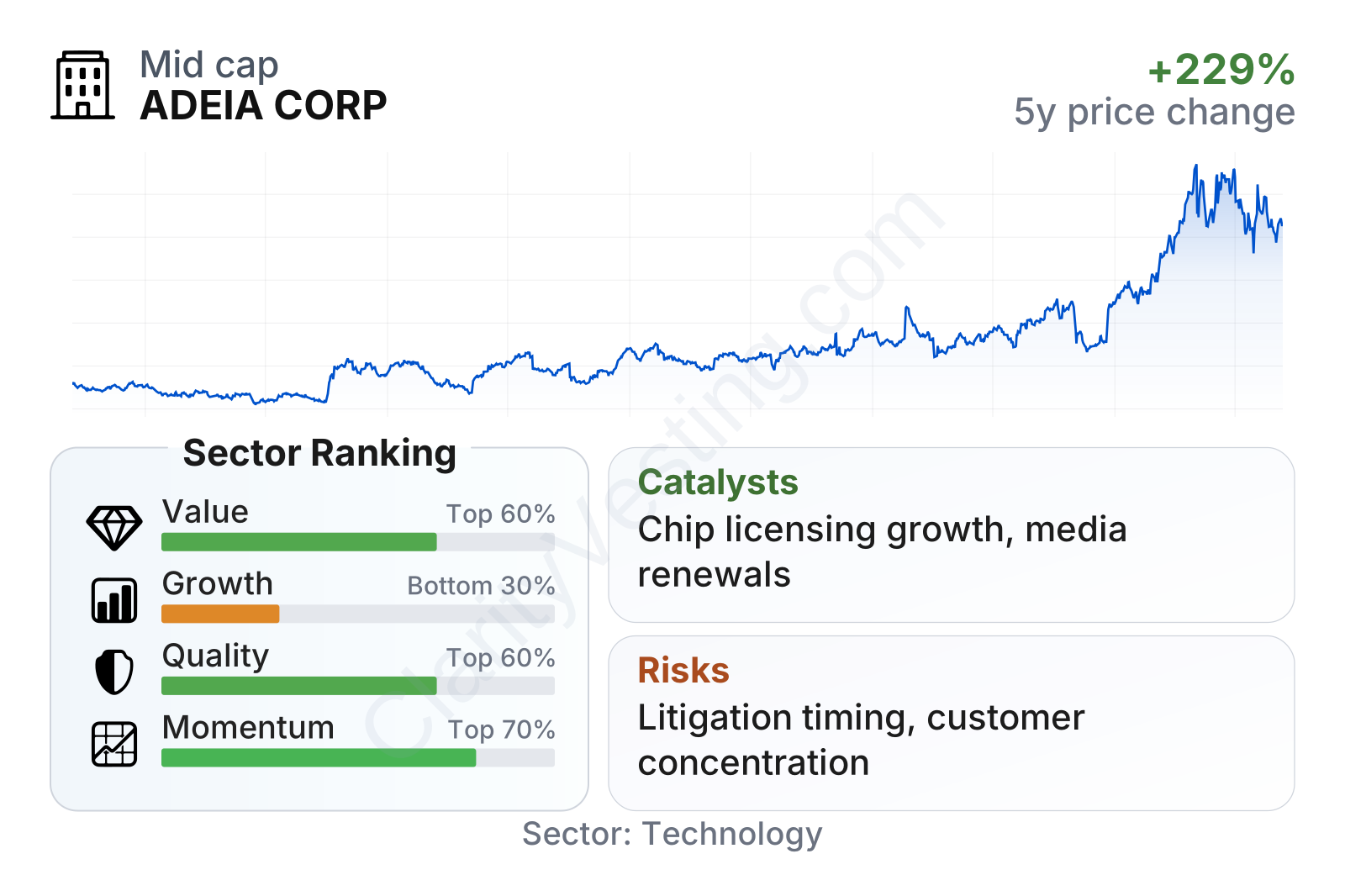
Adeia sits in the middle of the sector on valuation and overall quality, but the mix underneath is more distinctive. Profitability is far stronger than the typical software company, with operating and net margins comfortably above sector medians, while return on invested capital is also solid. Growth metrics are less impressive because the multi-year record still reflects the major revenue contraction after the business reshaping, even though recent year-over-year growth has turned positive again. Price performance has been strong, which shows that the market has already recognized part of the improvement.
The share price trend has been powerful over the last three years, moving from a small-cap technology laggard to a much stronger market performer. That rerating appears tied to improving profitability, better cash generation visibility, and confidence that licensing revenue is becoming more durable.
Growth
Adeia operates in sectors that should remain relevant for years: video distribution, connected entertainment, and semiconductors. The broad direction of those markets is favorable. Video continues to shift across streaming, smart devices, and platform fragmentation, while chip complexity keeps rising as memory, packaging, and compute demands increase. Those trends create a persistent need for patented technologies, which is the core of Adeia’s business.
The company’s strategy is straightforward and coherent for long-term growth. It concentrates on monetizing a deep patent portfolio through licensing rather than trying to outspend much larger product companies. In practice, that means expanding the number of licensees, renewing existing contracts, extending coverage into new use cases, and enforcing rights when negotiations fail. For a licensing business, execution matters more than raw revenue growth in any single quarter.
Recent revenue growth has improved meaningfully from the steep declines seen during the company’s transition period. The latest year-over-year pace is back in positive territory at around the low teens, although the path has been uneven. That pattern fits a licensing company where renewals and new agreements can create lumpy results rather than a steady subscription-like curve.
Free cash flow remains substantial, even though it has moved up and down over time. That is an important feature of the business. Adeia does not need heavy capital spending to operate, so a meaningful portion of earnings can turn into cash. A trailing twelve-month level around the mid-hundreds of millions of dollars is notable for a company of this size and gives it room to reduce debt, support shareholder returns, and fund portfolio development.
A significant catalyst is continued licensing momentum in semiconductors. Patent owners with relevant chip IP may have more leverage as advanced packaging, AI-related compute infrastructure, and memory technologies become more valuable across the industry. In media, the spread of connected TV and increasingly complex content delivery systems can also support licensing demand. Company-hosted releases in 2025 and 2026 have pointed to additional agreements and renewals, which matters because each new contract can improve confidence in the durability of future royalty streams.
Risks
This article is for informational purposes only and does not constitute financial advice. Some content is AI-generated. See Disclaimer


