Stock Analysis · Array Digital Infrastructure Inc (AD)
Overview
Array Digital Infrastructure Inc operates digital connectivity assets used by wireless carriers, enterprises, governments, and other network customers. In practical terms, the company owns and manages infrastructure that helps move data and mobile traffic: communication towers, indoor and outdoor network systems, and certain edge and connectivity-related assets. Its business model is based largely on leasing access to these assets under contracts that can generate recurring revenue over multiple years.
Public filings show that the company’s revenue base is primarily tied to site leasing and related services. Exact 2026 segment percentages are not always presented in a way that allows a clean breakdown for every line of business, but the business can be described as follows:
- Site leasing and colocation: the largest source of revenue. This includes rent paid by wireless operators and other tenants to place equipment on towers or at connectivity sites. Based on the company’s business mix in recent filings, this appears to represent well above 50% of revenue.
- Managed network and in-building infrastructure services: a meaningful secondary contributor. This includes distributed antenna systems, small-cell related arrangements, and network support services for venues, enterprises, and public-sector locations.
- Fiber, edge, and other connectivity-related services: a smaller but strategically important source tied to data transport, backhaul, and localized digital infrastructure needs.
The overall picture is that Array is not a consumer technology brand; it is an infrastructure owner and operator. That matters for long-term analysis because infrastructure companies are often judged less by product buzz and more by contract durability, tenant demand, capital discipline, and the ability to turn assets into dependable cash generation.
The long-term financial flow has shown a business with relatively stable gross profit through 2024 despite some pressure on total revenue, while operating income and net income have been more volatile. That suggests the core assets have retained value, but profitability has depended heavily on cost control, financing costs, and portfolio changes.
Key Figures
| Metric | Value | Sector ⓘ |
|---|---|---|
| Date | Sep 12, 2026 | |
| Context | ||
| Sector | Communication Services | |
| Industry | Telecom Services | |
| Market Cap ⓘ | $3.29B | |
| Beta ⓘ | 0.29 | |
Value (Cheapness) | ||
| P/E Ratio ⓘ | 5.02 | 18.61 |
| FCF Yield ⓘ | -6.17% | 13.68% |
| EBIT / EV ⓘ | 20.39% | 4.54% |
| PEG ⓘ | 16.33 | |
Growth (Business expansion) | ||
| Revenue Growth ⓘ | 89.50% | 5.40% |
| RPS Growth (5Y CAGR) ⓘ | -55.45% | 4.62% |
| EPS Growth (5Y CAGR) ⓘ | 16.12% | -18.01% |
| Margin Growth (5Y Trend) ⓘ | 95.30% | 1.10% |
| FCF Growth (5Y CAGR) ⓘ | N/A | 5.88% |
Quality (Business durability) | ||
| ROIC (Latest) ⓘ | 26.05% | 8.38% |
| ROIC (5Y Median) ⓘ | N/A | 8.32% |
| Net Debt / EBIT (Latest) ⓘ | 0.93 | 1.99 |
| Net Debt / EBIT (5Y Median) ⓘ | 12.64 | 2.94 |
| Operating Margin (Latest) ⓘ | 391.95% | 14.89% |
| Operating Margin (5Y Median) ⓘ | 7.86% | 12.96% |
| Debt to Equity (Latest) ⓘ | 94.63% | 59.59% |
| Profit Margin (Latest) ⓘ | 250.79% | 8.77% |
| Free Cash Flow (Latest) ⓘ | -$202.98M | |
Momentum (Price trend) | ||
| 3Y Return ⓘ | +103.17% | +46.64% |
| 12M Return (excl. last month) ⓘ | +1.16% | +2.16% |
| 6M Return ⓘ | +0.48% | +5.05% |
| Price vs. 200-Day MA ⓘ | +2.88% | +2.88% |
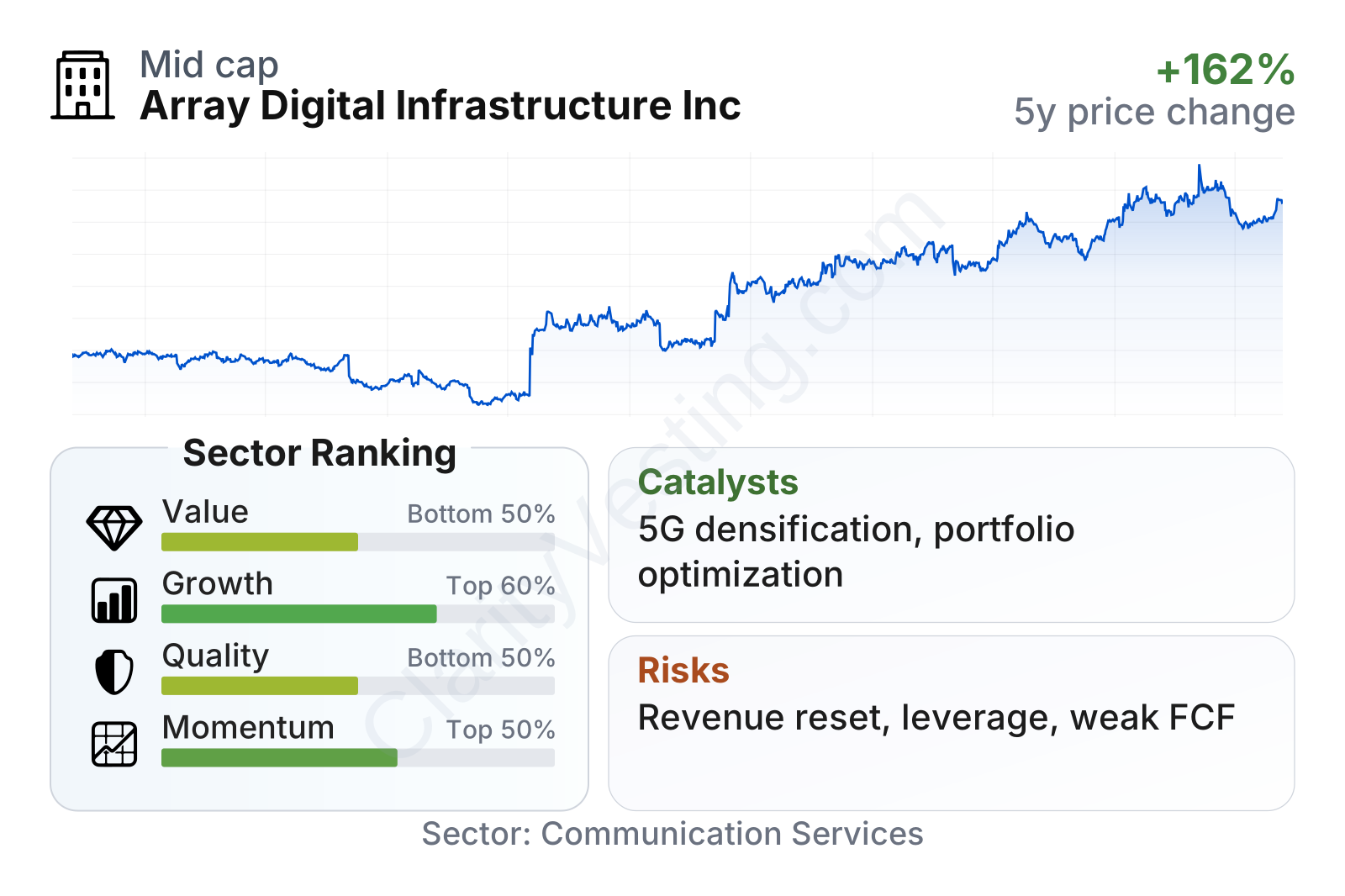
Array is a mid-sized company in its sector, and its share price performance over the last three years has been strong overall despite periods of sharp volatility. The metrics table points to a mixed profile: headline valuation looks low compared with the sector, growth indicators rank better than average, momentum is decent, but quality measures are uneven because leverage is elevated and free cash flow is currently negative. One notable feature is the combination of very high recent operating and profit margins with weak free cash flow, which usually means readers should look beyond headline earnings and focus on how repeatable those profits really are.
Growth
Digital infrastructure remains a structurally growing area. Mobile data usage keeps rising, carriers still need denser networks, enterprises increasingly rely on always-on connectivity, and edge computing expands the need for localized infrastructure. Those are favorable industry conditions because towers, in-building systems, and related network assets tend to benefit from long planning cycles and recurring demand once deployed.
Array’s strategy also makes sense on paper for future growth. Infrastructure businesses can expand in three main ways: adding tenants to existing sites, extending contract terms, and selectively acquiring or building assets in locations where network demand is increasing. If Array can increase the number of customers using the same physical footprint, incremental revenue can carry attractive economics because the base asset is already in place.
That said, the recent revenue pattern deserves careful interpretation. The long history before 2025 looks broadly stable to slightly declining, while the very large drop shown in the most recent year is so extreme that it likely reflects a major portfolio change, divestiture, accounting shift, or business reclassification rather than ordinary operating weakness alone. This is one of the most important points for understanding the company today: recent growth metrics look dramatic, but not all of that movement appears to come from normal customer demand trends.
Cash generation has also been volatile. Free cash flow was solidly positive in earlier periods, then moderated sharply and turned weaker more recently. For an infrastructure company, that matters because future value is usually tied to the ability to convert contracted revenue into cash after maintenance spending, interest, and expansion investments. If cash flow stabilizes again after the recent transition, it would strengthen the long-term case materially.
A meaningful catalyst is the broader push for network densification and higher-capacity wireless infrastructure. Public company communications have also highlighted portfolio optimization and asset monetization activity. Those moves can create opportunity if management is exiting lower-return assets and concentrating capital on better-positioned infrastructure with stronger recurring economics. In the near term, the biggest positive trigger is likely clearer evidence that the remodeled business can grow again on a cleaner and more focused base.
Risks
This article is for informational purposes only and does not constitute financial advice. Some content is AI-generated. See Disclaimer