Stock Analysis · ACV Auctions Inc (ACVA)
Overview
ACV Auctions Inc operates a digital marketplace for wholesale used vehicles. In simple terms, it helps car dealers buy and sell used cars through online auctions instead of relying only on physical auctions. The company also provides tools that make those transactions easier, such as vehicle inspections, pricing and market data, transportation, financing support, and title services. Its customers are mainly automotive dealers and commercial partners that need a faster and more data-driven way to move inventory.
The business has expanded beyond the core auction listing. That matters because ACV is trying to become a broader transaction platform rather than just a place where dealers bid on cars. The model benefits from network effects: more sellers attract more buyers, and more buyers make the marketplace more useful for sellers. Over time, this can improve transaction volume and support additional services attached to each sale.
Based on company disclosures, revenue is primarily generated from marketplace and service-related fees tied to wholesale vehicle transactions. A practical breakdown is:
- Marketplace and auction fees: the largest source of revenue, estimated at roughly 60% to 70% of total revenue. This includes fees from facilitating digital wholesale vehicle auctions between dealers and commercial partners.
- Transportation, logistics, and related services: estimated at roughly 15% to 25%. This covers moving vehicles after a sale and related operational services.
- Data, inspection, financing, title, and other services: estimated at roughly 10% to 20%. This includes condition reports, market tools, and other add-on products that support transactions.
Revenue has grown strongly over the past several years, and the business mix shows a notable pattern: gross profit has expanded much faster than cost of revenue, which suggests improving unit economics as ACV scales and adds higher-margin software-like services alongside the marketplace.
Key Figures
| Metric | Value | Sector ⓘ |
|---|---|---|
| Date | Sep 12, 2026 | |
| Context | ||
| Sector | Consumer Cyclical | |
| Industry | Auto & Truck Dealerships | |
| Market Cap ⓘ | $1.26B | |
| Beta ⓘ | 1.83 | |
Value (Cheapness) | ||
| P/E Ratio ⓘ | N/A | 17.10 |
| FCF Yield ⓘ | 0.47% | 8.53% |
| EBIT / EV ⓘ | -4.08% | 6.46% |
| PEG ⓘ | N/A | |
Growth (Business expansion) | ||
| Revenue Growth ⓘ | 10.40% | 5.75% |
| RPS Growth (5Y CAGR) ⓘ | 18.00% | 9.14% |
| EPS Growth (5Y CAGR) ⓘ | N/A | -18.21% |
| Margin Growth (5Y Trend) ⓘ | N/A | -0.23% |
| FCF Growth (5Y CAGR) ⓘ | -0.75% | 4.91% |
Quality (Business durability) | ||
| ROIC (Latest) ⓘ | -6.19% | 12.61% |
| ROIC (5Y Median) ⓘ | -10.28% | 10.72% |
| Net Debt / EBIT (Latest) ⓘ | N/A | 2.10 |
| Net Debt / EBIT (5Y Median) ⓘ | N/A | 2.32 |
| Operating Margin (Latest) ⓘ | -6.19% | 9.25% |
| Operating Margin (5Y Median) ⓘ | -15.20% | 9.64% |
| Debt to Equity (Latest) ⓘ | 52.58% | 75.78% |
| Profit Margin (Latest) ⓘ | -7.88% | 5.33% |
| Free Cash Flow (Latest) ⓘ | $5.95M | |
Momentum (Price trend) | ||
| 3Y Return ⓘ | -35.70% | +14.53% |
| 12M Return (excl. last month) ⓘ | -30.53% | +3.08% |
| 6M Return ⓘ | +114.20% | +0.55% |
| Price vs. 200-Day MA ⓘ | +55.43% | -0.54% |
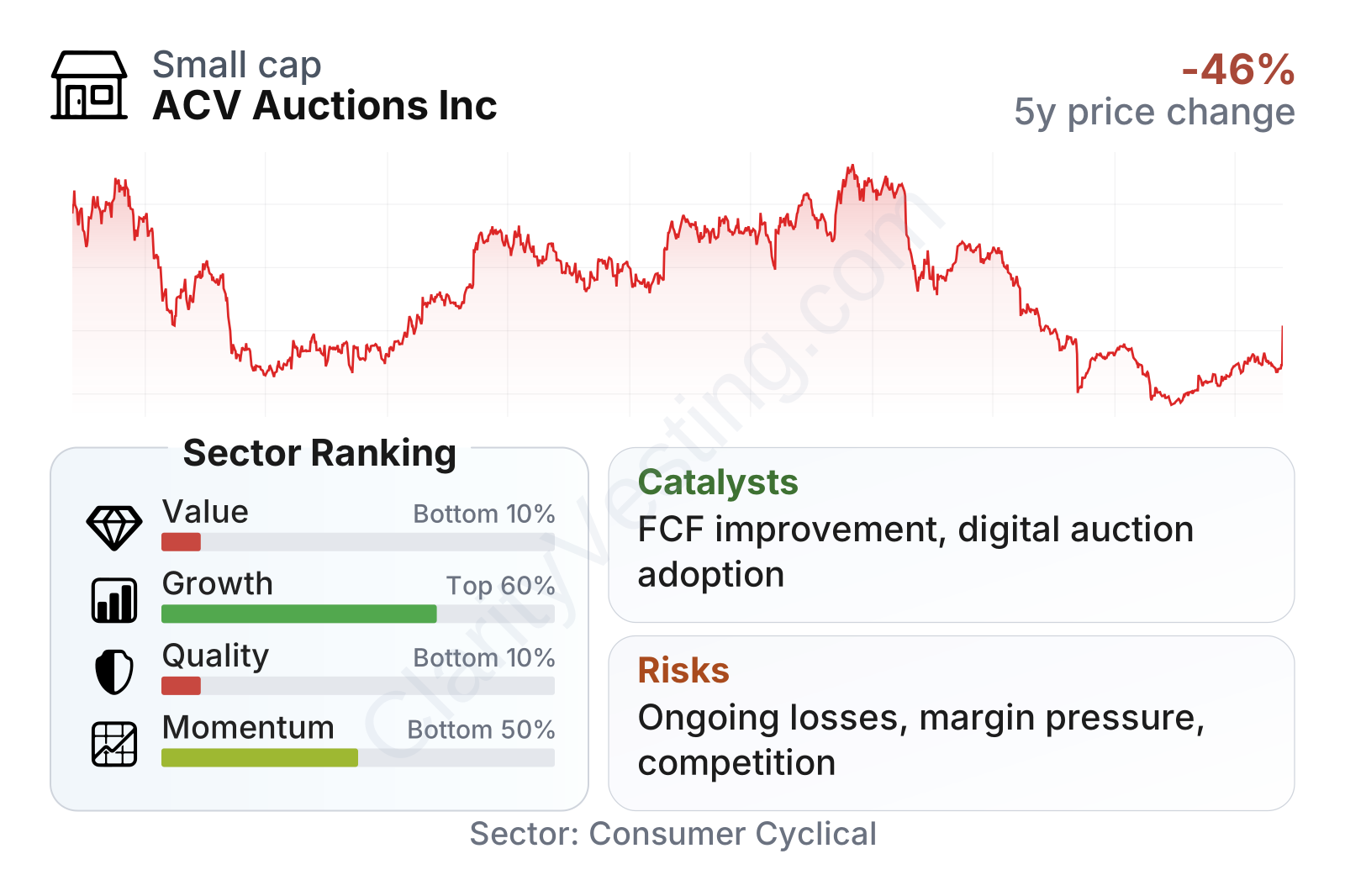
ACV is a small-cap company with a stock that has been very volatile, reflected in a beta well above 1. The share price has fallen sharply from its earlier post-IPO levels, even though the business has continued to grow revenue. In the latest factor snapshot, growth looks better than much of the sector, but value, quality, and momentum remain weak relative to peers. The main reason is straightforward: the company is still posting losses and its free cash flow yield remains thin compared with more established operators.
Growth
ACV operates in a part of the auto market that still has room for digital conversion. Wholesale used vehicle trading has historically involved physical auctions, phone calls, fragmented logistics, and uneven information about vehicle condition. A digital platform that reduces friction, improves transparency, and compresses transaction time fits a long-term industry trend. That makes the sector attractive even though it remains cyclical.
The company’s strategy also makes sense from a platform perspective. ACV is not only trying to win auction volume; it is building additional services around each transaction. That can increase revenue per unit, deepen customer relationships, and make the platform harder to replace. The more steps ACV controls in the transaction process, from inspection to transport and title, the more embedded it becomes in dealer workflows.
Growth has clearly slowed from the very high rates seen earlier in the company’s public life, but it is still positive and remains ahead of the sector median. Recent year-over-year revenue growth has been around 10%, while the five-year revenue-per-share growth record is much stronger. That combination points to a company that is no longer in its earliest surge phase but is still expanding faster than many traditional auto-related businesses.
An encouraging development is cash generation. Free cash flow was negative for a period as the company invested for scale, but it has turned positive and improved meaningfully into 2025 and 2026. That shift is important because it suggests the business is starting to convert growth into cash, even though accounting profits are still negative. For a platform company in expansion mode, that is often a major milestone.
Recent company communications have highlighted continued marketplace expansion, product adoption, and penetration of commercial partners. Another potential catalyst is the broader need for dealers to manage used-vehicle inventory more efficiently in a market where pricing and supply conditions can shift quickly. A platform that offers better data, faster sale cycles, and integrated services becomes more valuable when the operating environment is less predictable.
Risks
This article is for informational purposes only and does not constitute financial advice. Some content is AI-generated. See Disclaimer


